An alpha-glucosidase inhibitor
Acarbose
A type 2 diabetes tablet taken with meals that slows the digestion of carbohydrate to reduce the glucose spike after eating.
What is Acarbose?
Acarbose is a tablet for type 2 diabetes that works in the gut to slow the breakdown of carbohydrate from food, so blood glucose rises more gently after a meal. It is taken with the first mouthful of a main meal and is mainly used as an add-on when other treatments need support. Its most common effects are wind, bloating and a feeling of fullness, which often ease over time. Importantly, if a hypo happens while combining it with other diabetes medicines, it must be treated with pure glucose (not ordinary table sugar), because acarbose slows the breakdown of normal sugar.
Education and reference only. This is a plain-language guide to Acarbose — it deliberately contains no doses. Doses depend on the person, the brand and the reason for treatment, and belong with your prescriber. Always check the BNF, the product labelling (SmPC) and follow medical advice.
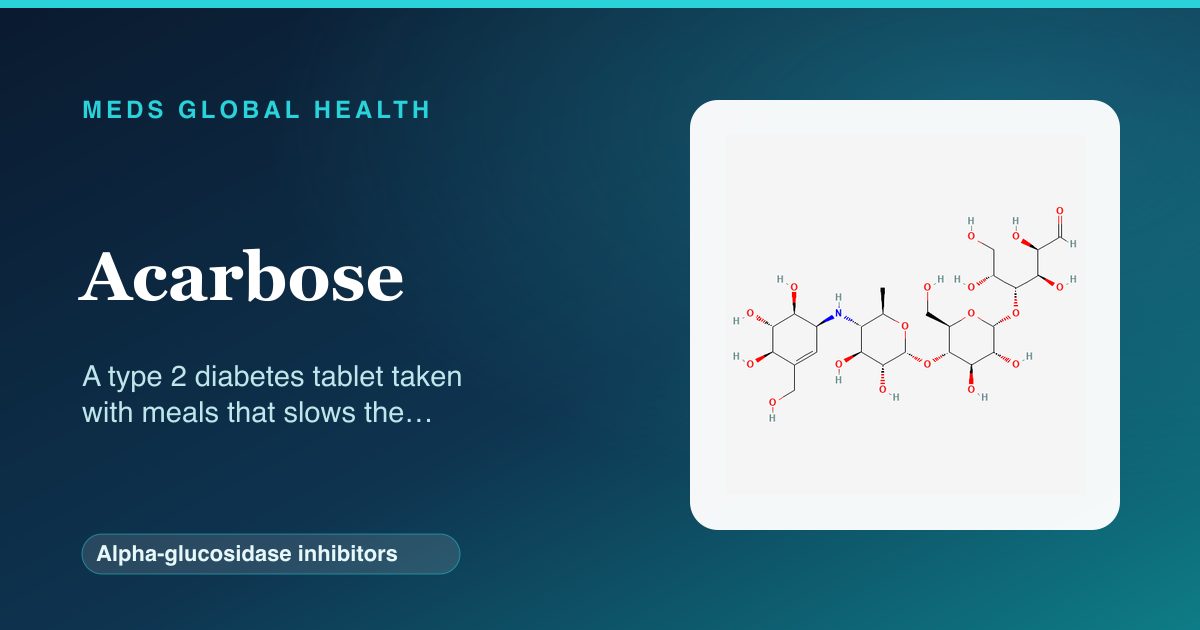
What it is
Acarbose is an oral medicine for type 2 diabetes belonging to a group called alpha-glucosidase inhibitors. Rather than acting on insulin directly, it works inside the gut to slow the digestion of starchy and sugary foods, so glucose is absorbed more slowly and the blood glucose spike after a meal is smaller. It is usually used as an add-on treatment when blood glucose, particularly after meals, needs extra control. It is taken as a tablet with meals.
How it works
Carbohydrate from food is normally broken down into simple sugars by enzymes in the gut before it can be absorbed. Acarbose blocks some of these enzymes (alpha-glucosidases), so starches and ordinary sugar are digested more slowly. This flattens and delays the rise in blood glucose after eating. A side effect of this mechanism is that undigested carbohydrate passes further along the bowel, where it ferments and causes wind and bloating. The same mechanism is why an important rule applies: because acarbose slows the breakdown of table sugar, a hypo on combination therapy must be treated with pure glucose rather than ordinary sugar.
Company & origin
Originated / developed by: Bayer (Glucobay).
An alpha-glucosidase inhibitor introduced in the 1990s and used in the UK as an add-on treatment for type 2 diabetes, taken with meals to blunt the rise in blood glucose after eating.
What it treats
Conditions Acarbose is used for
Practical use
How to take Acarbose
General, dose-free guidance — always follow your prescriber's and the leaflet's specific instructions.
- Take it with the first mouthful of a main meal, or chew it with the first bite, so it is in the gut as food arrives.
- It is usually started low and built up gradually to reduce wind and bloating; follow the schedule your prescriber gives.
- It works on the carbohydrate in a meal, so it has little effect if you take it without food or with a very low-carbohydrate meal.
- If you also take insulin or a sulfonylurea and have a hypo, treat it with pure glucose (glucose tablets or drink), not ordinary table sugar.
- Expect some wind and bloating at first, which usually ease over time as your body adjusts.
- Tell your prescriber about any liver problems or persistent stomach symptoms, and keep your regular diabetes reviews.
Weighing it up
Advantages & disadvantages of Acarbose
Advantages
- Targets the rise in blood glucose after meals by slowing carbohydrate digestion in the gut.
- Does not cause hypos when used on its own, as it does not push the body to release more insulin.
- Acts locally in the gut and can be a useful add-on when after-meal glucose needs extra control.
Disadvantages
- Frequently causes wind, bloating and a feeling of fullness, which some people find hard to tolerate.
- Must be taken with the first mouthful of food and has little effect on low-carbohydrate meals.
- If a hypo occurs on combination therapy, it must be treated with pure glucose, which is easy to forget.
Practical use
Good to know
Acarbose works in the gut, not on insulin, so on its own it does not usually cause hypos; the risk of a hypo comes when it is combined with insulin or medicines such as sulfonylureas. The single most important practical point is that, if a hypo does happen on combination therapy, it must be treated with pure glucose (glucose tablets or a glucose drink) rather than ordinary table sugar or sweets, because acarbose slows the breakdown of normal sugar and would delay recovery. The other main thing to expect is digestive side effects: wind, bloating, a feeling of fullness and sometimes diarrhoea, which are usually worst at the start and often settle as the body adjusts, especially if treatment is built up slowly. Taking it with the first mouthful of food is essential for it to work, and it has little effect if a meal contains very little carbohydrate.
Who should not take it / use with caution
- People with inflammatory bowel disease, bowel obstruction or other significant chronic gut conditions should not use it.
- It should be avoided in significant liver problems and in those with a known allergy to it.
- It is generally not used in pregnancy or breastfeeding unless specifically advised.
Monitoring
- Blood glucose, especially after meals, and HbA1c over time to judge the response.
- Liver blood tests may be checked, as acarbose can occasionally affect the liver.
- Reviewing tolerability of wind and bloating and whether a slow build-up has helped.
Side effects
- Wind (flatulence), bloating and a feeling of fullness are very common, especially when starting.
- Diarrhoea and stomach discomfort, which often ease as the body adjusts.
- Rarely, raised liver enzymes or liver problems, so liver checks may be advised.
Key interactions
- With insulin or sulfonylureas it can contribute to hypos, which must then be treated with pure glucose, not table sugar.
- It can reduce the absorption of some medicines taken at the same time, so spacing may be advised.
- Intestinal adsorbents and digestive enzyme preparations can reduce how well acarbose works.
Available as: Tablets taken by mouth with meals.
Answers
Acarbose: frequently asked questions
How does acarbose work?
It slows the digestion of carbohydrate in the gut, so glucose is absorbed more gradually and blood glucose rises more gently after a meal.
Why does it cause so much wind?
Carbohydrate that is digested more slowly passes further along the bowel and ferments, causing wind and bloating; this is usually worst at first and often eases.
How do I treat a hypo if I take acarbose with other diabetes medicines?
Use pure glucose, such as glucose tablets or a glucose drink, not ordinary table sugar or sweets, because acarbose slows the breakdown of normal sugar.
When should I take it?
Take it with the first mouthful of a main meal so it is in the gut as the food arrives; it has little effect taken without food.
Does acarbose cause hypos on its own?
No. On its own it does not usually cause hypos; the risk comes when it is combined with insulin or a sulfonylurea.
Authoritative sources
- BNF
- NICE CKS
Building a medicines information resource?
We create evidence-led, dose-free drug and formulary references for teams.