A vitamin K antagonist anticoagulant similar to warfarin
Acenocoumarol
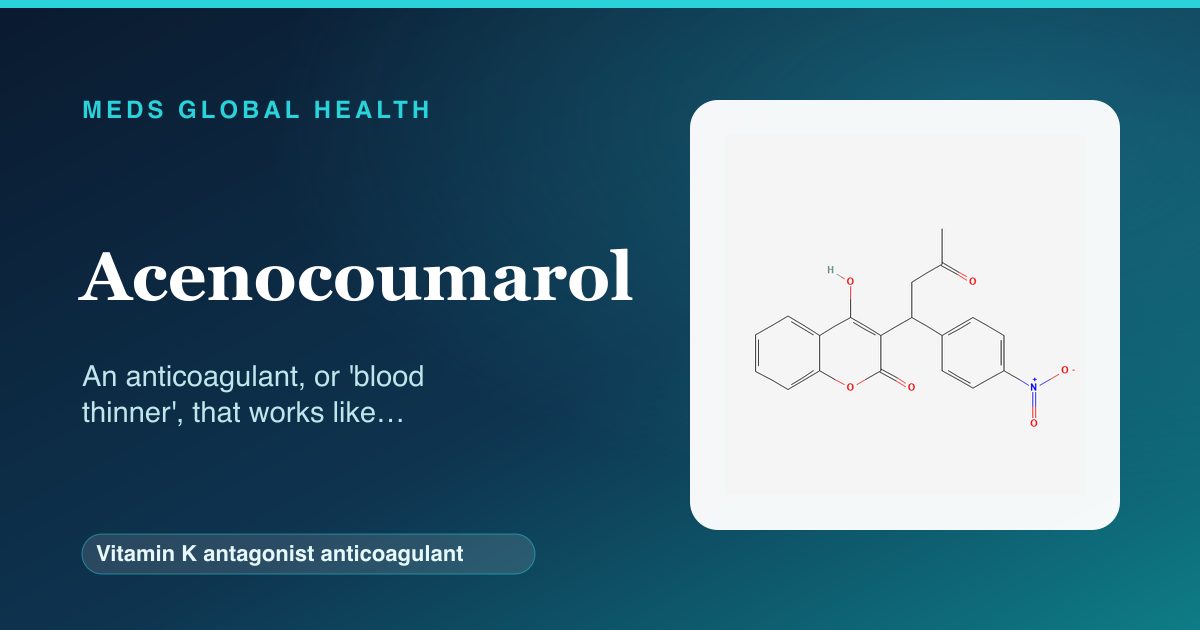
An anticoagulant, or 'blood thinner', that works like warfarin to prevent and treat blood clots and needs regular INR blood tests.
What is Acenocoumarol?
Acenocoumarol is an anticoagulant, often called a 'blood thinner', that works in a similar way to warfarin. It is used to prevent and treat blood clots, such as those in the legs or lungs, and to lower the risk of clots and stroke in conditions like atrial fibrillation. It works by reducing the effect of vitamin K, which the body needs to make clotting proteins, so blood clots less easily. Because the right amount varies from person to person and can be upset by food and other medicines, it needs regular INR blood tests to keep it in a safe range. The main risk is bleeding if the blood becomes too thin.
Education and reference only. This is a plain-language guide to Acenocoumarol — it deliberately contains no doses. Doses depend on the person, the brand and the reason for treatment, and belong with your prescriber. Always check the BNF, the product labelling (SmPC) and follow medical advice.
What it is
Acenocoumarol is an anticoagulant medicine, a type of 'blood thinner', that belongs to the same family as warfarin. It is taken by mouth as tablets and is used to prevent and treat harmful blood clots, for example a clot in a leg vein, a clot that has travelled to the lungs, or to reduce the risk of clots and stroke in people with an irregular heart rhythm called atrial fibrillation. Like warfarin, it does not actually thin the blood but makes it less likely to clot. Because each person needs a different amount, and that amount can change, it is managed with regular blood tests called the INR.
How it works
Acenocoumarol works by blocking the action of vitamin K, which the liver needs to make several of the proteins that allow blood to clot. By reducing how much of these clotting proteins are made, it makes the blood take longer to clot, which helps stop dangerous clots forming or growing. Because clotting proteins already in the blood take time to clear, the full effect builds up over a few days rather than straight away. The strength of its effect is measured by a blood test called the INR, and the dose is adjusted up or down to keep the INR in the range that is safe for each person.
Company & origin
An anticoagulant used in the UK to prevent and treat blood clots, working in a similar way to warfarin and needing regular INR blood-test monitoring.
What it treats
Conditions Acenocoumarol is used for
Practical use
How to take Acenocoumarol
General, dose-free guidance — always follow your prescriber's and the leaflet's specific instructions.
- Take it by mouth once a day at the same time, usually in the evening, exactly as your anticoagulant clinic tells you.
- Follow the dose written on your record carefully, as it can change from one INR test to the next and may differ on different days.
- Go to all your INR blood tests, as these decide whether your dose stays the same or changes.
- Keep your diet steady, especially green leafy vegetables, rather than suddenly eating a lot more or less vitamin K.
- Check with your pharmacist or doctor before starting any new medicine, herbal remedy or supplement, as many affect how it works.
Weighing it up
Advantages & disadvantages of Acenocoumarol
Advantages
- An effective, long-established way to prevent and treat blood clots and to lower stroke risk in atrial fibrillation.
- Its effect can be measured with a simple INR blood test and adjusted to suit each person.
- If bleeding occurs, its effect can be reversed with vitamin K and other treatments.
Disadvantages
- Needs regular INR blood tests and careful dose adjustment, which takes commitment.
- Interacts with many foods, medicines, alcohol and herbal remedies, which can upset control.
- Carries a risk of bleeding if the blood becomes too thin, sometimes seriously.
Practical use
Good to know
The most important things to understand about acenocoumarol are that it needs regular INR blood tests and that many foods and medicines can change how it works. Too little effect leaves you at risk of clots, while too much makes bleeding more likely, which is why the INR is checked regularly and the dose adjusted. Vitamin K in the diet affects it, so the advice is to keep your intake of green leafy vegetables fairly steady rather than suddenly eating a lot more or less. Alcohol, many prescription and over-the-counter medicines, and herbal remedies can also push the INR up or down, so always check before starting or stopping anything. You will usually carry an anticoagulant alert card and a record of your INR results and doses. Signs of bleeding, such as unusual bruising, blood in the urine or stools, or bleeding that will not stop, should be reported promptly.
Who should not take it / use with caution
- People with active serious bleeding, or who have recently had certain types of bleeding such as a bleed in the brain, should not take it.
- It is not used in pregnancy, as it can harm the developing baby; a different anticoagulant is used instead.
- It is used with great care in people at high risk of bleeding, such as those with uncontrolled high blood pressure or stomach ulcers.
- People who have had a serious allergic reaction to acenocoumarol should not take it.
Monitoring
- Regular INR blood tests to check the effect and guide the dose, more often when treatment is changing.
- Watching for any signs of bleeding, such as unusual bruising, nosebleeds or blood in urine or stools.
- Reviewing new medicines, diet changes and alcohol intake that might affect control.
Side effects
- Bleeding or bruising more easily, which is the main risk and may range from minor to serious.
- Nausea or other mild stomach upset in some people.
- Rarely, hair loss or skin reactions, including, very rarely, skin damage early in treatment.
Key interactions
- Many medicines, including some antibiotics, painkillers such as aspirin and ibuprofen, and others, can raise or lower its effect.
- Vitamin K in food and supplements, and herbal remedies such as St John's wort, can change how well it works.
- Alcohol, especially heavy or changeable drinking, can upset INR control, so steady, moderate intake is advised.
Available as: Tablets taken by mouth.
Answers
Acenocoumarol: frequently asked questions
What is acenocoumarol used for?
It is an anticoagulant used to prevent and treat blood clots, such as in the legs or lungs, and to lower the risk of clots and stroke in conditions like atrial fibrillation.
How is it different from warfarin?
It works in the same way as warfarin, by reducing vitamin K's effect on blood clotting, but it is a different medicine and tends to act over a slightly shorter time; both need regular INR tests.
Why do I need regular blood tests?
The right amount varies from person to person and can change with diet and other medicines, so the INR blood test is used to keep your blood thinned to a safe level.
Can I eat green vegetables?
Yes, but keep your intake fairly steady rather than suddenly eating a lot more or less, because the vitamin K in green leafy vegetables affects how well the medicine works.
What should I do if I notice bleeding?
Report unusual bruising, blood in your urine or stools, or bleeding that will not stop promptly, as it may mean your blood is too thin and your dose needs reviewing.
Authoritative sources
- BNF
- NICE CKS
Building a medicines information resource?
We create evidence-led, dose-free drug and formulary references for teams.