A prokinetic for functional dyspepsia (indigestion)
Acotiamide
A prokinetic medicine used to ease functional dyspepsia (indigestion), helping the stomach work and empty more normally.
What is Acotiamide?
Acotiamide is a prokinetic medicine used to treat functional dyspepsia, a common type of indigestion where people get fullness, bloating and discomfort after meals even though tests find no ulcer or other cause. It works by helping the stomach muscles move and empty more normally, so food does not sit and cause symptoms. It is taken by mouth, usually before meals, and is generally well tolerated, with most side effects being mild and related to the gut. It eases symptoms rather than curing the underlying tendency, so symptoms can return if it is stopped.
Education and reference only. This is a plain-language guide to Acotiamide — it deliberately contains no doses. Doses depend on the person, the brand and the reason for treatment, and belong with your prescriber. Always check the BNF, the product labelling (SmPC) and follow medical advice.
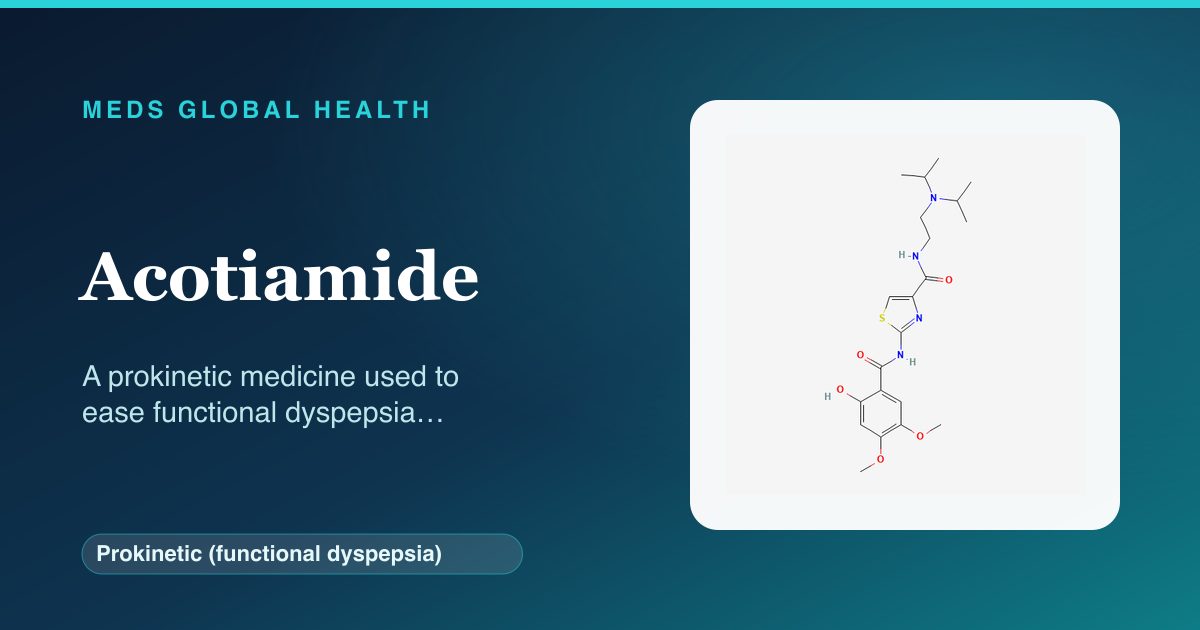
What it is
Acotiamide is a prokinetic, a medicine that helps the stomach and gut move food along more normally. It is used for functional dyspepsia, a type of long-standing indigestion in which people feel uncomfortably full soon after eating, bloated, or have upper-tummy discomfort, even though investigations do not find an ulcer, reflux disease or other clear cause. Acotiamide is taken by mouth, usually before food, and is one of the options used when these meal-related symptoms are troublesome. It is generally well tolerated and aims to improve how the stomach handles meals.
How it works
In functional dyspepsia, the stomach may empty slowly or fail to relax properly to accommodate a meal, which causes fullness, bloating and discomfort. Acotiamide helps the nerves and muscles of the stomach work together so that it empties and settles more normally. By improving this stomach activity, it eases the meal-related symptoms that people find most troublesome. Because it works on how the stomach handles food, it is usually taken before meals so that it is active when eating. It manages symptoms rather than changing the underlying tendency, so symptoms may return if it is stopped.
Company & origin
A medicine used for functional dyspepsia, a type of long-standing indigestion where the stomach does not empty or settle as it should despite no ulcer being found.
Practical use
How to take Acotiamide
General, dose-free guidance — always follow your prescriber's and the leaflet's specific instructions.
- Take it by mouth before meals, as advised, so it is working when you eat.
- Take it regularly rather than only when symptoms flare, as it works best taken consistently.
- Give it a little time to help, as the benefit may build up over the first weeks.
- Tell your prescriber if symptoms do not improve, so other causes can be reconsidered.
- Mention any liver problems or other medicines before starting, as these may affect suitability.
Weighing it up
Advantages & disadvantages of Acotiamide
Advantages
- Eases the fullness, bloating and discomfort of functional dyspepsia by helping the stomach empty more normally.
- Generally well tolerated, with mostly mild gut-related side effects.
- Taken by mouth and fits around mealtimes.
Disadvantages
- Treats symptoms rather than curing the underlying tendency, so symptoms can return if stopped.
- Works best taken before meals and consistently, which takes a little planning.
- May take some weeks before the benefit is clear.
Practical use
Good to know
The most useful thing to know is that acotiamide is generally well tolerated, with most side effects being mild and related to the gut, such as a little nausea, tummy discomfort or changes in bowel habit. It is usually taken before meals so it is working when you eat, which is when functional dyspepsia symptoms tend to come on, so building it into your routine around mealtimes helps. It treats the symptoms of functional dyspepsia rather than curing the underlying tendency, so it can take a little while to notice the benefit and symptoms may return if it is stopped. It is generally used once other causes such as an ulcer or infection have been considered or treated. Tell your prescriber about your other medicines and any liver problems, as these may affect whether it is suitable.
Who should not take it / use with caution
- People who have had a serious allergic reaction to acotiamide should not take it.
- It is used with care in people with significant liver problems, under medical guidance.
- It should be used only after other causes of the symptoms have been considered or treated.
Monitoring
- Reviewing how well symptoms improve and whether treatment should continue.
- Checking that no new symptoms point to a different cause needing investigation.
- Reviewing liver function where there is concern, with longer use.
Side effects
- Mild nausea, tummy discomfort or a change in bowel habit such as diarrhoea or constipation.
- Headache or a general feeling of being off-colour in some people.
- Rarely, changes in liver blood tests, which may be checked if needed.
Key interactions
- There are few well-established routine interactions, but tell your prescriber about all your medicines.
- Medicines that strongly affect the gut's movement may have an added or opposing effect.
- Tell your prescriber about any medicines or conditions affecting the liver.
Available as: Tablets taken by mouth.
Answers
Acotiamide: frequently asked questions
What is acotiamide used for?
It is used for functional dyspepsia, a type of indigestion causing fullness, bloating and discomfort after meals where no ulcer or other clear cause is found.
How does it work?
It is a prokinetic that helps the stomach muscles move and empty more normally, so food does not sit and cause the meal-related symptoms.
Why take it before meals?
Functional dyspepsia symptoms come on around eating, so taking it before meals means it is working when the stomach is handling food.
Is it well tolerated?
Yes, it is generally well tolerated, with most side effects being mild and related to the gut, such as a little nausea or a change in bowel habit.
Will my symptoms come back if I stop?
It eases symptoms rather than curing the underlying tendency, so symptoms can return if it is stopped; discuss any changes with your prescriber.
Authoritative sources
- BNF
- NICE CKS
Building a medicines information resource?
We create evidence-led, dose-free drug and formulary references for teams.