A targeted tablet for some types of lung cancer
Afatinib
A targeted oral cancer medicine used for certain types of non-small-cell lung cancer with EGFR changes.
What is Afatinib?
Afatinib is a specialist targeted cancer medicine used to treat some types of non-small-cell lung cancer that have particular changes in a protein called EGFR. It works by blocking EGFR signals that drive the cancer's growth. It is taken as a tablet by mouth on an empty stomach, away from food. The most common problems are diarrhoea and a skin rash, which can be severe, and it can occasionally cause serious lung inflammation. It can harm an unborn baby, so reliable contraception is important. It is prescribed and supervised by a cancer specialist.
Education and reference only. This is a plain-language guide to Afatinib — it deliberately contains no doses. Doses depend on the person, the brand and the reason for treatment, and belong with your prescriber. Always check the BNF, the product labelling (SmPC) and follow medical advice.
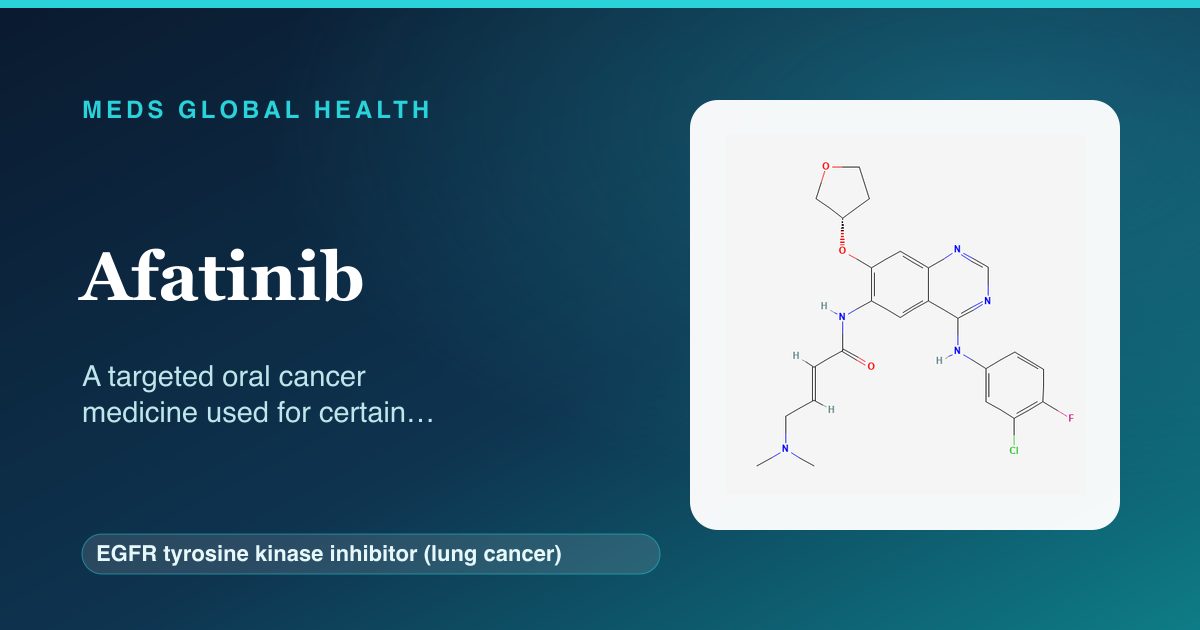
What it is
Afatinib is a targeted cancer medicine known as an EGFR tyrosine kinase inhibitor. It is used to treat certain types of non-small-cell lung cancer that carry specific changes (mutations) in the EGFR protein, which can be found by testing the cancer. Rather than acting like broad chemotherapy, it is aimed at a signal these cancers depend on to grow. It is taken by mouth as a tablet, on an empty stomach, and is prescribed and monitored by a cancer specialist team.
How it works
Many lung cancers with EGFR changes grow because the EGFR protein is stuck switched on, constantly telling the cancer cells to divide. Afatinib blocks EGFR and some related proteins, switching off this growth signal so the cancer slows down and shrinks. Because EGFR also helps keep skin and the gut lining healthy, blocking it explains the common side effects of rash and diarrhoea. It is taken on an empty stomach because food can reduce how much medicine the body absorbs.
Company & origin
A specialist cancer medicine used in the UK to treat certain types of non-small-cell lung cancer, taken as a tablet by mouth.
Practical use
How to take Afatinib
General, dose-free guidance — always follow your prescriber's and the leaflet's specific instructions.
- Take the tablet by mouth on an empty stomach, away from food, as your team advises.
- Swallow the tablet whole with water at about the same time each day.
- Start anti-diarrhoea treatment early as advised, drink plenty of fluids, and tell your team if diarrhoea is severe or does not settle.
- Look after your skin with moisturisers and sun protection, and report a severe or worsening rash.
- Report new or worsening breathlessness, cough or fever, and use reliable contraception during treatment.
Weighing it up
Advantages & disadvantages of Afatinib
Advantages
- A targeted oral treatment for EGFR-positive non-small-cell lung cancer that can be taken at home.
- Aimed at a specific growth signal the cancer relies on rather than affecting the whole body broadly.
- Can control the cancer and improve symptoms under specialist supervision.
Disadvantages
- Commonly causes diarrhoea and a skin rash, which can be severe and need active management.
- Can occasionally cause serious lung inflammation, which needs urgent attention.
- Must be taken on an empty stomach, and it can harm an unborn baby.
Practical use
Good to know
The two side effects to plan for with afatinib are diarrhoea and skin problems, both of which can be severe if not managed early. Diarrhoea can come on quickly, so your team will usually give you anti-diarrhoea medicine to keep at home and advice on when to use it and when to call them; staying hydrated matters. The skin rash is often acne-like and can affect the face and body, and good skin care, moisturisers and sun protection help. A less common but serious risk is inflammation of the lungs, so report any new or worsening breathlessness, cough or fever. It is taken on an empty stomach, away from food, for it to work properly. It can harm an unborn baby, so effective contraception is important during treatment.
Who should not take it / use with caution
- People who have had a serious allergic reaction to afatinib should not take it.
- It is not suitable in pregnancy because it can harm an unborn baby; effective contraception is needed.
- It is used with caution in people with existing lung, liver or kidney problems, under specialist guidance.
Monitoring
- Checking for and managing diarrhoea and skin reactions, including how severe they are.
- Watching for signs of lung inflammation such as breathlessness or cough.
- Liver function and general blood tests, and reviewing how the cancer is responding.
Side effects
- Diarrhoea, which can be severe and lead to dehydration if not treated promptly.
- A skin rash, often acne-like, along with dry skin, itching and nail or mouth soreness.
- Reduced appetite, tiredness and changes in liver blood tests.
- Less commonly but seriously, inflammation of the lungs, causing breathlessness and cough.
Key interactions
- Medicines that affect how the body moves drugs in and out of cells can raise or lower its levels.
- Other medicines that cause diarrhoea or skin problems can add to these side effects.
- Always share a full list of your medicines, including anything bought without a prescription, with your team.
Available as: Tablets taken by mouth.
Answers
Afatinib: frequently asked questions
What is afatinib used for?
It is a targeted cancer medicine used to treat certain non-small-cell lung cancers that have changes in the EGFR protein, by blocking the signals that drive the cancer's growth.
Why must I take it on an empty stomach?
Food reduces how much afatinib the body absorbs, so it is taken away from food for it to work properly.
What should I do about diarrhoea?
Start the anti-diarrhoea medicine your team gives you early, drink plenty of fluids, and contact your team if it is severe or does not settle, as it can be serious.
Why does it cause a rash?
The protein afatinib blocks also helps keep skin healthy, so a rash is common; good skin care, moisturisers and sun protection help, and severe rash should be reported.
Can I take it in pregnancy?
No. It can harm an unborn baby, so reliable contraception is important during treatment; discuss any pregnancy plans with your specialist.
Authoritative sources
- BNF
- NICE CKS
Building a medicines information resource?
We create evidence-led, dose-free drug and formulary references for teams.