An aluminium-based astringent and skin protectant
Alcloxa
An aluminium-based astringent and skin protectant used in some topical skin products.
What is Alcloxa?
Alcloxa is an aluminium-based ingredient found in some topical skin products, where it acts as an astringent and skin protectant. An astringent gently tightens and soothes the surface of the skin and can help dry up minor weeping or irritation, while a skin protectant helps shield the skin. It is used only on the skin, not swallowed, and is generally well tolerated, with the main issue being occasional local irritation. It is a minor, local-use ingredient rather than a treatment for any serious medical condition.
Education and reference only. This is a plain-language guide to Alcloxa — it deliberately contains no doses. Doses depend on the person, the brand and the reason for treatment, and belong with your prescriber. Always check the BNF, the product labelling (SmPC) and follow medical advice.
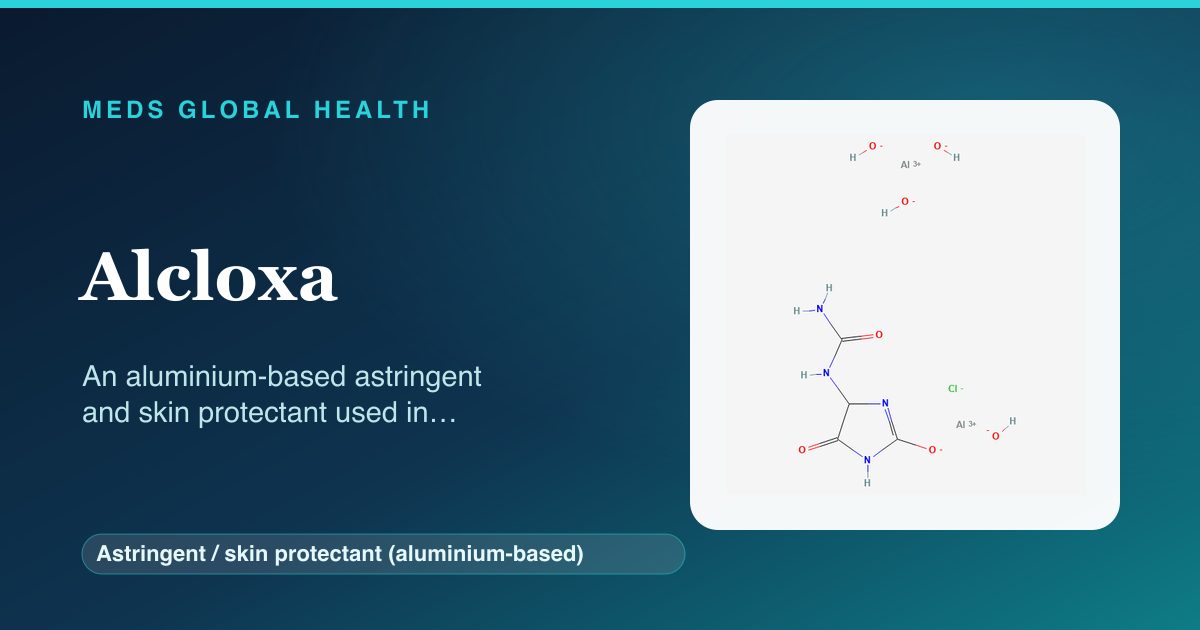
What it is
Alcloxa is an aluminium-based compound used as an ingredient in some topical skin products. It belongs to a group of substances called astringents, which gently tighten and soothe the skin surface, and it also acts as a skin protectant, helping to shield and calm the skin. It is applied directly to the skin and is not taken by mouth. Because it works locally on the surface, it is regarded as a minor, generally well-tolerated ingredient used for everyday skin care and minor skin irritation rather than for treating a specific disease.
How it works
As an astringent, alcloxa causes the very surface of the skin to tighten slightly, which can help calm minor irritation and reduce small amounts of weeping or oozing from the skin. As a skin protectant, it forms part of products designed to shield the skin and support its natural barrier. Because it stays mainly on the surface where it is applied, its effect is local and gentle, which is why it is generally well tolerated when used as directed on the skin.
Company & origin
An aluminium-based ingredient used in some topical skin products in the UK as an astringent and skin protectant.
Practical use
How to take Alcloxa
General, dose-free guidance — always follow your prescriber's and the leaflet's specific instructions.
- Apply it to the skin only, following the directions on the product or from your pharmacist.
- Use it on the affected area of skin and avoid getting it in the eyes, mouth or on broken skin unless advised.
- Do a small patch test first if you have sensitive skin, to check it does not irritate you.
- Stop using it if the skin becomes red, sore or more irritated, and seek advice.
- See a pharmacist or doctor if the skin problem is persistent, severe or spreading.
Weighing it up
Advantages & disadvantages of Alcloxa
Advantages
- A gentle astringent and skin protectant for minor skin irritation, used directly where needed.
- Generally well tolerated, with effects that stay mainly on the skin surface.
- Available within everyday topical skin products for local skin care.
Disadvantages
- Only helps minor, surface skin problems and is not a treatment for serious skin conditions.
- Can occasionally cause local irritation, redness or itching.
- For external use only and not suitable for the eyes or broken skin without advice.
Practical use
Good to know
The main thing to know about alcloxa is that it is a gentle, surface-acting skin ingredient rather than a strong medicine, so it is generally well tolerated when used as directed. It is for use on the skin only and should not be swallowed or put in the eyes. As with any topical product, some people may notice local irritation, redness or itching where it is applied, and if this happens it is sensible to stop using it. It is sensible to do a small patch test first if you have sensitive skin, and to keep it away from broken or badly damaged skin unless advised otherwise. If skin problems are persistent, severe or spreading, it is better to see a pharmacist or doctor rather than relying on a surface skin product.
Who should not take it / use with caution
- People who have had an allergic reaction to alcloxa or similar aluminium-based ingredients should avoid it.
- It should not be used in the eyes, mouth or on badly broken skin unless specifically advised.
- If you are unsure whether it suits your skin or condition, check with a pharmacist first.
Monitoring
- Watching how the skin responds and whether irritation develops.
- Stopping use if the skin becomes more sore or irritated.
- Seeking advice if the skin problem does not improve or gets worse.
Side effects
- Local irritation, redness or itching where it is applied in some people.
- Dryness or a tight feeling of the skin in the treated area.
- Rarely, an allergic skin reaction, which means it should be stopped.
Key interactions
- There are few known interactions, as it works mainly on the skin surface.
- Using several different products on the same area of skin may increase the chance of irritation.
- Tell your pharmacist about other skin products you are using on the same area.
Available as: An ingredient in topical skin products such as creams and lotions applied to the skin.
Answers
Alcloxa: frequently asked questions
What is alcloxa used for?
It is an aluminium-based ingredient used in some topical skin products as an astringent and skin protectant, helping to soothe and shield the skin and calm minor irritation.
Is it taken by mouth?
No. Alcloxa is for use on the skin only and should not be swallowed or put in the eyes.
Is it safe?
It is generally well tolerated as it works mainly on the skin surface, though some people may notice local irritation, in which case it should be stopped.
What does an astringent do?
An astringent gently tightens the very surface of the skin, which can help calm minor irritation and dry up small amounts of weeping.
When should I see a pharmacist or doctor?
If the skin problem is persistent, severe or spreading, or if the area becomes more irritated, it is better to seek advice rather than relying on a surface skin product.
Authoritative sources
- BNF
- NICE CKS
Building a medicines information resource?
We create evidence-led, dose-free drug and formulary references for teams.