An antiseptic found in sore-throat lozenges
Amylmetacresol
A mild antiseptic in throat lozenges that soothes sore throats and helps with minor mouth and throat infections.
What is Amylmetacresol?
Amylmetacresol is a mild antiseptic used in sore-throat lozenges, best known as an ingredient in Strepsils, where it is usually combined with another antiseptic called dichlorobenzyl alcohol. As you suck the lozenge it releases the antiseptic into the mouth and throat, helping against the germs behind minor mouth and throat infections, while the act of sucking soothes a sore, scratchy throat. It is an over-the-counter product for short-term relief of mild sore throats. It will not treat a serious throat infection, so a sore throat with a high temperature, severe pain or difficulty swallowing, or one that does not settle, should be checked.
Education and reference only. This is a plain-language guide to Amylmetacresol — it deliberately contains no doses. Doses depend on the person, the brand and the reason for treatment, and belong with your prescriber. Always check the BNF, the product labelling (SmPC) and follow medical advice.
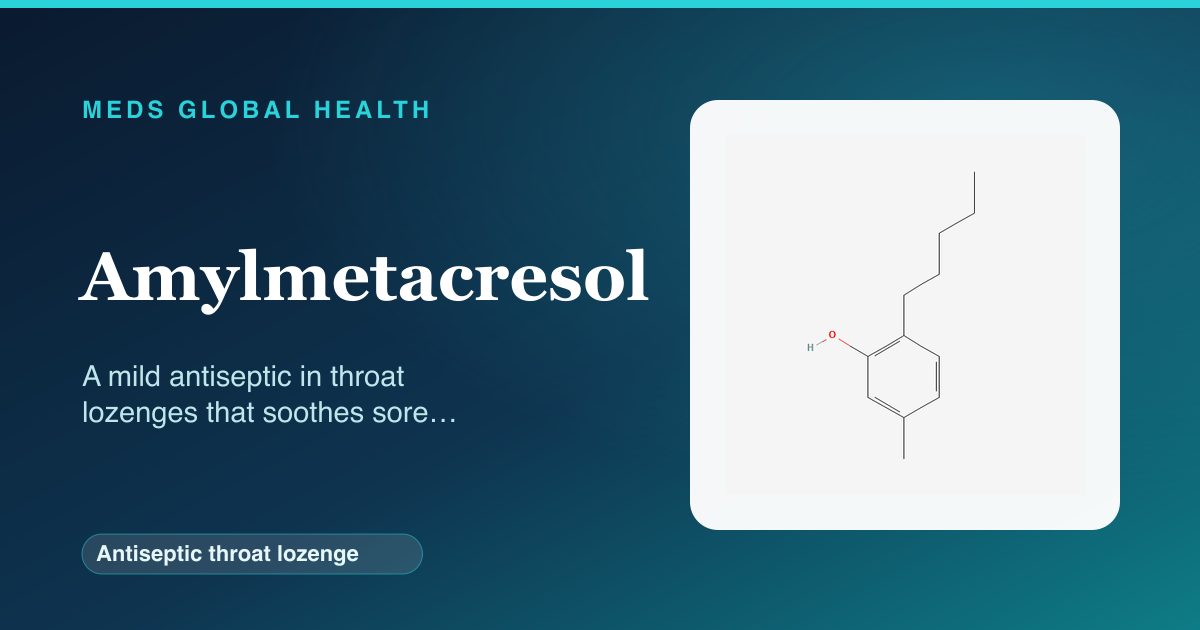
What it is
Amylmetacresol is a mild antiseptic used in lozenges to ease sore throats, most familiar as part of the Strepsils range, where it is typically combined with a second antiseptic, dichlorobenzyl alcohol. Antiseptics are agents that act against germs on surfaces such as the lining of the mouth and throat. The lozenge is designed to be sucked slowly so the antiseptic is released gradually where it is needed. It is an over-the-counter remedy for the short-term relief of minor sore throats and mouth discomfort, and many versions also contain flavourings or extra soothing ingredients.
How it works
As the lozenge dissolves slowly in the mouth, it releases amylmetacresol (and usually dichlorobenzyl alcohol) onto the lining of the mouth and throat, where these antiseptics act against some of the bacteria associated with minor throat infections. At the same time, sucking the lozenge encourages saliva and helps keep the throat moist, which itself soothes a dry, scratchy feeling. The overall effect is to ease the discomfort of a mild sore throat and tackle some surface germs, rather than to cure a deeper infection, which is why it is used for short-term relief.
Company & origin
A mild antiseptic used across the UK in sore-throat lozenges such as Strepsils, usually paired with another antiseptic called dichlorobenzyl alcohol.
Practical use
How to take Amylmetacresol
General, dose-free guidance — always follow your prescriber's and the leaflet's specific instructions.
- Suck one lozenge slowly so the antiseptic is released gradually, rather than chewing or swallowing it whole.
- Use it for short-term relief of a mild sore throat as directed on the pack.
- Choose a sugar-free version if you are watching sugar or are concerned about your teeth.
- Do not give lozenges to young children who could choke on them, and check the age advice on the pack.
- See a pharmacist or GP if your sore throat is severe, comes with a high temperature, or does not settle.
Weighing it up
Advantages & disadvantages of Amylmetacresol
Advantages
- Soothes a mild, scratchy sore throat and helps against some surface germs.
- Easy to use, widely available and works locally in the mouth and throat.
- Comes in many flavours and in sugar-free versions.
Disadvantages
- Gives short-term comfort rather than curing a throat infection.
- Some versions contain sugar, which is a consideration for teeth and diabetes.
- Lozenges are not suitable for young children because of the choking risk.
Practical use
Good to know
It helps to remember that these lozenges are for soothing a mild sore throat, not for treating a serious infection: most sore throats are caused by viruses and get better on their own within about a week, and antiseptic lozenges simply make you more comfortable while that happens. Sucking the lozenge slowly, rather than chewing or swallowing it whole, lets the antiseptic work where it is needed. Some versions contain sugar, which matters for teeth and for people with diabetes, so sugar-free options are worth asking about. Because the throat itself can be the source of discomfort, the soothing effect of any lozenge plays a real part. See a pharmacist or GP if a sore throat comes with a high temperature, severe pain, difficulty swallowing or breathing, or does not settle, especially in children.
Who should not take it / use with caution
- People who have had an allergic reaction to amylmetacresol or the other ingredients should not use it.
- Young children who could choke on a lozenge should not be given them; check the age advice on the pack.
- Anyone with a severe sore throat, high temperature or difficulty breathing should seek medical advice rather than rely on lozenges.
Monitoring
- No routine monitoring is needed.
- Reviewing symptoms if the sore throat does not settle within about a week.
- Seeking medical advice for warning signs such as severe pain or difficulty swallowing.
Side effects
- Side effects are uncommon, as it works mainly in the mouth and throat.
- Occasionally mild irritation or a tingling feeling in the mouth.
- Rarely, an allergic reaction to one of the ingredients, which needs medical attention.
Key interactions
- There are no well-known interactions with other medicines, as it acts locally.
- Tell your pharmacist about any other throat or mouth products you are using.
- Mention any allergies to lozenge ingredients before choosing a product.
Available as: Lozenges to suck in the mouth.
Answers
Amylmetacresol: frequently asked questions
What is amylmetacresol used for?
It is a mild antiseptic in sore-throat lozenges, such as Strepsils, used to soothe a mild sore throat and help against some of the germs behind minor mouth and throat infections.
How should I use the lozenge?
Suck it slowly so the antiseptic is released gradually onto the throat, rather than chewing or swallowing it whole.
Will it cure my throat infection?
No. It gives short-term comfort and helps with surface germs, but it does not cure a deeper infection; most sore throats settle on their own within about a week.
Are there sugar-free versions?
Yes. Some lozenges contain sugar, so ask your pharmacist for a sugar-free version if you are watching sugar or concerned about your teeth.
When should I see a doctor about a sore throat?
See a GP if your sore throat is severe, comes with a high temperature or difficulty swallowing or breathing, or does not settle, especially in children.
Authoritative sources
- BNF
- NICE CKS
Building a medicines information resource?
We create evidence-led, dose-free drug and formulary references for teams.