A platelet-lowering medicine
Anagrelide
A specialist platelet-lowering medicine used to bring down a high platelet count in essential thrombocythaemia.
What is Anagrelide?
Anagrelide is a specialist medicine that lowers a platelet count that is too high in essential thrombocythaemia, a bone-marrow condition in which the body makes far too many platelets (the cells that help blood to clot). Bringing the count down reduces the risk of harmful clots and bleeding. It is prescribed and monitored by a haematology team and is not for everyday use. Common effects include headache, palpitations and fluid retention, and because it can affect the heart it is used with extra care in people with heart problems. It is taken by mouth as a capsule.
Education and reference only. This is a plain-language guide to Anagrelide — it deliberately contains no doses. Doses depend on the person, the brand and the reason for treatment, and belong with your prescriber. Always check the BNF, the product labelling (SmPC) and follow medical advice.
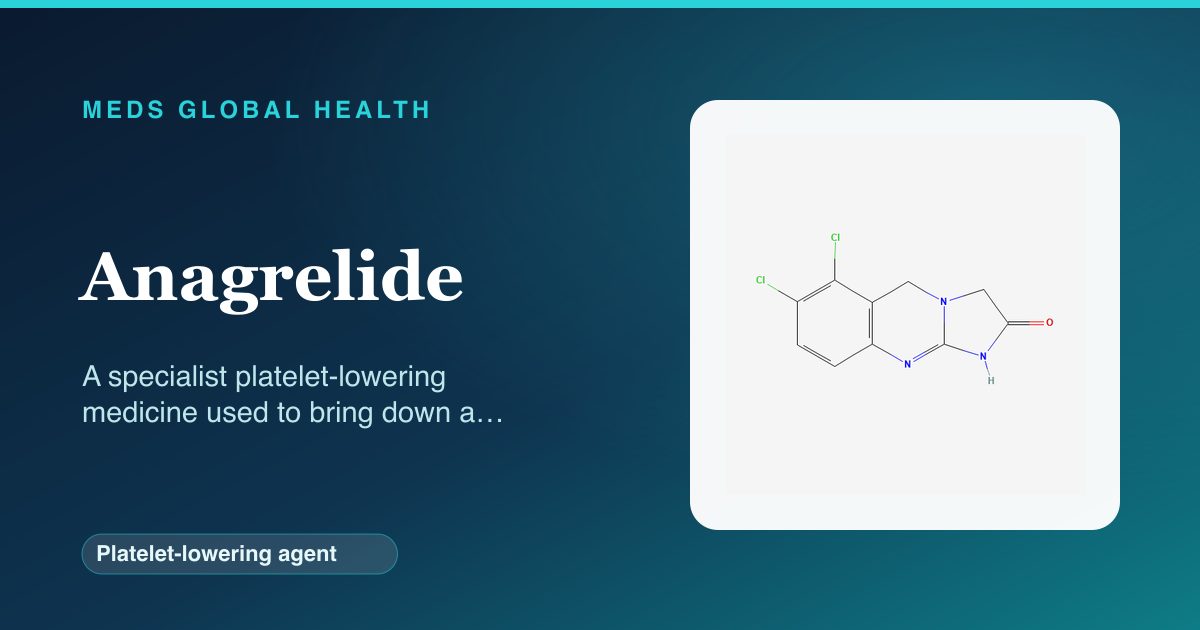
What it is
Anagrelide is a prescription-only medicine used to treat essential thrombocythaemia, a condition in which the bone marrow makes too many platelets. Platelets help blood to clot, so when there are far too many of them the blood can clot too easily, or, paradoxically, bleed more readily. Anagrelide is used in selected people, usually those at higher risk of complications, to bring the platelet count down to a safer level. It is started and supervised by a haematology specialist and is taken by mouth as a capsule, often over the long term.
How it works
Anagrelide works mainly in the bone marrow, where it reduces the production of platelets from the cells that make them. By slowing how many new platelets are released into the blood, it gradually brings a high count down towards a safer range, which lowers the risk of clots and bleeding linked to essential thrombocythaemia. It does not cure the underlying condition, so it is usually continued for as long as it is needed, with the dose adjusted according to regular blood counts.
Company & origin
Originated / developed by: Generic and branded (Takeda).
A specialist medicine used in the UK by haematology teams to lower a too-high platelet count in essential thrombocythaemia.
Practical use
How to take Anagrelide
General, dose-free guidance — always follow your prescriber's and the leaflet's specific instructions.
- Take it by mouth as directed by your haematology team, usually spread through the day, with or without food.
- Do not change the dose or stop taking it without advice, as the platelet count can rise again if it is stopped suddenly.
- Attend your regular blood tests so the dose can be adjusted to keep your platelet count in a safe range.
- Tell your team about any palpitations, breathlessness, swelling of the ankles or chest discomfort.
- Let other healthcare professionals know you take it, especially before surgery, dental work or starting new medicines.
Weighing it up
Advantages & disadvantages of Anagrelide
Advantages
- Effectively lowers a high platelet count in essential thrombocythaemia, reducing the risk of clots and bleeding.
- Taken by mouth and adjusted to each person using regular blood counts.
- Offers an alternative for people who cannot use or do not respond well to other platelet-lowering options.
Disadvantages
- Commonly causes headache, palpitations and fluid retention, particularly when first started.
- Can affect the heart, so it needs care in people with heart problems and may require heart monitoring.
- Does not cure the condition and usually has to be continued long term with regular blood tests.
Practical use
Good to know
Anagrelide is a long-term specialist treatment, and the platelet count is checked regularly so the dose can be fine-tuned. Headache is very common, especially when starting, and often settles; palpitations, a faster heartbeat and fluid retention can also occur, which is why heart health is assessed before and during treatment and why it is used cautiously in people with heart problems. Because it can affect the heart's rhythm, your team may arrange heart tracing tests. It is not suitable in pregnancy and effective contraception is advised. Do not stop it suddenly without advice, as the platelet count can rebound. Always tell other healthcare professionals that you take it, particularly before surgery or dental work.
Who should not take it / use with caution
- It is generally avoided in people with significant heart disease unless a specialist judges the benefit worthwhile.
- It is not recommended in pregnancy, and effective contraception is advised during treatment.
- It is used with caution in people with liver or kidney problems, who may need closer supervision.
Monitoring
- Regular blood counts to keep the platelet count in a safe range and guide the dose.
- Heart checks, which may include heart tracing tests, before and during treatment.
- Reviewing for fluid retention, palpitations and other side effects at each appointment.
Side effects
- Headache, palpitations, a faster heartbeat and fluid retention are common, especially at the start.
- Dizziness, nausea, diarrhoea and tiredness can also occur.
- Rarely, more serious heart-rhythm or heart-function problems, which is why monitoring is important.
Key interactions
- Can add to the effects of other medicines that affect the heart's rhythm, so the combination is reviewed carefully.
- Other platelet-lowering or blood-thinning medicines, including aspirin, may increase the risk of bleeding.
- Some medicines and substances change how anagrelide is handled by the body, so tell your team everything you take.
Available as: Capsules taken by mouth.
Answers
Anagrelide: frequently asked questions
What is anagrelide used for?
It is used to lower a platelet count that is too high in essential thrombocythaemia, a bone-marrow condition, to reduce the risk of clots and bleeding.
Why do I keep getting headaches on it?
Headache is a very common side effect, especially when starting, and it often settles; tell your team if it is troublesome.
Can it affect my heart?
Yes, it can cause palpitations and affect the heart's rhythm, which is why heart health is checked before and during treatment and it is used cautiously in heart disease.
Can I stop taking it if my count is normal?
Do not stop it without advice, as the platelet count can rebound; your haematology team will guide any changes.
Is it safe in pregnancy?
It is not recommended in pregnancy, and effective contraception is advised; tell your team if you are planning a pregnancy.
Authoritative sources
- BNF
- NICE CKS
Building a medicines information resource?
We create evidence-led, dose-free drug and formulary references for teams.