An androgen receptor inhibitor for prostate cancer
Apalutamide
A hormone-blocking tablet used to treat certain types of prostate cancer by stopping testosterone from driving the cancer.
What is Apalutamide?
Apalutamide is a specialist medicine used to treat certain types of prostate cancer. It works by blocking the receptor that male hormones such as testosterone act on, so the hormones can no longer fuel the cancer's growth. It is taken as tablets by mouth, usually alongside other hormone treatment that lowers testosterone, and is started and supervised by a cancer specialist. It can cause tiredness, skin rash, joint aches, hot flushes and falls, and it interacts with a number of other medicines, so the specialist team monitors treatment closely.
Education and reference only. This is a plain-language guide to Apalutamide — it deliberately contains no doses. Doses depend on the person, the brand and the reason for treatment, and belong with your prescriber. Always check the BNF, the product labelling (SmPC) and follow medical advice.
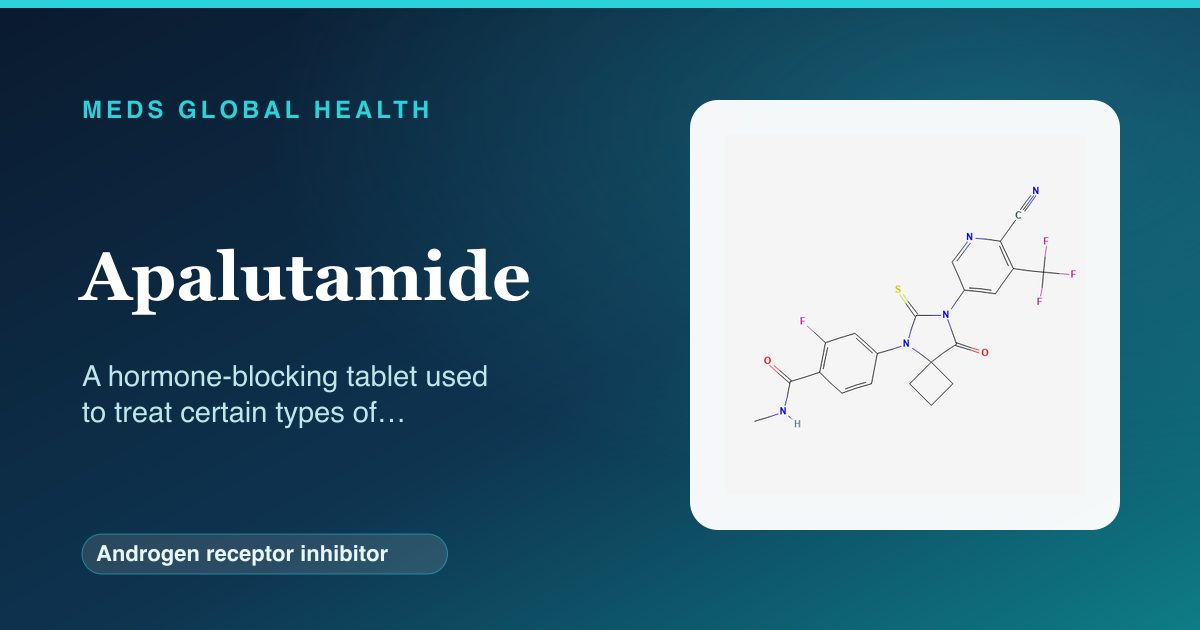
What it is
Apalutamide is a hormone-blocking medicine, known as an androgen receptor inhibitor, used to treat certain types of prostate cancer. Prostate cancer often relies on male hormones called androgens, especially testosterone, to grow. Apalutamide is usually used together with another treatment that lowers testosterone levels, so the cancer is starved of the hormone signals it depends on. It is taken by mouth as tablets, generally over the long term, and is prescribed and supervised by a cancer specialist team. It is used for prostate cancer that has not yet spread widely but is at high risk, and for some cancer that has started to spread.
How it works
Prostate cancer cells carry receptors that male hormones such as testosterone lock onto, which then tells the cancer to grow. Apalutamide blocks these androgen receptors so the hormones can no longer attach and send their growth signals. It also stops the receptor moving into the part of the cell where it would switch on cancer-driving activity. By cutting off this hormone signalling, it slows the cancer down and helps keep it under control. It is usually combined with treatment that lowers the body's testosterone, so the cancer is tackled from two directions at once.
Company & origin
A specialist hormone-blocking medicine used in the UK to treat certain types of prostate cancer, taken as tablets by mouth.
Practical use
How to take Apalutamide
General, dose-free guidance — always follow your prescriber's and the leaflet's specific instructions.
- Take the tablets by mouth once each day at about the same time, with or without food, as your specialist team directs.
- Swallow the tablets whole with water and try not to miss doses, as steady treatment works best.
- Keep taking any other hormone treatment you have been given, as apalutamide is usually used alongside it.
- Give your team a full list of all your medicines, as apalutamide interacts with many of them.
- Report any new or spreading skin rash, fits, or unusual symptoms promptly rather than waiting.
Weighing it up
Advantages & disadvantages of Apalutamide
Advantages
- An effective oral treatment that helps slow certain prostate cancers by blocking hormone signals.
- Taken as tablets at home rather than needing regular hospital infusions.
- Used alongside testosterone-lowering treatment to tackle the cancer from two directions.
Disadvantages
- Can cause tiredness, skin rash, hot flushes, joint aches and a higher chance of falls and fractures.
- Interacts with a wide range of other medicines, so careful review is needed.
- Needs ongoing specialist supervision and regular monitoring during treatment.
Practical use
Good to know
Apalutamide is usually taken alongside other hormone treatment that lowers testosterone, rather than on its own, so it is important to keep up with all parts of the treatment plan. A skin rash is a common side effect and can sometimes be troublesome, so any new or spreading rash should be reported to the team early. Tiredness, hot flushes, joint and muscle aches, and a higher chance of falls and bone fractures can also occur, so staying active where possible and looking after bone health matters. An important practical point is that apalutamide interacts with many other medicines, both by lowering their levels and being affected by them, so the team needs a complete list of everything you take, including anything bought over the counter. Rarely it can cause seizures or serious skin reactions, which need urgent attention.
Who should not take it / use with caution
- People who have had a serious allergic reaction to apalutamide should not take it.
- It is not for use in women, and certainly not in pregnancy, as it is a prostate cancer treatment for men.
- It is used with caution in people with a history of seizures, heart problems or significant falls, under specialist guidance.
Monitoring
- Regular reviews to check how well the cancer is responding, including blood tests such as PSA.
- Watching for side effects such as rash, falls, fractures and high blood pressure.
- Reviewing other medicines over time because of the many possible interactions.
Side effects
- Tiredness, hot flushes, joint or muscle aches and a higher chance of falls.
- Skin rash, which can sometimes be widespread and needs reporting.
- High blood pressure, weight changes or diarrhoea in some people.
- Rarely but seriously, seizures or severe skin reactions, which need urgent medical attention.
Key interactions
- It can lower the levels of many other medicines, making them less effective, so a full medicines list is essential.
- Some medicines can change how well apalutamide itself works, so tell your team about everything you take.
- Medicines that can lower the seizure threshold should be reviewed, as apalutamide can rarely cause seizures.
Available as: Tablets taken by mouth.
Answers
Apalutamide: frequently asked questions
What is apalutamide used for?
It is used to treat certain types of prostate cancer by blocking the receptor that male hormones such as testosterone act on, so the hormones can no longer fuel the cancer.
Do I take it on its own?
Usually no. Apalutamide is normally taken alongside other hormone treatment that lowers testosterone, so keep up with all parts of your treatment plan.
Why does my team need my full medicines list?
Apalutamide interacts with many other medicines, often lowering their levels, so a complete list, including anything bought over the counter, helps keep treatment safe and effective.
What should I do about a skin rash?
A rash is a common side effect; report any new or spreading rash to your team early, as it sometimes needs treatment or a change in the plan.
Can it cause falls?
Yes, it can cause tiredness and a higher chance of falls and fractures, so take care and tell your team, who will keep an eye on your bone health.
Authoritative sources
- BNF
- NICE CKS
Building a medicines information resource?
We create evidence-led, dose-free drug and formulary references for teams.