A gepant to prevent migraine
Atogepant
A daily oral tablet taken regularly to prevent migraine attacks.
What is Atogepant?
Atogepant (brand name Qulipta) is a newer oral medicine called a gepant, which works by blocking CGRP, a natural body chemical involved in migraine. It is a preventer, taken as a tablet once a day to reduce how often migraines happen, so it is not used to treat an attack that has already started. It offers a tablet-based alternative to the anti-CGRP injections for preventing migraine. The most common side effects are constipation, nausea and tiredness. As a newer class, gepants are often used after older preventers, and it is not recommended in pregnancy without advice.
Education and reference only. This is a plain-language guide to Atogepant — it deliberately contains no doses. Doses depend on the person, the brand and the reason for treatment, and belong with your prescriber. Always check the BNF, the product labelling (SmPC) and follow medical advice.
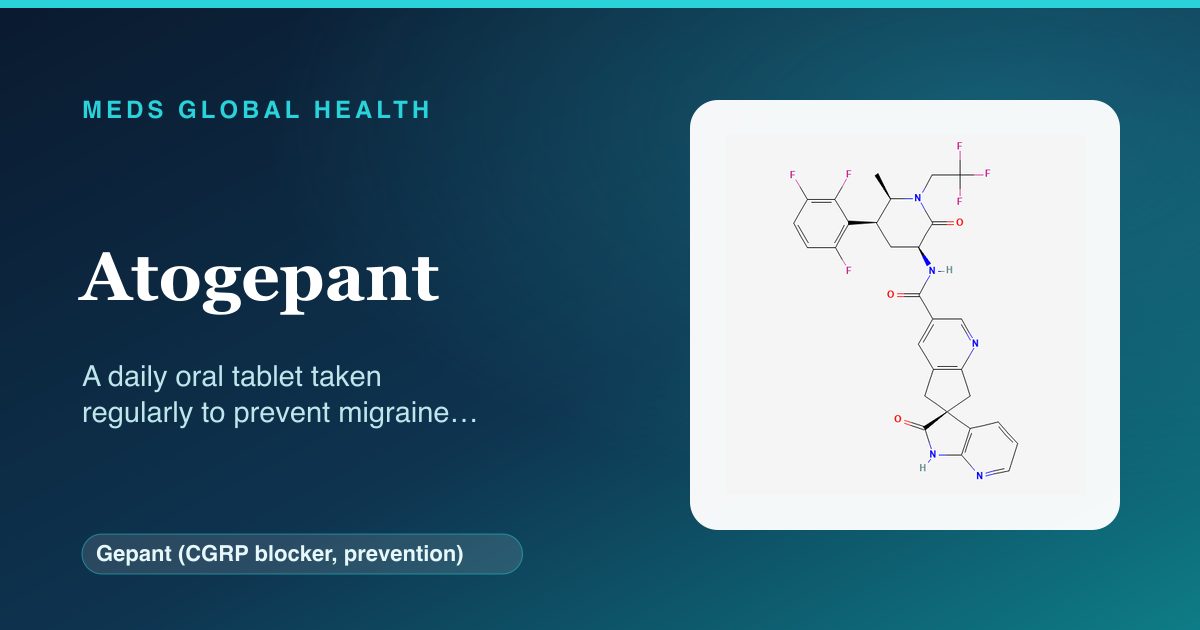
What it is
Atogepant is a gepant, a newer type of tablet that blocks CGRP (calcitonin gene-related peptide), a body chemical that plays a key part in migraine. It is used as a preventer, taken regularly to reduce how often migraines happen rather than to stop an attack already underway. It is taken once a day by mouth, which makes it a tablet-based option for prevention, in contrast to the anti-CGRP medicines that are given by injection. In the UK it is usually considered for people with frequent migraine who have tried older preventers.
How it works
CGRP rises during a migraine and helps drive the pain and other symptoms. Atogepant blocks the place where CGRP acts, and when taken regularly this reduces how often migraines occur and how severe they are. Because it is a preventer, it is taken every day and its benefit builds up over weeks rather than relieving an attack within minutes. It does not treat a migraine that has already begun, so a separate acute treatment is still needed for breakthrough attacks. Unlike triptans, gepants do not narrow blood vessels.
Company & origin
Originated / developed by: AbbVie.
A newer daily oral medicine used in the UK to help prevent migraine in people who have frequent attacks.
What it treats
Conditions Atogepant is used for
Practical use
How to take Atogepant
General, dose-free guidance — always follow your prescriber's and the leaflet's specific instructions.
- Take one tablet by mouth once a day, at around the same time each day, to prevent migraine.
- Take it regularly; it will not relieve an attack that has already started, so keep using your usual acute treatment as well.
- It can be taken with or without food.
- Allow a few months to judge whether it is working, as the benefit builds up gradually.
- Tell your prescriber if you are pregnant, planning a pregnancy or breastfeeding, as it is not recommended without advice.
Weighing it up
Advantages & disadvantages of Atogepant
Advantages
- A once-a-day tablet for preventing migraine, with no injections needed.
- Offers a newer option for people whose migraines have not responded to older preventers.
- Does not narrow blood vessels, unlike triptans.
Disadvantages
- It is a preventer only and does not treat an attack that has already begun.
- Commonly causes constipation, nausea or tiredness, especially at first.
- As a newer medicine, it is usually offered after older preventers have been tried.
Practical use
Good to know
It helps to understand the difference between preventers and acute treatments: atogepant is a preventer, taken every day to make migraines less frequent, while you still need a separate medicine to treat an attack when one happens. The gepants are a newer class developed for people who have not done well with older preventers, so it is usually offered after those have been tried. Being a daily tablet, it suits people who would rather not have injections. Benefit is judged over a few months. The most common effects are constipation, nausea and tiredness, which often settle. It is not recommended in pregnancy without advice, so discuss it if you are planning a pregnancy or breastfeeding.
Who should not take it / use with caution
- It is not recommended in pregnancy without advice, and should be discussed before planning a pregnancy or while breastfeeding.
- People who have had a serious allergic reaction to atogepant or its ingredients should not use it.
- It is used with care in people with significant liver problems, who should tell their prescriber.
Monitoring
- Reviewing after a few months whether migraines have reduced enough to continue.
- Checking liver health if there are existing liver problems.
- Discussing pregnancy plans, breastfeeding and overall migraine control at review.
Side effects
- Constipation, nausea and tiredness are among the most common effects and often settle.
- Some people notice reduced appetite.
- Rarely, an allergic reaction such as rash or swelling can occur, which needs medical attention.
Key interactions
- Certain medicines that affect how the liver handles drugs can change atogepant levels, so tell your prescriber what you take.
- It is best not to combine it too closely with other CGRP-blocking medicines without advice.
- Always mention other migraine treatments so your overall plan can be reviewed.
Available as: Tablets taken by mouth.
Answers
Atogepant: frequently asked questions
Is atogepant a preventer or an acute treatment?
It is a preventer, taken as a daily tablet to make migraines less frequent, so you still need a separate acute treatment for an attack that has started.
How is it different from the anti-CGRP injections?
It works on the same chemical, CGRP, but it is a daily tablet rather than an injection, which suits people who would rather not inject.
What are the common side effects?
Constipation, nausea and tiredness are the most common, and they often settle as your body adjusts.
How long before I know if it works?
Its benefit builds up gradually, so it is usually judged over a few months before deciding whether to continue.
Is it safe in pregnancy?
It is not recommended in pregnancy without advice, so discuss it if you are pregnant, planning a pregnancy or breastfeeding.
Authoritative sources
- BNF
- NICE CKS
Building a medicines information resource?
We create evidence-led, dose-free drug and formulary references for teams.