A non-stimulant medicine for ADHD
Atomoxetine
A non-stimulant medicine for ADHD, taken daily by mouth, that is not a controlled drug but needs watching for mood changes and effects on heart rate and blood pressure.
What is Atomoxetine?
Atomoxetine is a non-stimulant medicine used to treat attention deficit hyperactivity disorder (ADHD). Unlike stimulant ADHD medicines, it is not a controlled drug, and it works steadily rather than giving a quick on-off effect, often taking some weeks to show its full benefit. Important things to know are that it can rarely cause liver problems and suicidal thoughts, especially early in treatment, and it can raise heart rate and blood pressure. Anyone taking it should be alert for new or worsening low mood or thoughts of self-harm, and for signs of liver trouble such as yellowing skin or dark urine.
Education and reference only. This is a plain-language guide to Atomoxetine — it deliberately contains no doses. Doses depend on the person, the brand and the reason for treatment, and belong with your prescriber. Always check the BNF, the product labelling (SmPC) and follow medical advice.
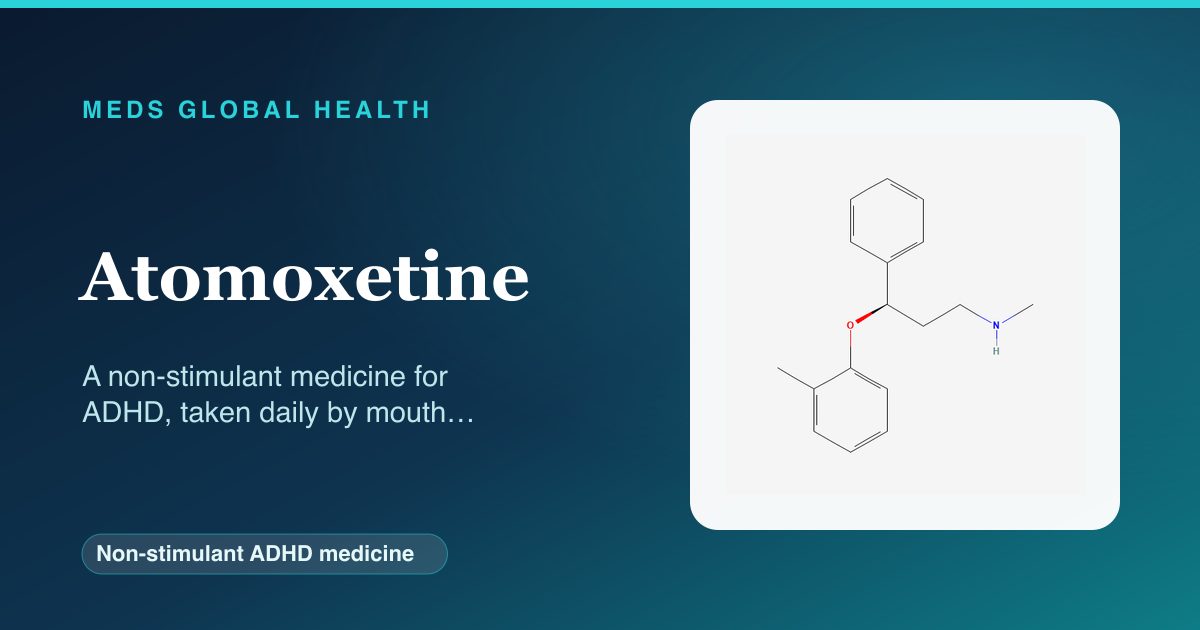
What it is
Atomoxetine is a medicine used to treat ADHD, a condition that affects attention, activity levels and impulsiveness. It is a non-stimulant, meaning it works in a different way from the more commonly used stimulant medicines, and unlike them it is not a controlled drug. It is often considered when stimulants are unsuitable, not tolerated or not preferred. It is taken by mouth once or twice a day and tends to work gradually, so it is taken every day rather than only when needed, building up its effect over several weeks.
How it works
Atomoxetine increases the amount of a brain chemical called noradrenaline by stopping it being taken back up into nerve cells. Noradrenaline is involved in attention and self-control, so boosting it helps improve concentration and reduce restlessness and impulsiveness in ADHD. Because it works steadily in the background rather than giving a rapid effect, it does not produce the quick lift that stimulants can, and its full benefit usually builds up over a few weeks. This continuous action is also why it is taken every day at regular times.
Company & origin
A non-stimulant medicine used in the UK for attention deficit hyperactivity disorder (ADHD) in children, young people and adults.
Practical use
How to take Atomoxetine
General, dose-free guidance — always follow your prescriber's and the leaflet's specific instructions.
- Take it by mouth every day at about the same time, as it works steadily rather than only when needed.
- Be patient, as it can take several weeks to show its full effect.
- Watch for new or worsening low mood, agitation or thoughts of self-harm, especially early on, and seek help quickly.
- Report signs of liver problems such as yellowing of the skin or eyes, dark urine or unexplained tummy pain.
- Tell your prescriber about any heart problems and all your other medicines before starting.
Weighing it up
Advantages & disadvantages of Atomoxetine
Advantages
- An effective ADHD treatment that is not a stimulant and not a controlled drug.
- Works steadily through the day without the quick on-off effect of stimulants.
- A useful option when stimulants are unsuitable, not tolerated or not preferred.
Disadvantages
- Can take several weeks to show its full benefit.
- Carries a warning about, rarely, liver injury and about new or worsening suicidal thoughts, especially early.
- Can raise heart rate and blood pressure, so these need checking.
Practical use
Good to know
A key thing to understand is that atomoxetine works gradually, so it can take several weeks to see the full benefit, and it should be taken regularly rather than only on difficult days. Because it is a non-stimulant and not a controlled drug, some people and families prefer it. Two important safety points are that, rarely, it can cause liver injury and that it carries a warning about new or worsening low mood, agitation or thoughts of self-harm, particularly when first started or after a dose change; any such changes should be reported promptly. It can also raise heart rate and blood pressure, so these are checked before and during treatment. Tell your prescriber about any heart problems and all your other medicines before starting.
Who should not take it / use with caution
- People with certain serious heart or circulation problems, where it is used with great caution or avoided.
- People with severe liver problems, or who develop signs of liver injury while taking it.
- People taking, or who have recently taken, monoamine oxidase inhibitor (MAOI) antidepressants.
- People who have had a serious allergic reaction to atomoxetine should not take it.
Monitoring
- Checking heart rate and blood pressure before and during treatment.
- Watching height, weight and appetite, particularly in children and young people.
- Watching for mood changes or thoughts of self-harm and for signs of liver problems.
Side effects
- Reduced appetite, nausea, tummy upset or feeling sick, especially early on.
- A faster heartbeat or raised blood pressure.
- Tiredness, dizziness, dry mouth or trouble sleeping.
- Rarely but seriously, liver injury or new or worsening thoughts of self-harm, which need urgent attention.
Key interactions
- Monoamine oxidase inhibitor (MAOI) antidepressants must not be combined with it.
- Some antidepressants and other medicines can raise its levels, so a full medicines list matters.
- Medicines that raise blood pressure or heart rate may add to its effects on the heart.
Available as: Capsules and an oral liquid taken by mouth.
Answers
Atomoxetine: frequently asked questions
What is atomoxetine used for?
It is a non-stimulant medicine used to treat attention deficit hyperactivity disorder (ADHD) in children, young people and adults.
How is it different from stimulant ADHD medicines?
It is not a stimulant and not a controlled drug, and it works steadily over weeks rather than giving the quick on-off effect of stimulants.
How long does it take to work?
It works gradually, so it can take several weeks to see the full benefit; it should be taken every day rather than only when needed.
What serious effects should I watch for?
Watch for new or worsening low mood or thoughts of self-harm, especially early on, and for signs of liver problems such as yellow skin or dark urine, and seek help promptly.
Does it affect the heart?
It can raise heart rate and blood pressure, so these are checked before and during treatment, and any heart problems should be mentioned beforehand.
Authoritative sources
- BNF
- NICE CKS
Building a medicines information resource?
We create evidence-led, dose-free drug and formulary references for teams.