An oral treatment for ANCA-associated vasculitis
Avacopan
An oral capsule used with other medicines for ANCA-associated vasculitis, a serious condition where the immune system attacks small blood vessels.
What is Avacopan?
Avacopan is a specialist tablet used, together with other medicines, to treat ANCA-associated vasculitis, a serious condition in which the immune system inflames small blood vessels and can damage the kidneys and other organs. It works by blocking part of the immune system (the C5a receptor) that drives this inflammation, and it can help reduce the amount of steroid needed. It is taken by mouth and started by specialist teams. Its most important risks are liver problems, which need regular blood tests, serious infections, and reactivation of hepatitis B, so people are screened and monitored carefully.
Education and reference only. This is a plain-language guide to Avacopan — it deliberately contains no doses. Doses depend on the person, the brand and the reason for treatment, and belong with your prescriber. Always check the BNF, the product labelling (SmPC) and follow medical advice.
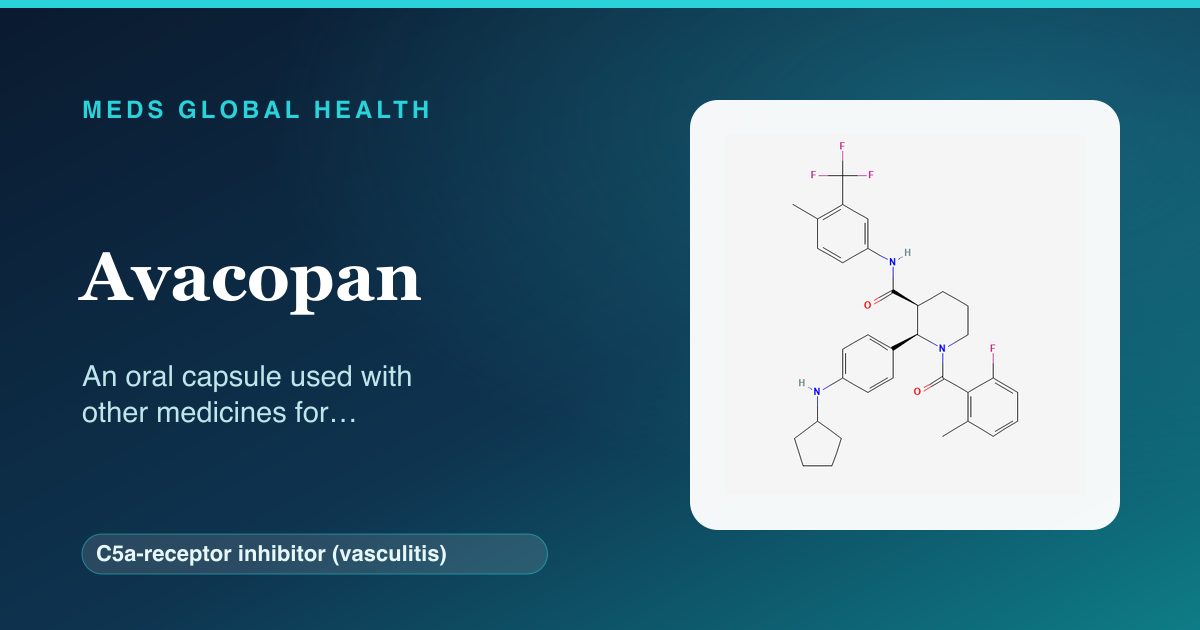
What it is
Avacopan is a medicine used as part of the treatment of ANCA-associated vasculitis, a group of serious conditions in which the immune system attacks small blood vessels, causing inflammation that can harm the kidneys, lungs and other organs. It is given alongside other treatments, such as medicines that calm the immune system, and one of its aims is to allow less use of steroids. It is taken by mouth as a capsule and is started and supervised by specialist teams who screen for infection and check liver health before and during treatment.
How it works
In ANCA-associated vasculitis, part of the immune system called the complement system becomes overactive and helps drive the damaging inflammation of the blood vessels. One of its products, called C5a, attracts and activates inflammatory cells. Avacopan blocks the receptor that C5a acts on, so these cells are less easily switched on and the harmful inflammation is reduced. By targeting this pathway, it supports control of the disease and can help reduce reliance on steroids, which carry their own long-term problems.
Company & origin
A specialist oral medicine used in the UK, alongside other treatment, for a serious type of blood-vessel inflammation called ANCA-associated vasculitis.
Practical use
How to take Avacopan
General, dose-free guidance — always follow your prescriber's and the leaflet's specific instructions.
- Take the capsules by mouth as prescribed, usually with food, at evenly spaced times each day.
- Swallow the capsules whole and do not crush or chew them.
- Keep up with the liver blood tests your specialist arranges, as the medicine can affect the liver.
- Tell your team promptly about signs of infection or of liver trouble, such as yellow skin or eyes, dark urine or feeling very tired.
- Continue your other vasculitis treatments as advised, since avacopan is used alongside them.
Weighing it up
Advantages & disadvantages of Avacopan
Advantages
- Helps control ANCA-associated vasculitis by blocking part of the immune system that drives the inflammation.
- Can reduce the amount of steroid needed, lessening steroid-related side effects.
- Taken by mouth as part of a specialist treatment plan.
Disadvantages
- Can affect the liver, so regular liver blood tests are needed.
- Can increase the risk of serious infections and allow hepatitis B to flare up.
- Used only under specialist care, alongside other treatments, with careful monitoring.
Practical use
Good to know
The most important safety point with avacopan is that it can affect the liver, so liver blood tests are checked before starting and regularly during treatment, and the medicine may be paused or stopped if these become abnormal. Because it dampens part of the immune system, it can make serious infections more likely, so people are watched for signs of infection. It can also allow a past hepatitis B infection to flare up again, so people are screened for hepatitis B beforehand. It is used alongside other vasculitis treatments rather than on its own, and a key benefit is that it can help reduce the amount of steroid needed. Live vaccines are generally avoided, and people should report any signs of infection or liver trouble, such as yellowing of the skin or eyes, promptly.
Who should not take it / use with caution
- People who have had a serious allergic reaction to avacopan should not take it.
- It is generally avoided in people with significant active liver disease until this is assessed.
- It is used with caution, and with screening, in people with a current or past hepatitis B infection.
- It is avoided in people with a serious active infection until this is treated, and is not recommended in pregnancy without specialist advice.
Monitoring
- Liver blood tests before starting and regularly during treatment.
- Screening for infections, including hepatitis B, before starting and watching for infection during treatment.
- Reviewing how well the vasculitis is controlled and checking for side effects over time.
Side effects
- Nausea, diarrhoea or other stomach upset.
- Headache or dizziness in some people.
- Changes in liver blood tests, which is why the liver is monitored.
- A higher chance of infections, and rarely reactivation of hepatitis B.
Key interactions
- It can interact with medicines that strongly affect certain liver enzymes, so give your team a full medicines list.
- Taking it with other medicines that weaken the immune system increases the infection risk.
- Live vaccines are generally avoided while on treatment.
Available as: Capsules taken by mouth.
Answers
Avacopan: frequently asked questions
What is avacopan used for?
It is used, together with other medicines, to treat ANCA-associated vasculitis, a serious condition where the immune system inflames small blood vessels and can damage the kidneys and other organs.
How does it work?
It blocks the C5a receptor, part of an overactive immune pathway that drives the damaging inflammation in vasculitis, which helps control the disease and can reduce the steroid needed.
Why are liver blood tests important?
Avacopan can affect the liver, so liver function is checked before starting and regularly during treatment, and the medicine may be paused or stopped if the tests become abnormal.
Can it affect infections?
Yes. Because it dampens part of the immune system it can make serious infections more likely and can allow a past hepatitis B infection to flare up, so people are screened and monitored.
Is it used on its own?
No. It is used alongside other vasculitis treatments rather than by itself, and one of its benefits is helping to reduce the amount of steroid needed.
Authoritative sources
- BNF
- NICE CKS
Building a medicines information resource?
We create evidence-led, dose-free drug and formulary references for teams.