A VEGFR-targeted tablet for advanced kidney cancer
Axitinib
A targeted tablet used for advanced kidney cancer that works by cutting off the tumour's blood supply.
What is Axitinib?
Axitinib is a targeted cancer medicine used for advanced kidney cancer. It is a type of treatment called a VEGFR tyrosine kinase inhibitor, which works by blocking the signals tumours use to grow new blood vessels, so the cancer is starved of its blood supply. It is taken by mouth, usually twice a day. The most common and important side effect is high blood pressure, and it can also cause bleeding, affect the thyroid and lead to protein leaking into the urine, so it needs regular monitoring under specialist care.
Education and reference only. This is a plain-language guide to Axitinib — it deliberately contains no doses. Doses depend on the person, the brand and the reason for treatment, and belong with your prescriber. Always check the BNF, the product labelling (SmPC) and follow medical advice.
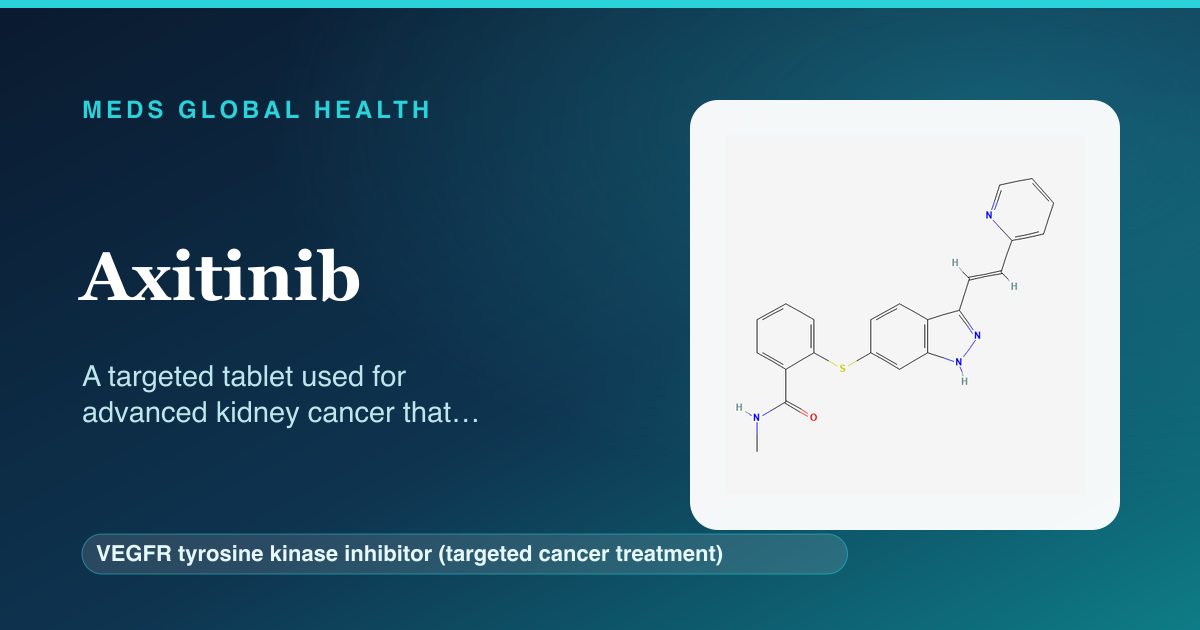
What it is
Axitinib is a targeted cancer treatment known as a tyrosine kinase inhibitor that acts mainly on VEGFR, a signal tumours use to build their own blood supply. It is used for advanced kidney cancer, often after another treatment has been tried, and is sometimes combined with an immunotherapy medicine. It is taken by mouth and is prescribed by a cancer specialist team, who tailor the dose to the individual and watch closely for side effects, particularly blood pressure. It works to control the cancer rather than to cure it.
How it works
Tumours need a blood supply to grow, and they make signals that prompt the body to build new blood vessels towards them. Axitinib blocks the receptors (VEGFR) that respond to these signals, so the tumour struggles to form new vessels and is starved of the oxygen and nutrients it needs. This slows the cancer's growth. Because blocking these blood-vessel signals also affects normal blood vessels, it can raise blood pressure and cause bleeding or protein leaking into the urine. It is taken every day, continuously, for as long as it controls the cancer and is tolerated, with the dose adjusted to suit the person.
Company & origin
A targeted cancer medicine used in the UK for advanced kidney cancer (renal cell carcinoma).
Practical use
How to take Axitinib
General, dose-free guidance — always follow your prescriber's and the leaflet's specific instructions.
- Take it by mouth as prescribed, usually twice a day, with or without food.
- Swallow the tablets whole with water; do not chew or crush them.
- Have your blood pressure checked regularly and report any severe headaches or symptoms of high blood pressure.
- Report any unusual bleeding or bruising, and avoid grapefruit, which can change how the medicine works.
- Keep taking it every day unless your specialist tells you to pause or stop.
Weighing it up
Advantages & disadvantages of Axitinib
Advantages
- A targeted tablet that can control advanced kidney cancer by cutting off its blood supply.
- Taken by mouth at home rather than as an infusion.
- The dose can be adjusted to suit the individual and how well it is tolerated.
Disadvantages
- Commonly raises blood pressure, often soon after starting.
- Can increase the risk of bleeding and cause protein to leak into the urine.
- Can affect the thyroid and is not suitable in pregnancy.
Practical use
Good to know
The most common and important effect of axitinib is a rise in blood pressure, which can happen quickly after starting; blood pressure is checked regularly and often needs treatment, and it should ideally be well controlled before starting. It can increase the risk of bleeding, so unusual bruising, nosebleeds, blood in the urine or stools, or coughing up blood should be reported. It can affect the thyroid gland, so thyroid blood tests are monitored, and it can cause protein to leak into the urine, which is also checked. Other common effects include tiredness, diarrhoea, a hoarse voice and soreness of the palms and soles. As with other targeted cancer medicines, it can harm a developing baby, so effective contraception is needed during treatment and for a time afterwards.
Who should not take it / use with caution
- People who have had a serious allergic reaction to axitinib should not take it.
- It must not be used in pregnancy, as it can harm a developing baby, and effective contraception is needed during treatment and for a time after.
- It is used with great care in people with uncontrolled high blood pressure, recent bleeding or significant heart problems.
- It should only be used under specialist cancer care with regular monitoring.
Monitoring
- Regular blood pressure checks, especially early in treatment.
- Thyroid blood tests and urine checks for protein.
- Watching for bleeding and reviewing other side effects over time.
Side effects
- High blood pressure, which is common and often needs treatment.
- Tiredness, diarrhoea, a hoarse voice and soreness of the palms and soles.
- An increased risk of bleeding, such as nosebleeds or blood in the urine.
- Thyroid changes and protein leaking into the urine, which are monitored.
Key interactions
- Grapefruit and some antifungal and antibiotic medicines can raise its levels, so tell your team everything you take.
- Some medicines, including certain epilepsy treatments and St John's wort, can lower its levels and reduce how well it works.
- Care is needed with blood-thinning medicines because of the bleeding risk.
Available as: Tablets taken by mouth.
Answers
Axitinib: frequently asked questions
What is axitinib used for?
It is a targeted medicine used for advanced kidney cancer, working by blocking the signals that tumours use to build their own blood supply.
Why does it raise blood pressure?
By blocking blood-vessel signals it also affects normal blood vessels, which commonly raises blood pressure, so this is checked regularly and often treated.
What bleeding should I report?
Report unusual bruising, nosebleeds, blood in the urine or stools, or coughing up blood, as the medicine can increase the risk of bleeding.
Why are my thyroid and urine checked?
Axitinib can affect the thyroid gland and can cause protein to leak into the urine, so blood and urine tests help catch these early.
Is it safe in pregnancy?
No. It can harm a developing baby, so effective contraception is needed during treatment and for a time afterwards; discuss any plans with your specialist.
Authoritative sources
- BNF
- NICE CKS
Building a medicines information resource?
We create evidence-led, dose-free drug and formulary references for teams.