A chemotherapy injection for some bone-marrow cancers
Azacitidine
A chemotherapy medicine used for myelodysplastic syndromes and some types of acute myeloid leukaemia.
What is Azacitidine?
Azacitidine is a specialist chemotherapy medicine used to treat myelodysplastic syndromes (MDS) and some types of acute myeloid leukaemia (AML), which are disorders of the bone marrow where blood cells are made. It is a hypomethylating agent, meaning it works by changing the chemical 'switches' on the DNA of abnormal cells. It is usually given as an injection under the skin, and there is also a tablet form. The main risks are low blood counts leading to infection and bleeding, nausea, injection-site reactions and, early on, a complication called tumour lysis. It can harm an unborn baby, so contraception is important.
Education and reference only. This is a plain-language guide to Azacitidine — it deliberately contains no doses. Doses depend on the person, the brand and the reason for treatment, and belong with your prescriber. Always check the BNF, the product labelling (SmPC) and follow medical advice.
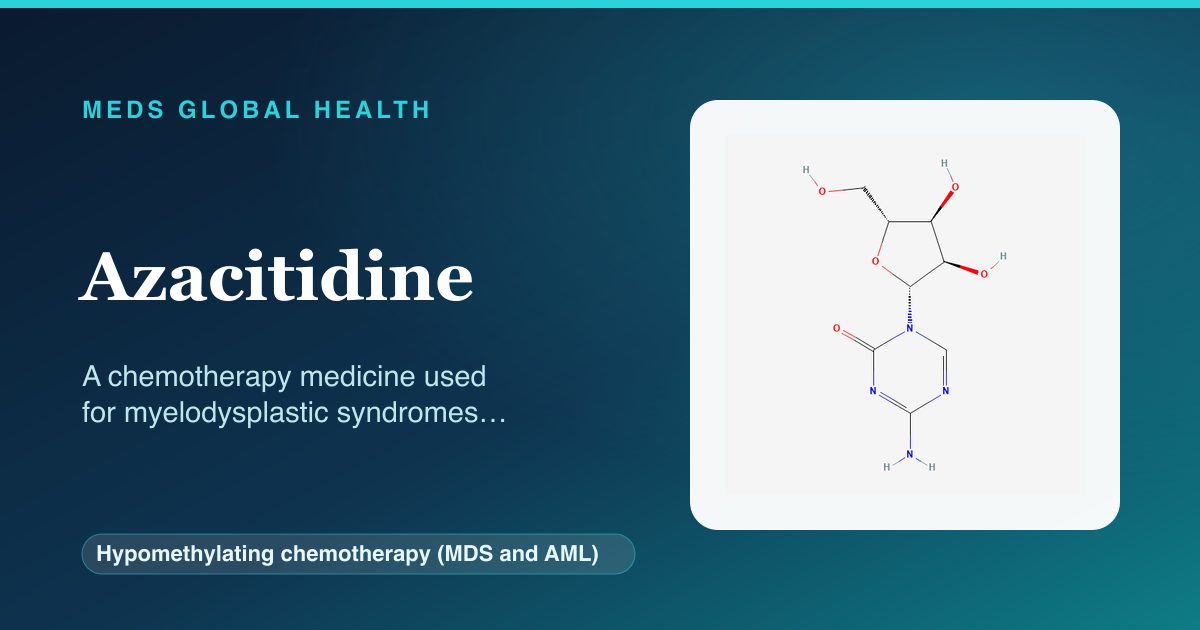
What it is
Azacitidine is a chemotherapy medicine used to treat myelodysplastic syndromes (MDS) and certain types of acute myeloid leukaemia (AML), conditions in which the bone marrow makes too few healthy blood cells or too many abnormal ones. It belongs to a group called hypomethylating agents. It is usually given as an injection under the skin in courses, and there is also a tablet form used in some situations. It is prescribed and supervised by a haematology specialist team, with regular blood tests between courses.
How it works
Cells control which of their genes are switched on or off partly through chemical tags on the DNA, a process called methylation. In MDS and some leukaemias, this control goes wrong and stops cells maturing properly. Azacitidine acts as a hypomethylating agent, removing some of these tags so that genes which encourage cells to grow up normally and die when they should can work again. This helps the bone marrow produce healthier blood cells and reduces the abnormal ones. It is given in repeated courses because the effect builds up over time.
Company & origin
A specialist chemotherapy used in the UK to treat certain bone-marrow disorders and leukaemias, given by injection or as a tablet.
Practical use
How to take Azacitidine
General, dose-free guidance — always follow your prescriber's and the leaflet's specific instructions.
- It is usually given as an injection under the skin in hospital or a specialist unit; the tablet form is taken by mouth as prescribed.
- Attend all your courses and blood tests, as treatment works over repeated cycles.
- Report any fever or signs of infection straight away, and tell your team about unusual bruising or bleeding.
- Use anti-sickness medicine as advised, and tell your team if injection-site soreness is troublesome.
- Use reliable contraception as advised, and drink fluids as recommended, especially early in treatment.
Weighing it up
Advantages & disadvantages of Azacitidine
Advantages
- An effective treatment for myelodysplastic syndromes and some types of acute myeloid leukaemia.
- Works in a different way from traditional chemotherapy by changing how genes are switched on and off.
- Often given as an injection under the skin, with a tablet form available in some situations.
Disadvantages
- Lowers blood counts, raising the risk of infection and bleeding.
- Commonly causes nausea, tiredness and injection-site reactions.
- Carries a risk of tumour lysis early on and can harm an unborn baby.
Practical use
Good to know
The main thing to understand about azacitidine is its effect on the bone marrow. Blood counts often fall, especially in the first courses, which raises the risk of infection and bleeding, so report any fever or signs of infection straight away and tell your team about unusual bruising or bleeding. Nausea and tiredness are common, and anti-sickness medicine helps. When given under the skin, it can cause redness, soreness or a lump at the injection site, which usually settles. Early in treatment there is a risk of tumour lysis, where rapid breakdown of cancer cells upsets the body's chemistry, so you may have extra blood tests and fluids at first. It can harm an unborn baby, so effective contraception is important during treatment.
Who should not take it / use with caution
- People who have had a serious allergic reaction to azacitidine should not have it.
- It is not suitable for people with advanced liver cancer, and is used with caution in serious liver or kidney problems.
- It is not suitable in pregnancy because it can harm an unborn baby; effective contraception is needed.
Monitoring
- Regular blood counts to check blood cells before and between courses.
- Liver and kidney blood tests, and chemistry checks for tumour lysis early on.
- Watching for signs of infection, bleeding and how the bone marrow is responding.
Side effects
- Low blood counts, leading to a greater risk of infection, bleeding and tiredness.
- Nausea, vomiting, constipation or diarrhoea, and reduced appetite.
- Redness, soreness or a lump where an injection is given under the skin.
- Early in treatment, tumour lysis, where rapid cell breakdown upsets the body's chemistry.
Key interactions
- Other medicines that lower blood counts can add to this effect, as planned by your team.
- Live vaccines are generally avoided during treatment because the immune system is weakened.
- Always share a full medicines list, including anything bought without a prescription, with your team.
Available as: A powder made up for injection under the skin or into a vein, and tablets taken by mouth.
Answers
Azacitidine: frequently asked questions
What is azacitidine used for?
It is a chemotherapy medicine used to treat myelodysplastic syndromes (MDS) and some types of acute myeloid leukaemia (AML), disorders of the bone marrow.
How does it work?
It is a hypomethylating agent that changes the chemical tags on the DNA of abnormal cells, helping the bone marrow make healthier blood cells.
Why do I need so many blood tests?
It lowers blood counts and can affect the liver and kidneys, so regular blood tests check your blood cells and catch any problems early.
What is tumour lysis?
It is a complication early in treatment where cancer cells break down quickly and upset the body's chemistry; you may have extra fluids and blood tests to prevent it.
Can I have it in pregnancy?
No. It can harm an unborn baby, so reliable contraception is important during treatment; discuss any pregnancy plans with your specialist.
Authoritative sources
- BNF
- NICE CKS
Building a medicines information resource?
We create evidence-led, dose-free drug and formulary references for teams.