An alkylating chemotherapy medicine for certain blood cancers
Bendamustine
A chemotherapy medicine used to treat certain blood cancers such as some lymphomas and chronic lymphocytic leukaemia.
What is Bendamustine?
Bendamustine is a chemotherapy medicine used to treat certain blood cancers, including some types of lymphoma and chronic lymphocytic leukaemia. It works by damaging the DNA of cancer cells so they cannot grow and divide. It is given as a drip into a vein in hospital, in cycles, by a cancer team. The most important risks are a fall in blood cells that raises the chance of serious infection, reactions during or after the infusion, and a rapid breakdown of cancer cells called tumour lysis. It can harm an unborn baby, so reliable contraception is essential.
Education and reference only. This is a plain-language guide to Bendamustine — it deliberately contains no doses. Doses depend on the person, the brand and the reason for treatment, and belong with your prescriber. Always check the BNF, the product labelling (SmPC) and follow medical advice.
What it is
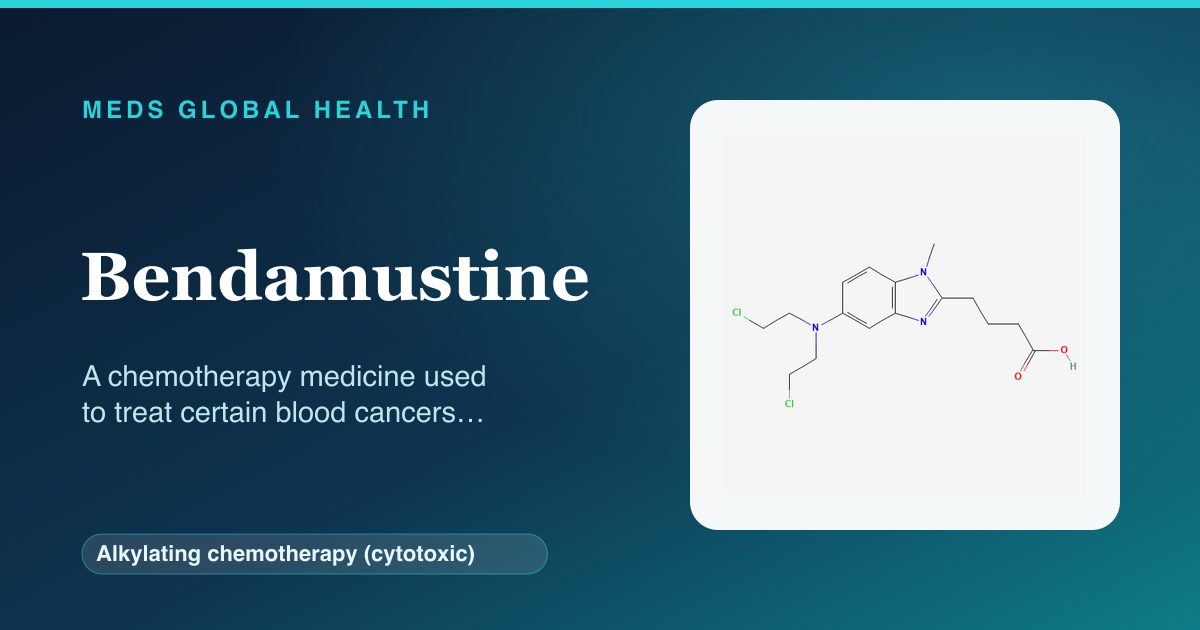
Bendamustine is a chemotherapy (cytotoxic) medicine of a type called an alkylating agent. It is used to treat certain blood cancers, particularly some forms of non-Hodgkin lymphoma and chronic lymphocytic leukaemia, often when other treatments are not suitable or have stopped working. It is given as an infusion into a vein in hospital, usually in repeated cycles with rest periods in between, and always under the care of a cancer specialist team. It is a powerful medicine that affects rapidly dividing cells, which is why it works against cancer but also causes side effects.
How it works
Bendamustine works by attaching to and damaging the DNA inside cells, which stops cancer cells from copying themselves and triggers them to die. Because cancer cells divide quickly, they are especially vulnerable to this DNA damage. However, some healthy cells that divide quickly, such as those in the bone marrow that make blood cells, are also affected, which explains many of its side effects. Treatment is given in cycles so the body, particularly the bone marrow, has time to recover between doses, and blood counts are checked to guide timing.
Company & origin
A chemotherapy medicine used in the UK to treat certain lymphomas and chronic lymphocytic leukaemia, given in hospital under a cancer specialist.
Practical use
How to take Bendamustine
General, dose-free guidance — always follow your prescriber's and the leaflet's specific instructions.
- It is given as a drip into a vein in hospital by your cancer team, in cycles, not as something you take at home.
- Attend all your appointments and blood tests, as your counts decide when the next dose can safely be given.
- Report any fever, chills, sore throat or other sign of infection straight away, as your defences are lowered.
- Tell your team about any rash, itching or reaction during or after the infusion, as skin reactions can be serious.
- Use reliable contraception during treatment and for the time your team advises, as it can harm an unborn baby.
Weighing it up
Advantages & disadvantages of Bendamustine
Advantages
- An effective chemotherapy option for certain lymphomas and chronic lymphocytic leukaemia.
- Given in cycles with rest periods that allow the bone marrow to recover.
- A useful choice when some other treatments are not suitable or have stopped working.
Disadvantages
- Lowers blood cells, raising the risk of serious infection, bleeding and tiredness.
- Can cause infusion and skin reactions, some of which are serious.
- Carries risks of tumour lysis early on and, over time, a small added risk of a second cancer.
Practical use
Good to know
The most important thing to understand is that bendamustine lowers the blood cells made in the bone marrow, which can leave you prone to serious infections, bleeding or tiredness, so any fever or sign of infection needs urgent medical attention. Reactions can happen during or after the infusion, including skin rashes that can occasionally be severe, so the team watches you closely and you should report any rash or itching. When treatment first kills a lot of cancer cells quickly, a problem called tumour lysis syndrome can occur, where chemicals released into the blood affect the kidneys and heart, so you may be given fluids and other medicines to prevent it. Over the long term, chemotherapy like this can slightly raise the risk of a second cancer. Because it can seriously harm an unborn baby, reliable contraception during and for a time after treatment is essential for both women and men.
Who should not take it / use with caution
- People who have had a serious allergic reaction to bendamustine should not receive it.
- It is not used in pregnancy because it can seriously harm an unborn baby, and breastfeeding is avoided.
- It is used with caution, and with dose adjustment, in people with significant liver or kidney problems, under specialist care.
Monitoring
- Regular blood counts to check the bone marrow and guide the timing of each cycle.
- Checking kidney function and blood chemistry, especially early on, to watch for tumour lysis syndrome.
- Watching for infection, infusion or skin reactions, and reviewing liver function during treatment.
Side effects
- A fall in blood cells, causing tiredness, a higher risk of infection and easier bruising or bleeding.
- Nausea, vomiting or stomach upset, for which anti-sickness medicines are usually given.
- Skin rashes or infusion reactions, which can occasionally be severe.
- Rarely but seriously, tumour lysis syndrome early in treatment, severe infections, or a second cancer over the long term.
Key interactions
- It is used with care alongside other medicines that lower blood cells or weaken the immune system.
- Live vaccines are generally avoided during treatment because the immune system is weakened.
- Some medicines can affect how bendamustine is handled by the body, so give your team a full medicines list.
Available as: A powder or solution made up into a drip given into a vein in hospital.
Answers
Bendamustine: frequently asked questions
What is bendamustine used for?
It is a chemotherapy medicine used to treat certain blood cancers, including some types of non-Hodgkin lymphoma and chronic lymphocytic leukaemia.
How is it given?
It is given as a drip into a vein in hospital by a cancer team, in repeated cycles with rest periods so the bone marrow can recover.
Why am I more likely to get infections?
It lowers the blood cells made in the bone marrow, including those that fight infection, so any fever or sign of infection needs urgent medical attention.
What is tumour lysis syndrome?
When treatment kills a lot of cancer cells quickly, chemicals released into the blood can affect the kidneys and heart, so you may be given fluids and other medicines to prevent it.
Can I get pregnant while on it?
No. Bendamustine can seriously harm an unborn baby, so reliable contraception is essential during treatment and for the time your team advises, for both women and men.
Authoritative sources
- BNF
- NICE CKS
Building a medicines information resource?
We create evidence-led, dose-free drug and formulary references for teams.