A skin antiseptic and disinfectant, also used as a preservative
Benzalkonium chloride
An over-the-counter antiseptic used to clean skin and minor wounds, and widely used as a preservative in other medicines.
What is Benzalkonium chloride?
Benzalkonium chloride is a widely used antiseptic and disinfectant that kills bacteria and some other germs on the skin. It is found in first-aid sprays, antiseptic wipes, creams and washes, and is also used in tiny amounts as a preservative in many eye drops, nasal sprays and inhalers. On the skin it is used to clean minor cuts, grazes and scrapes, and to disinfect intact skin before a procedure. It is for external use only and should be kept away from the eyes and deep or serious wounds. It is generally well tolerated but can cause stinging or irritation in some people.
Education and reference only. This is a plain-language guide to Benzalkonium chloride — it deliberately contains no doses. Doses depend on the person, the brand and the reason for treatment, and belong with your prescriber. Always check the BNF, the product labelling (SmPC) and follow medical advice.
What it is
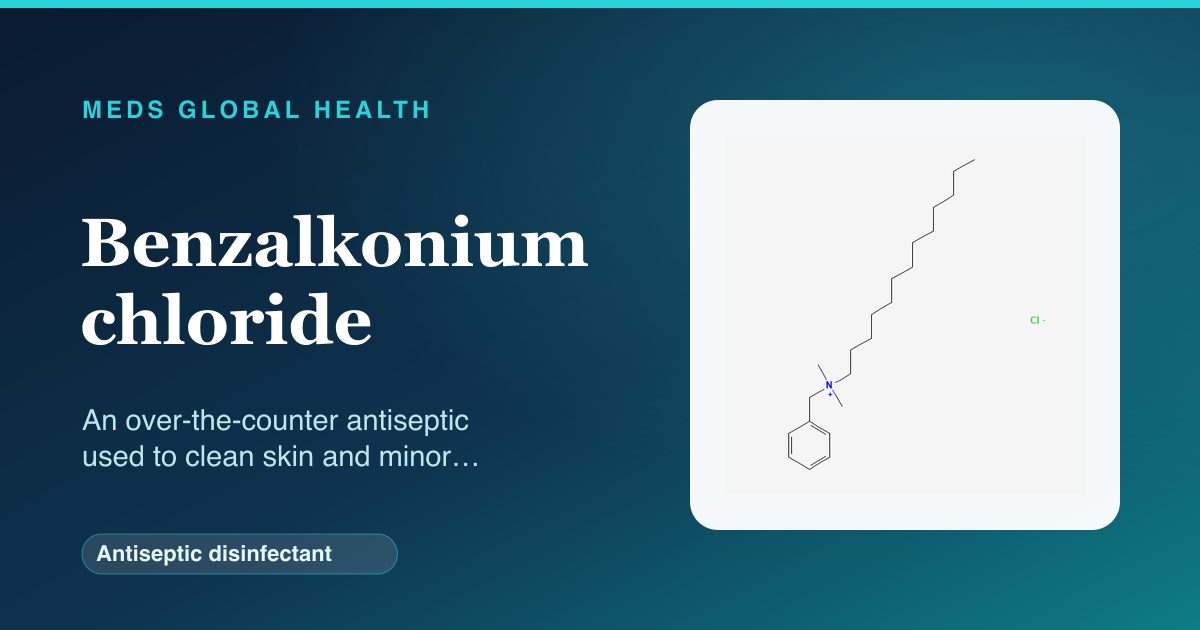
Benzalkonium chloride is a member of a group of antiseptics known as quaternary ammonium compounds. It is one of the most commonly used disinfectants in everyday products, from first-aid antiseptics to hand washes and surface cleaners. In healthcare and at home it is used to clean the skin and minor wounds, and in very low concentrations it is added to many liquid medicines, eye drops and nasal sprays as a preservative to stop them growing germs once opened. It is available without a prescription in a range of antiseptic products and is valued for being effective, fast-acting and reasonably gentle on the skin when used as directed.
How it works
Benzalkonium chloride works by disrupting the outer surface of bacteria and some other microbes. Its molecules are attracted to the fatty membranes that surround germs, and they break these membranes apart, causing the contents to leak out so the organism dies. This makes it effective against many bacteria and some fungi and viruses on the skin and on surfaces. Because the effect is on the germ's outer layer, it acts quickly where it is applied. The same germ-killing action is what makes it useful as a preservative in tiny amounts, keeping multi-use medicines free of contamination once the container has been opened.
Company & origin
A long-established antiseptic found across the UK in first-aid products, antiseptic wipes and creams, and as a preservative in many eye drops, nasal sprays and other medicines.
Practical use
How to take Benzalkonium chloride
General, dose-free guidance — always follow your prescriber's and the leaflet's specific instructions.
- Use it on the skin only, to clean minor cuts, grazes and intact skin, following the instructions on the pack.
- Apply it to the affected area as directed, using a clean swab or the product's own applicator.
- Keep it away from the eyes, inside the mouth and deep or serious wounds.
- Stop using it and seek advice if the skin becomes red, sore or develops a rash.
- See a pharmacist or GP if a wound looks infected or is not healing.
Weighing it up
Advantages & disadvantages of Benzalkonium chloride
Advantages
- Cleans skin and minor wounds quickly and is effective against many common germs.
- Widely available in convenient forms such as sprays, wipes and creams.
- Useful as a gentle preservative that keeps other medicines free of contamination.
Disadvantages
- For external use only and not suitable for deep, large or serious wounds.
- Can sting or irritate the skin, and some people become sensitised with repeated use.
- As a preservative in eye drops, frequent use can irritate sensitive eyes.
Practical use
Good to know
Benzalkonium chloride is for external use on the skin and is not meant to be swallowed or used in the eyes unless it is part of a product specifically designed for that. It is best for cleaning minor cuts, grazes and intact skin rather than for deep, large or heavily contaminated wounds, which need proper medical assessment. Some people find it stings or irritates the skin, and a small number can become sensitised to it with repeated use, so stop using it if a rash develops. As a preservative in eye drops and nasal sprays it is generally fine for occasional use, but people who use these products frequently or have sensitive eyes may be advised to choose preservative-free versions. If a wound shows signs of infection, such as spreading redness, swelling, heat or pus, it should be seen by a pharmacist or GP rather than just treated with antiseptic.
Who should not take it / use with caution
- People who have had an allergic or irritant reaction to benzalkonium chloride should not use it.
- It should not be used in or near the eyes, or on deep or serious wounds, unless in a product made for that purpose.
- Anyone with frequently irritated eyes from preserved drops should ask about preservative-free alternatives.
Monitoring
- No routine monitoring is needed for ordinary short-term skin use.
- Checking the skin for signs of irritation or allergy with repeated use.
- Watching wounds for signs of infection that need medical review.
Side effects
- Stinging, redness or mild irritation where it is applied.
- An itchy rash or contact allergy in people who become sensitised.
- Eye irritation if a preserved product is used very frequently in sensitive eyes.
Key interactions
- Soaps and some other cleansers can reduce its antiseptic effect, so rinse them off first.
- It should not be mixed with anionic detergents, which can inactivate it.
- Tell the pharmacist about other skin products you are using on the same area.
Available as: Antiseptic solutions, sprays, wipes and creams for the skin, and a preservative in many other medicines.
Answers
Benzalkonium chloride: frequently asked questions
What is benzalkonium chloride used for?
It is an antiseptic used to clean the skin and minor cuts and grazes, and it is also used in tiny amounts as a preservative in many eye drops, nasal sprays and other medicines.
Can I put it on a deep wound?
No. It is meant for minor cuts, grazes and intact skin. Deep, large or heavily contaminated wounds need proper medical assessment rather than home antiseptic.
Why is it in my eye drops?
It is added in a very small amount as a preservative to stop the drops growing germs once the bottle is opened. If you use drops often and find them irritating, ask about preservative-free versions.
Can it cause an allergy?
A small number of people become sensitised with repeated use and develop an itchy rash. If your skin becomes red or sore, stop using it and ask a pharmacist.
Is it safe to swallow?
No. It is for external use on the skin only and should not be swallowed. Keep it out of the reach of children and away from the eyes.
Authoritative sources
- BNF
- NICE CKS
Building a medicines information resource?
We create evidence-led, dose-free drug and formulary references for teams.