A skin antiseptic used in first-aid products
Benzethonium chloride
An over-the-counter antiseptic used on the skin and in first-aid products to help clean minor cuts and grazes.
What is Benzethonium chloride?
Benzethonium chloride is an antiseptic that kills bacteria and some other germs on the skin. It is found in first-aid sprays, creams, washes and cleansing products, and is used to clean minor cuts, grazes and intact skin. It belongs to the same family of antiseptics as benzalkonium chloride and works in a similar way by breaking down the outer surface of germs. It is for external use only and should be kept away from the eyes and out of deep or serious wounds. It is usually well tolerated but can sometimes cause stinging or irritation.
Education and reference only. This is a plain-language guide to Benzethonium chloride — it deliberately contains no doses. Doses depend on the person, the brand and the reason for treatment, and belong with your prescriber. Always check the BNF, the product labelling (SmPC) and follow medical advice.
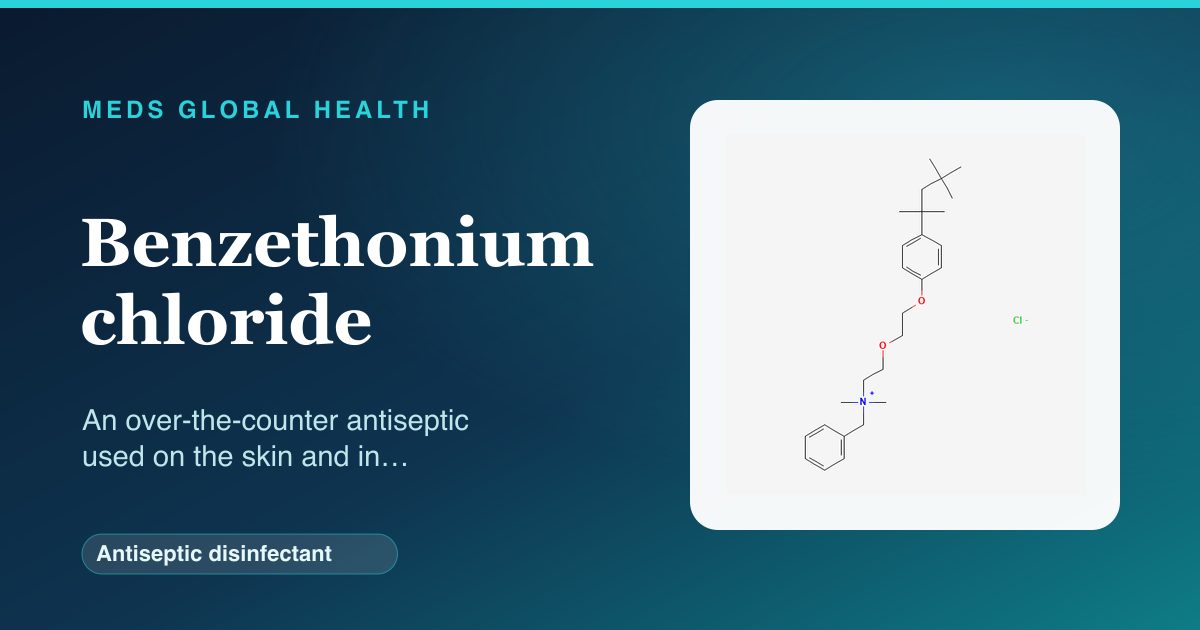
What it is
Benzethonium chloride is an antiseptic in the quaternary ammonium group, closely related to benzalkonium chloride. It is used to disinfect the skin and is found in a variety of over-the-counter first-aid products, antiseptic cleansers and some personal-care items. Its main role is to reduce the number of germs on the skin and on minor wounds, helping to lower the chance of infection. It is available without a prescription and is chosen for its broad action against many common bacteria and some fungi, together with being reasonably gentle on the skin when used as directed.
How it works
Benzethonium chloride works by attacking the outer membrane that surrounds bacteria and some other microbes. Its molecules attach to the germ's fatty outer layer and disrupt it, so the cell can no longer hold itself together and dies. This action covers a broad range of common germs and happens quickly at the site where it is applied. Because it acts on the surface of the germ rather than being absorbed deep into the body, its main effect is local antisepsis on the skin and minor wounds where it is put on.
Company & origin
An antiseptic used in first-aid sprays, creams and cleansing products to clean the skin and minor wounds, similar to other quaternary ammonium antiseptics.
Practical use
How to take Benzethonium chloride
General, dose-free guidance — always follow your prescriber's and the leaflet's specific instructions.
- Use it on the skin only, to clean minor cuts, grazes and intact skin, following the pack instructions.
- Apply it to the affected area as directed, using a clean swab or the product's applicator.
- Keep it away from the eyes, mouth and deep or serious wounds.
- Stop using it if the skin becomes red, sore or develops a rash.
- Seek advice from a pharmacist or GP if a wound looks infected or will not heal.
Weighing it up
Advantages & disadvantages of Benzethonium chloride
Advantages
- Cleans the skin and minor wounds and is effective against many common germs.
- Available in handy first-aid forms such as sprays, creams and washes.
- Acts quickly at the place where it is applied.
Disadvantages
- For external use only and not suitable for deep or serious wounds.
- Can sting or irritate the skin, particularly where it is broken.
- Its effect can be reduced by soaps and some detergents.
Practical use
Good to know
Benzethonium chloride is for use on the skin only and should not be swallowed or put in the eyes. It is suited to cleaning minor cuts, grazes and intact skin rather than deep, large or seriously contaminated wounds, which need proper medical care. Like other antiseptics in its group, it can sting or irritate, especially on broken skin, and a few people may become sensitised with repeated use and develop a rash. Plain soap and some detergents can reduce its effect, so it works best on skin that has been rinsed clean first. If a wound shows signs of infection, such as spreading redness, swelling or pus, it should be checked by a pharmacist or GP rather than relying on antiseptic alone.
Who should not take it / use with caution
- People who have had an allergic or irritant reaction to benzethonium chloride should not use it.
- It should not be used in the eyes, swallowed, or applied to deep or serious wounds.
- Anyone whose skin reacts badly to it should stop and choose a different antiseptic.
Monitoring
- No routine monitoring is needed for ordinary short-term skin use.
- Checking the skin for irritation or allergy with repeated use.
- Watching wounds for signs of infection that need medical review.
Side effects
- Stinging, redness or mild irritation where it is applied.
- An itchy rash or contact allergy in people who become sensitised.
- Irritation if it is used on large areas of broken skin.
Key interactions
- Soaps and anionic detergents can inactivate it, so rinse the skin clean first.
- Avoid mixing it with other strong cleansers on the same area.
- Tell the pharmacist about other skin products you are using nearby.
Available as: Antiseptic solutions, sprays, creams and washes for use on the skin.
Answers
Benzethonium chloride: frequently asked questions
What is benzethonium chloride used for?
It is an antiseptic used to clean the skin and minor cuts and grazes. It is found in many first-aid sprays, creams and cleansing products.
How is it different from benzalkonium chloride?
They are closely related antiseptics from the same chemical family and work in a similar way. Both kill germs by breaking down their outer surface and are used for similar purposes.
Can I use it on a deep cut?
No. It is meant for minor cuts, grazes and intact skin. Deep, large or heavily contaminated wounds need proper medical assessment.
Why does it sometimes sting?
Antiseptics can sting on broken skin. If the stinging is severe or the skin becomes red and sore, stop using it and ask a pharmacist.
Is it safe to swallow?
No. It is for external use on the skin only and should not be swallowed. Keep it away from the eyes and out of reach of children.
Authoritative sources
- BNF
- NICE CKS
Building a medicines information resource?
We create evidence-led, dose-free drug and formulary references for teams.