A medicine for Chagas disease
Benznidazole
A specialist medicine used to treat Chagas disease, a parasitic infection mainly seen in parts of Latin America.
What is Benznidazole?
Benznidazole is a specialist medicine used to treat Chagas disease, also called American trypanosomiasis, a parasitic infection spread mainly by insects in parts of Latin America that can damage the heart and gut over many years. It is taken by mouth in a course aimed at clearing the parasite. It can cause skin rashes, sometimes serious, as well as nerve effects such as tingling or numbness in the hands and feet, and it can lower blood cell counts. Alcohol must be avoided. Because of these risks, it needs close specialist supervision and monitoring.
Education and reference only. This is a plain-language guide to Benznidazole — it deliberately contains no doses. Doses depend on the person, the brand and the reason for treatment, and belong with your prescriber. Always check the BNF, the product labelling (SmPC) and follow medical advice.
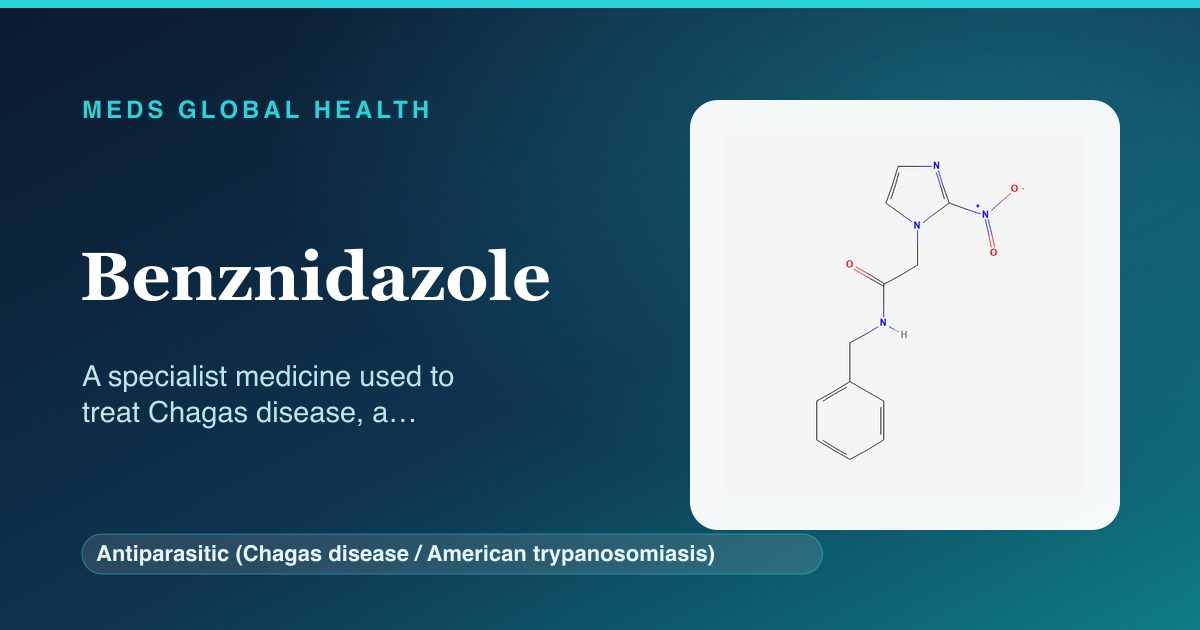
What it is
Benznidazole is an antiparasitic medicine used to treat Chagas disease, also known as American trypanosomiasis. This is an infection caused by a parasite spread mainly through the bite of certain insects in parts of Central and South America, and over many years it can damage the heart and digestive system. Benznidazole is taken by mouth as a course of treatment aimed at clearing the parasite from the body, particularly when the infection is caught early or in younger people. It is a specialist medicine, started and supervised by infection or tropical-disease teams.
How it works
Chagas disease is caused by a parasite that can stay in the body for years and gradually damage organs such as the heart. Benznidazole works against this parasite, helping to clear it from the body, which is most effective in the early stages of infection and in younger people but may still be used in some longer-standing cases. By reducing or clearing the parasite, it aims to prevent or limit long-term damage. Because it acts on the parasite throughout the body over a course of treatment, it is taken regularly for the whole course, with monitoring for side effects.
Company & origin
A specialist medicine used in the UK to treat Chagas disease, a parasitic infection found mainly in parts of Latin America.
Practical use
How to take Benznidazole
General, dose-free guidance — always follow your prescriber's and the leaflet's specific instructions.
- Take it by mouth for the full course as prescribed, even if you feel well, to give the best chance of clearing the parasite.
- Avoid alcohol completely during treatment, as the combination can cause an unpleasant reaction.
- Report any skin rash promptly, and seek urgent help for a spreading rash, blistering or rash with fever.
- Report tingling, numbness or pins and needles in the hands or feet, as this can be a nerve side effect.
- Attend your blood tests and monitoring appointments throughout the course.
Weighing it up
Advantages & disadvantages of Benznidazole
Advantages
- Can clear the parasite that causes Chagas disease, especially when treated early or in younger people.
- Aims to prevent or limit long-term damage to the heart and gut.
- Taken by mouth as a defined course of treatment.
Disadvantages
- Commonly causes skin rashes, some of which can be serious.
- Can cause nerve effects such as tingling and numbness in the hands and feet.
- Can lower blood cell counts and requires alcohol avoidance and close monitoring.
Practical use
Good to know
There are several important safety points with benznidazole. It commonly causes skin rashes, and although most are mild, some can be serious, so any spreading rash, blistering or rash with fever should be reported urgently. It can also affect the nerves, causing tingling, numbness or pins and needles in the hands and feet (peripheral neuropathy), which should be reported as it may mean the treatment needs changing. It can lower the blood cell counts, so blood tests are part of treatment. Alcohol must be avoided during treatment, as the combination can cause an unpleasant reaction. Because of all this, it needs close specialist supervision, and it is important to attend monitoring appointments and report new symptoms promptly.
Who should not take it / use with caution
- People who have had a serious allergic reaction to benznidazole should not take it.
- It is used with caution, or avoided, in people with serious liver, kidney or blood problems.
- It is generally avoided in pregnancy and used in breastfeeding only on specialist advice.
Monitoring
- Regular blood tests to check blood cell counts and the liver.
- Watching for skin rashes and for nerve symptoms in the hands and feet.
- Reviewing how treatment is tolerated and whether the course should continue.
Side effects
- Skin rashes, which are common and occasionally serious.
- Nerve effects such as tingling, numbness or pins and needles in the hands and feet.
- A drop in blood cell counts, and sometimes nausea, stomach upset or feeling generally unwell.
Key interactions
- Alcohol must be avoided, as the combination can cause an unpleasant reaction.
- Tell your team about all your medicines, as some may add to effects on the blood, liver or nerves.
- Always give a full medicines list, including anything bought over the counter, to your specialist team.
Available as: Tablets taken by mouth.
Answers
Benznidazole: frequently asked questions
What is benznidazole used for?
It is used to treat Chagas disease (American trypanosomiasis), a parasitic infection mainly seen in parts of Latin America that can damage the heart and gut over time.
Why must I avoid alcohol?
Alcohol combined with benznidazole can cause an unpleasant reaction, so it must be avoided completely throughout the course of treatment.
What skin symptoms should worry me?
Report any rash, and seek urgent help for a spreading rash, blistering or a rash with fever, as some skin reactions can be serious.
Why might my hands or feet tingle?
Benznidazole can affect the nerves, causing tingling, numbness or pins and needles in the hands and feet; report this, as the treatment may need changing.
Why do I need blood tests?
It can lower your blood cell counts and affect the liver, so regular blood tests during the course help keep treatment safe.
Authoritative sources
- BNF
- NICE CKS
Building a medicines information resource?
We create evidence-led, dose-free drug and formulary references for teams.