A homocysteine-lowering agent
Betaine
A specialist medicine that lowers raised homocysteine in the inherited condition homocystinuria.
What is Betaine?
Betaine is a specialist medicine for homocystinuria, a rare inherited condition in which a substance called homocysteine builds up in the blood, raising the risk of blood clots and other problems affecting the eyes, bones and brain. It helps the body convert the excess homocysteine into a harmless form, lowering its level. It is mixed into water or food and is usually used together with a special diet and vitamins, guided by a metabolic team. It is a lifelong treatment that needs regular blood monitoring.
Education and reference only. This is a plain-language guide to Betaine — it deliberately contains no doses. Doses depend on the person, the brand and the reason for treatment, and belong with your prescriber. Always check the BNF, the product labelling (SmPC) and follow medical advice.
What it is
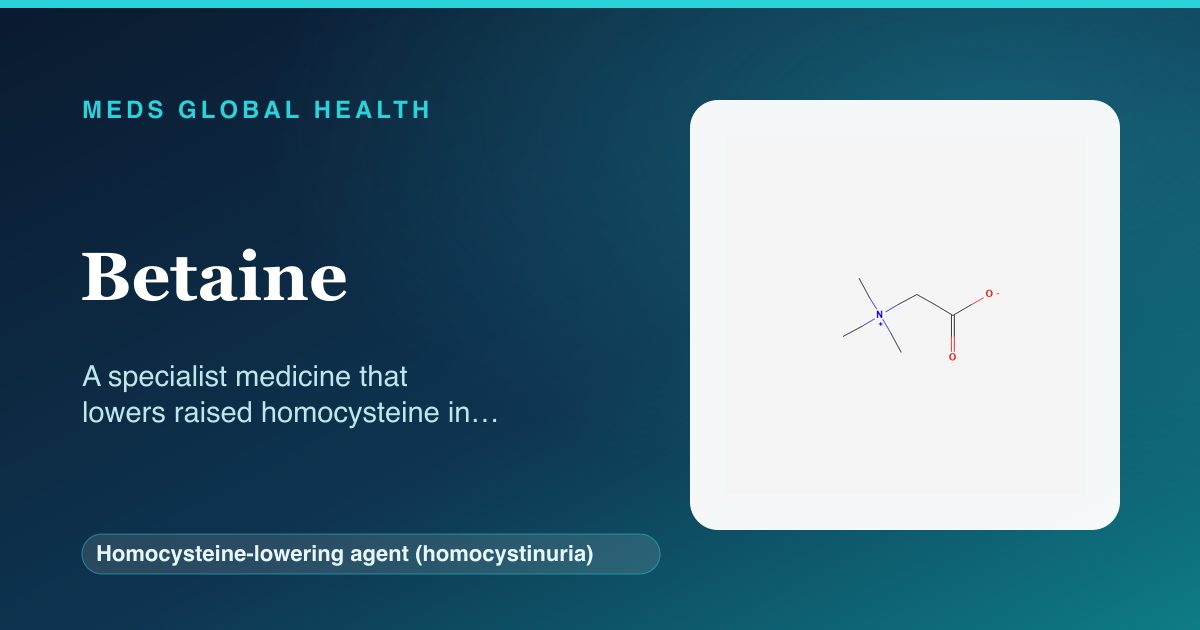
Betaine is a treatment for homocystinuria, a rare inherited (genetic) condition in which the body cannot process the amino acid homocysteine properly, so it builds up in the blood. High homocysteine increases the risk of blood clots and can affect the eyes, skeleton and nervous system. Betaine provides a route for the body to convert homocysteine into a harmless substance, helping to bring levels down. It is taken by mouth, usually with a special diet and vitamins, under a specialist metabolic centre.
How it works
Homocysteine can be recycled back into a useful, harmless amino acid through a chemical step that needs betaine. By supplying extra betaine, the medicine boosts this recycling pathway, so more of the excess homocysteine is converted away and its level in the blood falls. Lowering homocysteine reduces the risk of clots and the other complications of the condition. It is usually combined with diet and vitamins, which support the body's other routes for handling homocysteine.
Company & origin
Originated / developed by: Recordati Rare Diseases.
A specialist medicine used in the UK by metabolic centres to lower raised homocysteine in homocystinuria, alongside diet and vitamins.
Practical use
How to take Betaine
General, dose-free guidance — always follow your prescriber's and the leaflet's specific instructions.
- Mix the powder into water, juice or food and take it regularly, as your metabolic team directs.
- Measure the powder carefully with the scoop provided and stir until it dissolves before taking it.
- Keep to any low-protein (low-methionine) diet and the vitamins your team has prescribed, as these work together.
- Do not stop it without your team's advice, and attend your blood tests so homocysteine can be monitored.
- Tell your team about any planned surgery or pregnancy, because of the increased clotting risk in this condition.
Weighing it up
Advantages & disadvantages of Betaine
Advantages
- Lowers raised homocysteine, helping reduce the risk of clots and other complications.
- Taken by mouth as a powder mixed into water or food, which can be easier for children.
- Works alongside diet and vitamins as part of an overall plan for homocystinuria.
Disadvantages
- Usually needs to be combined with a special diet and vitamins, which takes ongoing effort.
- Must be taken regularly and lifelong to keep homocysteine controlled.
- Needs specialist supervision and regular blood monitoring.
Practical use
Good to know
The main reason for treating homocystinuria is to lower homocysteine and so reduce the risk of clots and damage to the eyes, bones and brain over time. Betaine is usually one part of a wider plan that also includes a special low-protein (low-methionine) diet and vitamins such as B6, folate and B12, all guided by a metabolic dietitian and team. The powder is mixed into water, juice or food and taken regularly; keeping to it matters for steady control. It is a lifelong treatment, must not be stopped without advice, and needs regular blood tests to check homocysteine and related levels. Any planned surgery or pregnancy should be discussed with the team because of the clotting risk.
Who should not take it / use with caution
- It should only be used under a metabolic centre experienced in homocystinuria.
- It must not replace the diet and vitamins that are part of the overall treatment plan.
- Use in pregnancy or breastfeeding is managed by the specialist team because of the clotting risk.
Monitoring
- Regular blood tests to check homocysteine and methionine levels and adjust treatment.
- Reviewing diet, vitamins, growth and symptoms with the metabolic team and dietitian.
- Watching for complications such as eye, bone or clotting problems over time.
Side effects
- Usually well tolerated; occasional nausea or stomach upset.
- Diarrhoea or a change in body odour in some people.
- Rarely, swelling of the brain (very high methionine) has been reported, which the team monitors for.
Key interactions
- It is used with diet and vitamins such as B6, folate and B12, which all affect homocysteine.
- Tell your team about all other medicines, as treatment is overseen by a specialist centre.
- Methionine levels can rise on treatment, so diet and levels are balanced together.
Available as: Oral powder mixed into water, juice or food.
Answers
Betaine: frequently asked questions
How does betaine help in homocystinuria?
It boosts a recycling pathway that converts excess homocysteine into a harmless substance, lowering its level in the blood and reducing the risk of clots and other complications.
Do I still need a diet and vitamins?
Yes. Betaine is usually one part of a wider plan that also includes a low-protein (low-methionine) diet and vitamins such as B6, folate and B12, all guided by your team.
How do I take the powder?
It is measured with the scoop provided and mixed into water, juice or food until it dissolves, then taken regularly as your team directs.
Why is homocysteine being high a problem?
High homocysteine raises the risk of blood clots and can affect the eyes, bones and nervous system, so lowering it helps protect against these complications.
Can I stop it once my levels are normal?
No, not without your team's advice; it is a lifelong treatment, and stopping it can let homocysteine rise again.
Authoritative sources
- BNF
- NICE CKS
Building a medicines information resource?
We create evidence-led, dose-free drug and formulary references for teams.