A MEK inhibitor tablet used with encorafenib in melanoma
Binimetinib
A targeted tablet used with encorafenib for advanced melanoma that carries a BRAF gene change.
What is Binimetinib?
Binimetinib is a targeted cancer medicine called a MEK inhibitor, used for advanced melanoma (a type of skin cancer) that carries a change in the BRAF gene. It is given together with another medicine called encorafenib, as the two work better as a pair. It works by blocking a growth pathway the cancer relies on. It is taken by mouth twice a day. Important effects to watch for include changes in vision, effects on the heart's pumping strength, raised liver blood tests and muscle problems, so it needs regular monitoring under specialist care.
Education and reference only. This is a plain-language guide to Binimetinib — it deliberately contains no doses. Doses depend on the person, the brand and the reason for treatment, and belong with your prescriber. Always check the BNF, the product labelling (SmPC) and follow medical advice.
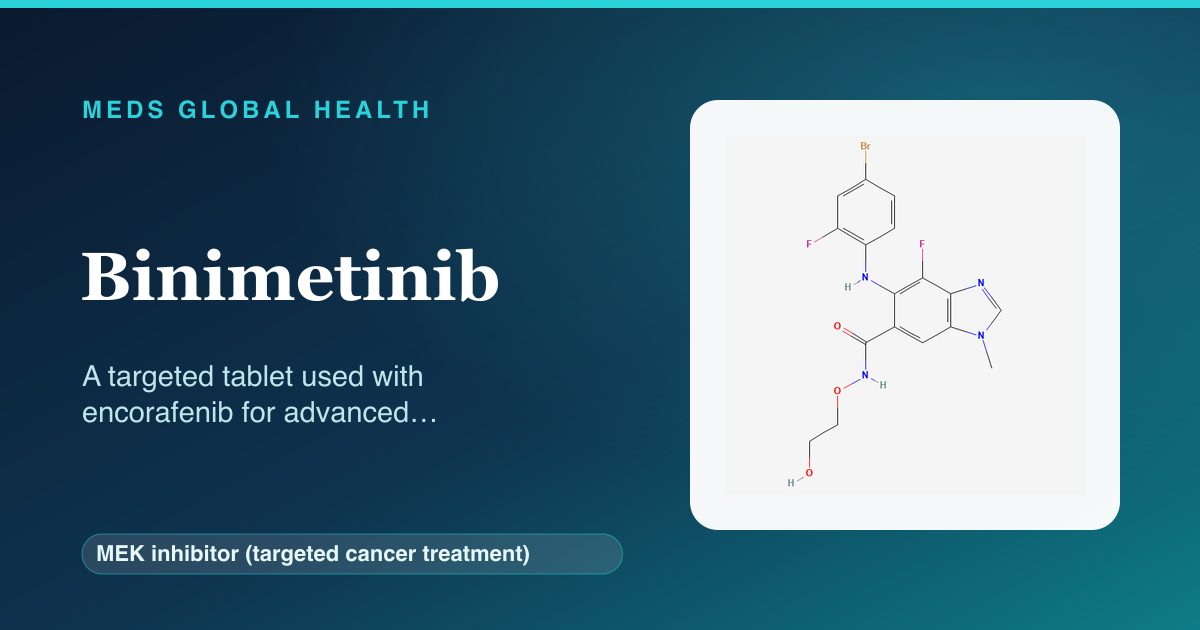
What it is
Binimetinib is a targeted cancer treatment known as a MEK inhibitor. It is used for advanced melanoma, a serious form of skin cancer, when the cancer carries a particular change in the BRAF gene confirmed by a test. It is not used on its own but together with encorafenib, a BRAF inhibitor, because blocking two steps of the same growth pathway works better and helps delay resistance. It is taken by mouth and is prescribed and supervised by a cancer specialist team, who monitor for effects on the eyes, heart, liver and muscles.
How it works
Some melanomas have a change in the BRAF gene that switches on a growth pathway (the MAPK pathway), telling the cancer cells to keep growing. This pathway works in steps, and binimetinib blocks one step (MEK) while encorafenib blocks an earlier step (BRAF). Hitting two points in the same pathway shuts down the growth signal more completely and helps delay the cancer becoming resistant. It is taken every day, continuously, alongside encorafenib, for as long as it controls the cancer and is tolerated, with the team adjusting treatment if side effects appear.
Company & origin
A targeted cancer medicine used in the UK for advanced melanoma with a BRAF change, given together with encorafenib.
Practical use
How to take Binimetinib
General, dose-free guidance — always follow your prescriber's and the leaflet's specific instructions.
- Take it by mouth twice a day as prescribed, with or without food, alongside encorafenib.
- Swallow the tablets whole with water and keep to the schedule for both medicines.
- Report any changes in your vision, such as blurring or dark spots, straight away.
- Report severe or unexplained muscle pain, and attend your heart and blood-test appointments.
- Keep taking both medicines as directed unless your specialist tells you to pause or stop.
Weighing it up
Advantages & disadvantages of Binimetinib
Advantages
- A targeted treatment that, with encorafenib, can effectively control BRAF-positive advanced melanoma.
- Taken by mouth at home rather than as an infusion.
- Combining two medicines works better and helps delay resistance.
Disadvantages
- Can affect the eyes, including the retina, and the heart's pumping strength.
- Can raise liver blood tests and affect the muscles.
- Must be taken with encorafenib and is not suitable in pregnancy.
Practical use
Good to know
Binimetinib is always used together with encorafenib, so the two are managed as a pair, and side effects are considered across both. A few effects need particular attention: it can affect the eyes, including the retina, so any new visual symptoms such as blurring, dark spots or changes in vision should be reported promptly and eye checks are arranged. It can reduce the heart's pumping strength, so heart scans are done before and during treatment. It can raise liver blood tests and can affect the muscles, raising a muscle-related blood marker, so liver and muscle blood tests are monitored and severe muscle pain should be reported. As with other targeted cancer medicines, it can harm a developing baby, so effective contraception is needed during treatment and for a time afterwards. The specialist team reviews progress and adjusts treatment as needed.
Who should not take it / use with caution
- People who have had a serious allergic reaction to binimetinib should not take it.
- It must not be used in pregnancy, as it can harm a developing baby, and effective contraception is needed during treatment and for a time after.
- It is used with care in people with significant heart, liver or eye problems.
- It should only be used under specialist cancer care, together with encorafenib, with regular monitoring.
Monitoring
- Eye checks before and during treatment, with prompt review of any visual symptoms.
- Heart scans to check the heart's pumping strength before and during treatment.
- Regular liver and muscle blood tests, and review of other side effects over time.
Side effects
- Changes in vision, including effects on the retina, which should be reported promptly.
- A reduction in the heart's pumping strength, monitored by heart scans.
- Raised liver blood tests and muscle problems, with a rise in a muscle-related blood marker.
- Tiredness, nausea, diarrhoea and skin changes.
Key interactions
- It is always used with encorafenib, and the two are managed together.
- Tell your team about all your medicines, as some can affect how the treatment works.
- Care is needed with other medicines that affect the heart, liver or muscles.
Available as: Tablets taken by mouth.
Answers
Binimetinib: frequently asked questions
What is binimetinib used for?
It is a targeted medicine used with encorafenib for advanced melanoma that carries a change in the BRAF gene, confirmed by a test.
Why is it given with encorafenib?
The two medicines block different steps of the same growth pathway, which controls the cancer more completely and helps delay it becoming resistant.
What eye symptoms should I report?
Report any new vision changes such as blurring, dark spots or distortion straight away, as binimetinib can affect the eyes, including the retina.
Why do I need heart scans?
It can reduce the heart's pumping strength, so heart scans are done before and during treatment to check this.
Is it safe in pregnancy?
No. It can harm a developing baby, so effective contraception is needed during treatment and for a time afterwards; discuss any plans with your specialist.
Authoritative sources
- BNF
- NICE CKS
Building a medicines information resource?
We create evidence-led, dose-free drug and formulary references for teams.