Vitamin B7
Biotin
A B vitamin used to treat biotin deficiency and certain inherited metabolic conditions; high intake can interfere with some blood tests.
What is Biotin?
Biotin is vitamin B7, a water-soluble B vitamin the body uses to help process fats, carbohydrates and proteins. Supplements are used to treat biotin deficiency and certain inherited metabolic conditions, although deficiency is uncommon because biotin is found in many foods and the gut bacteria also make some. It is generally very safe, but an important point is that taking biotin, especially in larger amounts, can interfere with some laboratory blood tests, such as thyroid and heart (troponin) tests, giving false results. For this reason it is worth telling your doctor or the laboratory if you take it before having blood tests.
Education and reference only. This is a plain-language guide to Biotin — it deliberately contains no doses. Doses depend on the person, the brand and the reason for treatment, and belong with your prescriber. Always check the BNF, the product labelling (SmPC) and follow medical advice.
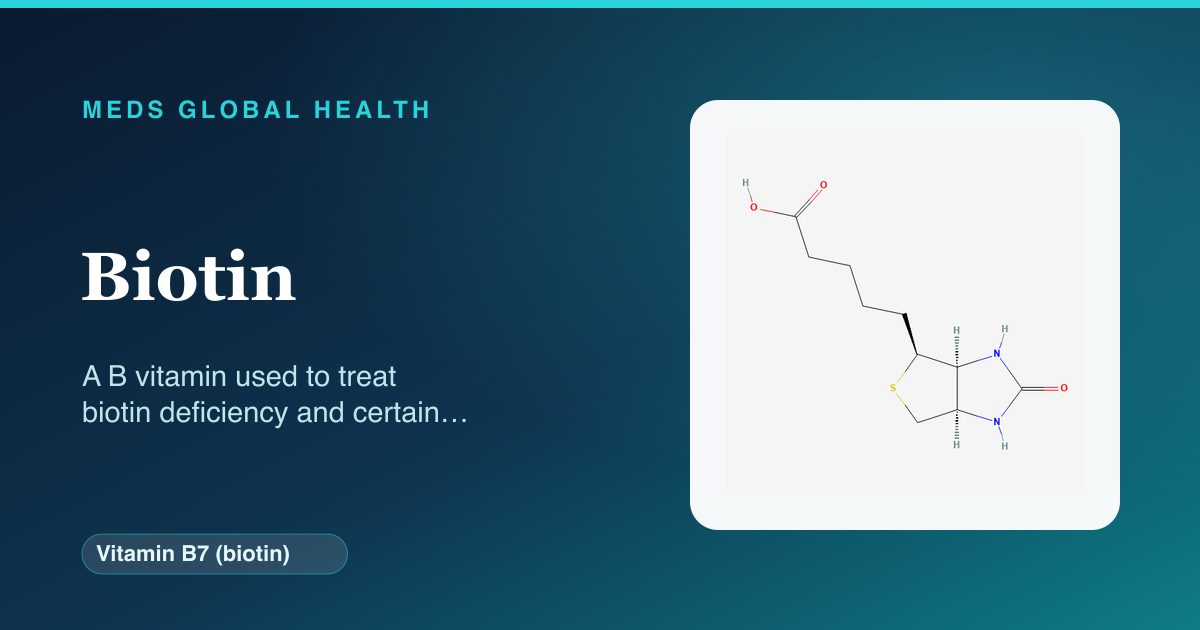
What it is
Biotin, also known as vitamin B7 and once called vitamin H, is a water-soluble B vitamin found in foods such as eggs, nuts, seeds, fish and some vegetables, and it is also made by bacteria in the gut. The body uses it to help enzymes process fats, carbohydrates and proteins for energy. Deficiency is uncommon, but it can occur in certain inherited conditions or with particular diets and circumstances. As a supplement, biotin is taken to treat deficiency and is also widely sold for hair, skin and nails, though it only helps these if a person is actually deficient.
How it works
Biotin acts as a helper for several key enzymes involved in breaking down and using fats, carbohydrates and proteins. When the body is short of biotin, these processes do not run properly, which can cause symptoms such as skin rashes, hair thinning and tiredness; supplementing corrects this. In certain rare inherited metabolic conditions, the body cannot use biotin normally, and treatment with biotin allows these pathways to work, which is why it is given in those situations.
Company & origin
Biotin was identified in the early 20th century as a nutrient needed for normal growth, and was once known as vitamin H.
Practical use
How to take Biotin
General, dose-free guidance — always follow your prescriber's and the leaflet's specific instructions.
- Take it as advised, usually once a day, with or without food.
- Tell your doctor or the laboratory that you take biotin before having blood tests, as it can affect the results.
- If asked, pause biotin before certain blood tests for the time your healthcare team advises.
- Remember it mainly helps hair, skin and nails if you are genuinely deficient, rather than for everyone.
- Most people get enough from a varied diet, so supplements are mainly for deficiency or specific conditions.
Weighing it up
Advantages & disadvantages of Biotin
Advantages
- Effectively treats biotin deficiency and supports normal energy-producing pathways.
- Generally very safe and well tolerated.
- Important treatment for certain inherited metabolic conditions where the body cannot use biotin normally.
Disadvantages
- Can interfere with some laboratory blood tests, giving false results.
- Often taken for hair, skin and nails when it only helps people who are genuinely deficient.
- Rarely needed by people who eat a varied diet.
Practical use
Good to know
Biotin deficiency is uncommon, so for most people supplements are not necessary; it is found in many foods and gut bacteria also make some. Biotin is popularly sold for hair, skin and nails, but it generally only helps these if you are genuinely deficient, so it is not a reliable beauty treatment for everyone. The most important practical point is that taking biotin, particularly larger amounts, can interfere with some laboratory blood tests, including thyroid hormone tests and the troponin test used to check for heart attacks, producing falsely high or low results. Because of this, you should tell your doctor or the laboratory if you take biotin before having blood tests, as they may ask you to pause it beforehand.
Who should not take it / use with caution
- People about to have blood tests that biotin can affect should pause it if advised.
- Routine high-dose use is unnecessary for those with a normal diet and no deficiency.
- Use in inherited metabolic conditions should be guided by a specialist.
Monitoring
- Reviewing whether a supplement is genuinely needed or whether diet provides enough.
- Being aware of biotin when interpreting thyroid, heart and other affected blood tests.
- Checking response in people treated for deficiency or an inherited metabolic condition.
Side effects
- Usually none; biotin is generally very well tolerated.
- Occasionally mild stomach upset.
- It does not directly cause harm, but it can cause misleading blood-test results.
Key interactions
- Interferes with some laboratory blood tests, such as thyroid and troponin tests, giving false results.
- Tell laboratory staff you take it, as they may ask you to stop it before certain tests.
- No major routine interactions with other medicines are well established.
Available as: Tablets and capsules taken by mouth.
Answers
Biotin: frequently asked questions
What is biotin used for?
It is used to treat biotin deficiency and certain inherited metabolic conditions; it is also popularly taken for hair, skin and nails, though it mainly helps if you are genuinely deficient.
Can biotin affect my blood tests?
Yes. Taking biotin, especially in larger amounts, can interfere with some blood tests such as thyroid and heart (troponin) tests, so tell your doctor or the laboratory that you take it.
Will biotin make my hair grow?
Biotin generally only helps hair, skin and nails if you are actually deficient, so it is not a reliable treatment for everyone.
Do I need a biotin supplement?
Deficiency is uncommon as biotin is found in many foods and made by gut bacteria, so most people do not need a supplement.
Should I stop biotin before a blood test?
Sometimes; tell your healthcare team that you take it, as they may ask you to pause it for a while before certain tests.
Authoritative sources
- BNF
- NICE CKS
Building a medicines information resource?
We create evidence-led, dose-free drug and formulary references for teams.