A barbiturate used in some headache combination tablets
Butalbital
A barbiturate combined with a painkiller and caffeine in some tension-headache tablets, used mainly outside the UK.
What is Butalbital?
Butalbital is a barbiturate that is combined with a painkiller such as paracetamol or aspirin, along with caffeine, in tablets used for tension-type headache. It is largely a United States product and is not commonly used in the UK. The most important concerns are that it can cause dependence and lead to medication-overuse headache if used too often, it is sedating, and it is dangerous when combined with alcohol, opioids or other sedatives because it can suppress breathing. Because of these risks it is used cautiously and for limited periods.
Education and reference only. This is a plain-language guide to Butalbital — it deliberately contains no doses. Doses depend on the person, the brand and the reason for treatment, and belong with your prescriber. Always check the BNF, the product labelling (SmPC) and follow medical advice.
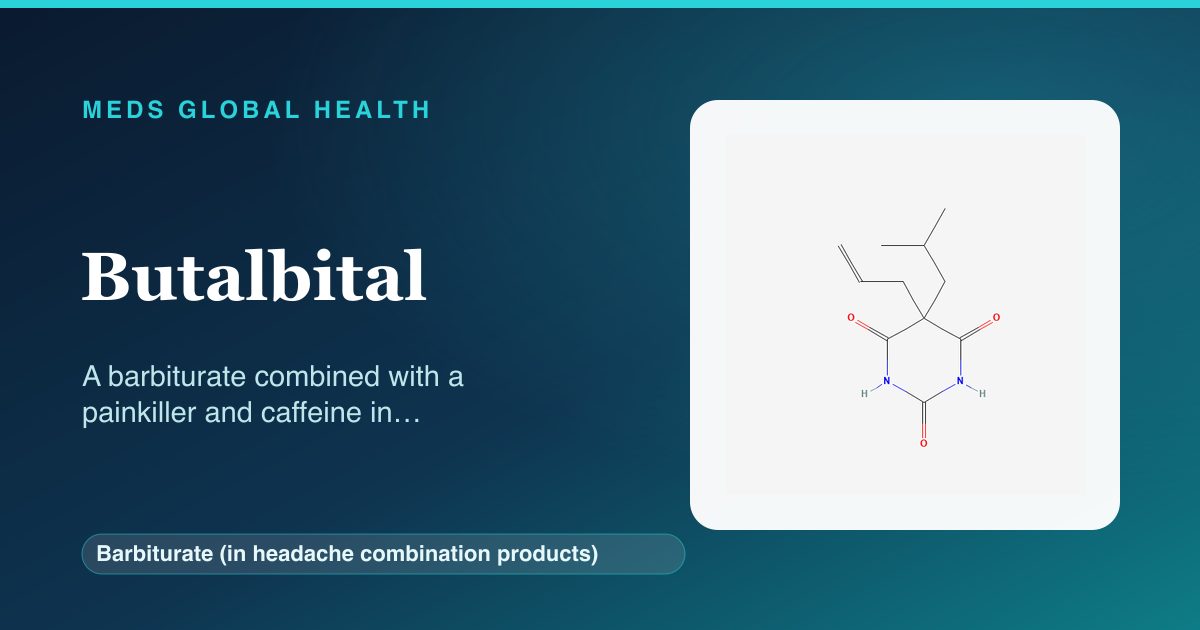
What it is
Butalbital is a barbiturate, an older type of medicine that calms the nervous system. It is not usually used on its own but is combined with a painkiller, most often paracetamol or aspirin, together with caffeine, in tablets marketed for tension-type headache. These combination products are used largely in the United States and are not a standard treatment in the UK. The butalbital part is included to relax and ease the tension that can contribute to these headaches, but it carries the well-known risks of barbiturates, including sedation and dependence.
How it works
Butalbital works by boosting the calming chemical signals in the brain (acting on the GABA system), which has a sedating and muscle-relaxing effect; the idea in a headache tablet is to ease the tension and discomfort of a tension-type headache. The caffeine in the combination is thought to help the painkiller work and to counter some drowsiness, while the paracetamol or aspirin provides the main pain relief. Because barbiturates calm the whole nervous system, regular use leads the body to become used to the medicine, which is how dependence and rebound, medication-overuse headaches develop.
Company & origin
A barbiturate combined with painkillers and caffeine for tension headache, used largely in the United States rather than the UK.
Practical use
How to take Butalbital
General, dose-free guidance — always follow your prescriber's and the leaflet's specific instructions.
- Take it only as prescribed and for the shortest time needed, as frequent use can cause dependence and rebound headaches.
- Do not drink alcohol or take opioids, sleeping tablets or other sedatives with it, as the combination can dangerously slow breathing.
- Be aware it is sedating, so avoid driving or operating machinery until you know how it affects you.
- Do not stop a regular course suddenly without advice, as withdrawal can occur; your prescriber can guide a gradual reduction.
- Because the tablets also contain paracetamol or aspirin, do not take other products with the same ingredient, to avoid an overdose.
Weighing it up
Advantages & disadvantages of Butalbital
Advantages
- Can provide relief for some tension-type headaches as part of a combination tablet.
- Combines a calming medicine with a painkiller and caffeine in a single product.
- Long established where it is used, mainly in the United States.
Disadvantages
- Can cause dependence and lead to medication-overuse (rebound) headache with frequent use.
- Sedating and dangerous when combined with alcohol, opioids or other sedatives, which can suppress breathing.
- Not a standard or commonly used treatment in the UK, with other options generally preferred.
Practical use
Good to know
The dominant issue with butalbital is its risk of dependence and of medication-overuse headache: taking these tablets too frequently can cause the very headaches they are meant to relieve, and the body can become reliant on the barbiturate so that stopping suddenly causes withdrawal. It is sedating and slows reactions, so it affects driving. A crucial safety point is that combining it with alcohol, opioid painkillers, sleeping tablets or other sedatives can dangerously suppress breathing and can be life-threatening. Because these combination products also contain paracetamol or aspirin, the usual cautions for those medicines apply, including not exceeding the safe daily amount of paracetamol. For these reasons it is used sparingly, for short periods, and other treatments for tension headache and migraine are generally preferred, particularly in the UK where it is not commonly used.
Who should not take it / use with caution
- People who have had a serious reaction to barbiturates should not take it.
- It should be avoided by people who drink alcohol heavily or who take opioids or other sedatives, because of the risk to breathing.
- It is used with great caution, or avoided, in people with a history of dependence, breathing problems, or liver problems (linked to the paracetamol component), and it is not suitable for frequent headache use.
Monitoring
- Reviewing how often it is being used, to guard against dependence and medication-overuse headache.
- Watching for excessive drowsiness or signs of slowed breathing, especially with other sedatives.
- Reassessing the headache treatment plan, as other options are usually preferred.
Side effects
- Drowsiness, dizziness and a feeling of being slowed down.
- Feeling sick, light-headedness or a hangover-like effect.
- With frequent use, dependence, withdrawal on stopping, and medication-overuse headache; an overdose, especially with alcohol or opioids, can dangerously suppress breathing.
Key interactions
- Alcohol, opioids, sleeping tablets and other sedatives add to its effect on breathing and alertness and can be dangerous.
- As a barbiturate, it can change how some other medicines are broken down by the body, reducing their effect.
- The paracetamol or aspirin in the combination has its own interactions, including with blood thinners for aspirin.
Available as: Tablets and capsules taken by mouth, combined with a painkiller and caffeine.
Answers
Butalbital: frequently asked questions
What is butalbital used for?
It is a barbiturate combined with a painkiller and caffeine in tablets used for tension-type headache, mainly in the United States rather than the UK.
Can it become habit-forming?
Yes. Butalbital can cause dependence, and frequent use can also cause medication-overuse (rebound) headaches, so it is used sparingly and for short periods.
Why is mixing it with alcohol dangerous?
As a barbiturate it slows the nervous system, and combining it with alcohol, opioids or other sedatives can dangerously suppress breathing.
Is it used in the UK?
It is largely a United States product and is not a standard treatment in the UK, where other options for tension headache and migraine are generally preferred.
Can I just stop taking it?
If you have been taking it regularly, do not stop suddenly without advice, as withdrawal can occur; your prescriber can guide a gradual reduction.
Authoritative sources
- BNF
- NICE CKS
Building a medicines information resource?
We create evidence-led, dose-free drug and formulary references for teams.