A targeted tablet for certain advanced cancers
Cabozantinib
A targeted cancer tablet used for certain advanced cancers, including kidney, liver and thyroid cancers.
What is Cabozantinib?
Cabozantinib is a specialist targeted cancer medicine used to treat certain advanced cancers, including kidney, liver and a type of thyroid cancer. It is taken as a tablet by mouth and works by blocking several signals that cancers use to grow and to build their blood supply. Common and important risks include high blood pressure, bleeding, problems with wound healing, and a sore, red, peeling reaction on the hands and feet. More serious but less common problems include damage to the gut wall (a perforation or fistula). It can harm a developing baby, so reliable contraception is essential.
Education and reference only. This is a plain-language guide to Cabozantinib — it deliberately contains no doses. Doses depend on the person, the brand and the reason for treatment, and belong with your prescriber. Always check the BNF, the product labelling (SmPC) and follow medical advice.
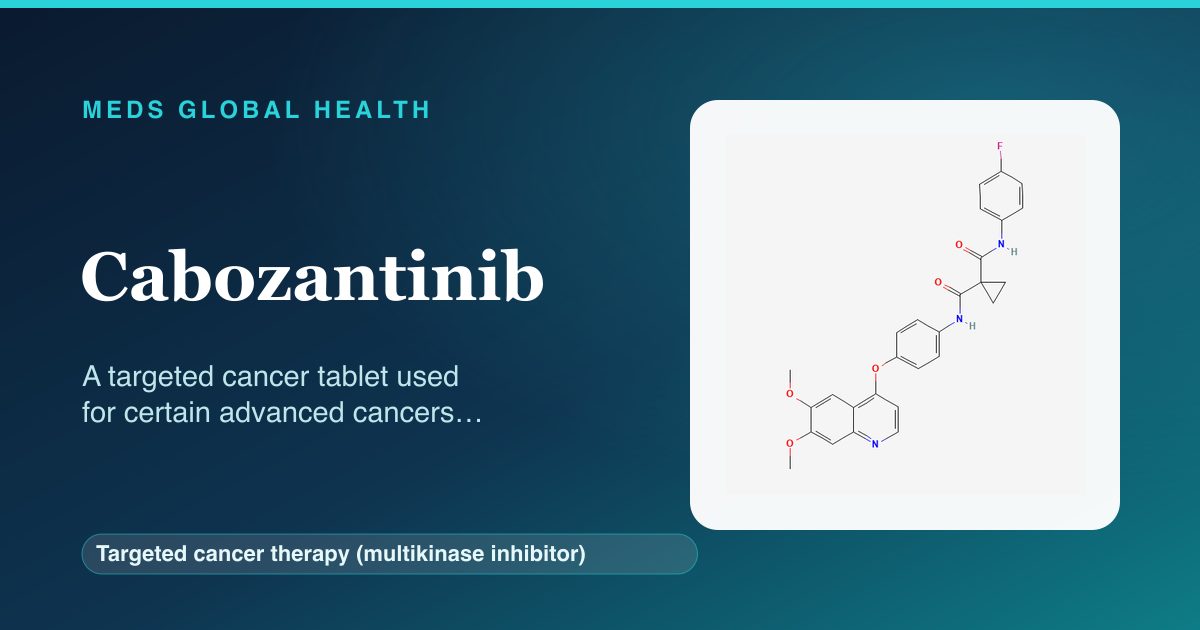
What it is
Cabozantinib is a targeted cancer medicine, sometimes called a multikinase inhibitor, used to treat several advanced cancers, including kidney cancer, liver cancer and a particular type of thyroid cancer. It is taken by mouth as a tablet, usually once a day on an empty stomach, under the care of a cancer specialist. Rather than acting like standard chemotherapy, it blocks several growth signals, including those a tumour uses to grow new blood vessels. It is a long-term treatment that continues for as long as it controls the cancer and is tolerated.
How it works
Cancers need growth signals and a blood supply to grow and spread. Cabozantinib blocks several of these signals at once, including ones that drive cancer cells to multiply and ones that let tumours build new blood vessels. By cutting off these signals, it slows the cancer and can help shrink it. Because it affects blood vessels and healing throughout the body, this is also why it can raise blood pressure, cause bleeding and slow wound healing. It is taken every day so these signals stay blocked, and treatment continues while it remains effective.
Company & origin
A specialist targeted medicine used in the UK to treat certain advanced cancers, including kidney, liver and thyroid cancers.
Practical use
How to take Cabozantinib
General, dose-free guidance — always follow your prescriber's and the leaflet's specific instructions.
- Take the tablet by mouth once a day on an empty stomach, with no food for a couple of hours before and after.
- Swallow it whole with water at about the same time each day, and avoid grapefruit while taking it.
- Have your blood pressure checked regularly and report severe tummy pain, unusual bleeding or sore, peeling hands and feet.
- Tell your team about any planned surgery or dental work, as it is usually paused around procedures to help wounds heal.
- Use reliable contraception during treatment and for the time afterwards your team advises, as it can harm a baby.
Weighing it up
Advantages & disadvantages of Cabozantinib
Advantages
- An effective targeted treatment for several advanced cancers, including kidney, liver and thyroid cancers.
- Taken as a once-daily tablet at home rather than as an infusion.
- Blocks several growth and blood-supply signals that cancers rely on.
Disadvantages
- Commonly raises blood pressure and can cause bleeding and a sore hand-foot skin reaction.
- Slows wound healing, so it must be paused around surgery, and can rarely cause a hole in the gut wall.
- Taken on an empty stomach, can harm a developing baby, and interacts with several other medicines.
Practical use
Good to know
Several practical safety points matter with cabozantinib. It often raises blood pressure, which is checked regularly and may need treating. It can cause bleeding, so any unusual or heavy bleeding should be reported. It slows wound healing, so it is usually paused before and after planned surgery or dental work, and you should tell your team about any procedures. Many people get a hand-foot reaction, with sore, red or peeling skin on the palms and soles, which can be eased with moisturisers and careful foot care. A less common but serious risk is a hole or abnormal connection forming in the gut wall, so severe tummy pain must be reported urgently. Diarrhoea, tiredness and changes in liver and thyroid blood tests are also common. It is taken on an empty stomach, and because it can harm a developing baby, reliable contraception is essential.
Who should not take it / use with caution
- It must not be used in pregnancy, as it can harm a developing baby.
- People who have had a serious allergic reaction to cabozantinib should not take it.
- It is used with caution, or paused, around surgery, and in people with bleeding problems, very high blood pressure or certain liver problems, under specialist supervision.
Monitoring
- Regular blood pressure checks throughout treatment.
- Blood tests for liver and thyroid function, and watching for bleeding, tummy pain and skin changes.
- Reviewing treatment around any planned surgery or dental work because of slow wound healing.
Side effects
- Raised blood pressure, which is checked regularly and may need treating.
- A sore, red or peeling reaction on the palms and soles (hand-foot reaction).
- Diarrhoea, tiredness, weight loss, mouth soreness, and changes in liver and thyroid blood tests.
- Less commonly but seriously, bleeding, a hole or abnormal connection in the gut wall, or poor wound healing.
Key interactions
- Some medicines and grapefruit can raise cabozantinib levels and increase side effects.
- Other medicines and supplements, such as St John's wort, can lower its levels and make it less effective.
- Medicines that increase the risk of bleeding may need reviewing, so give your team a full list of what you take.
Available as: Tablets and capsules taken by mouth.
Answers
Cabozantinib: frequently asked questions
What is cabozantinib used for?
It is a targeted medicine used to treat certain advanced cancers, including kidney, liver and a type of thyroid cancer, by blocking several signals they use to grow.
Why must I take it on an empty stomach?
Food can change how much of the medicine your body absorbs, so it is taken on an empty stomach, with no food for a couple of hours before and after.
Why is it stopped before surgery?
It slows wound healing, so it is usually paused before and after planned surgery or dental work; always tell your team about any procedures.
What is the hand-foot reaction?
It is a sore, red or peeling reaction on the palms and soles that is common with this medicine and can be eased with moisturisers and careful foot care.
Can I take it if I might become pregnant?
It can harm a developing baby, so you should use reliable contraception during treatment and for the time afterwards your team advises, and it is not used in pregnancy.
Authoritative sources
- BNF
- NICE CKS
Building a medicines information resource?
We create evidence-led, dose-free drug and formulary references for teams.