A soothing pink lotion
Calamine
A classic pink soothing lotion for itchy, irritated skin such as chickenpox, insect bites, sunburn and prickly heat.
What is Calamine?
Calamine is a classic pink soothing lotion used to calm itchy, irritated skin, such as chickenpox, insect bites, sunburn and prickly heat. It soothes and cools the skin as it dries, helping to relieve itch and discomfort. It is very safe, has been used for generations and is bought without a prescription. It is dabbed onto the skin and left to dry, leaving a fine pink film, and is reapplied when needed. Avoid the eyes and broken or weeping skin.
Education and reference only. This is a plain-language guide to Calamine — it deliberately contains no doses. Doses depend on the person, the brand and the reason for treatment, and belong with your prescriber. Always check the BNF, the product labelling (SmPC) and follow medical advice.
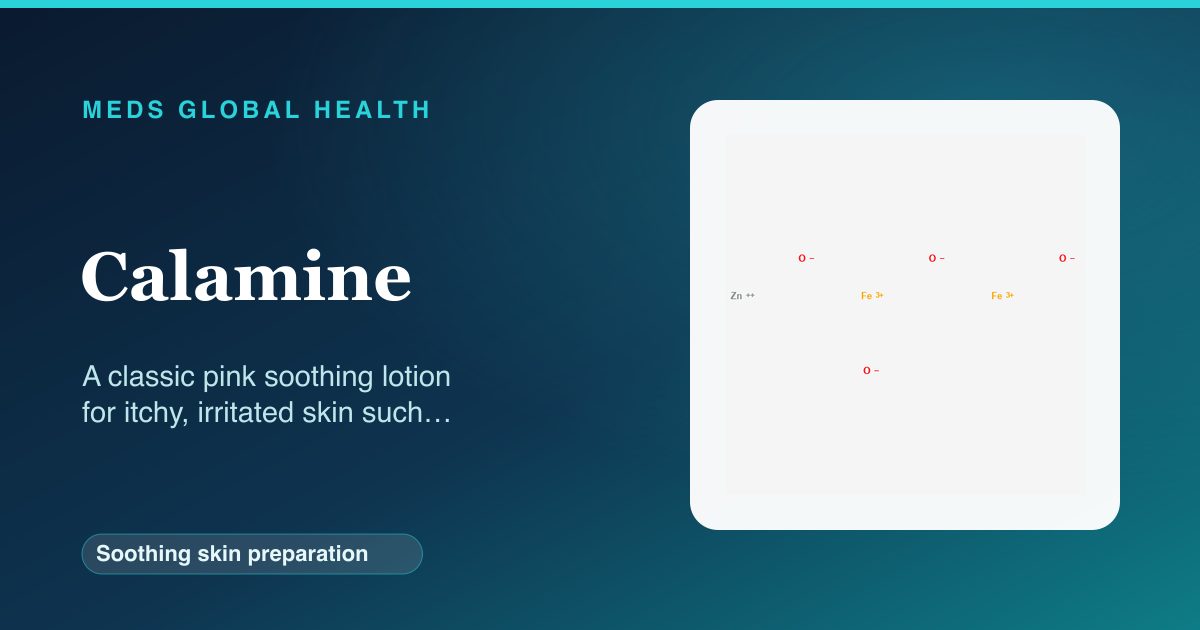
What it is
Calamine is a long-established soothing skin preparation, best known as the pink calamine lotion. It is used to relieve itching and irritation from conditions such as chickenpox, insect bites and stings, sunburn, prickly heat and minor rashes. It works on the skin surface to cool and soothe rather than treating an underlying infection. It is one of the safest skin remedies, suitable for adults and children, and is sold over the counter.
How it works
Calamine works on the skin surface to soothe and cool. As the watery lotion dries, it draws a little heat from the skin and leaves a fine powdery film that calms itching and irritation. It does not cure the underlying cause — for example the chickenpox virus or an insect bite — but it makes the skin feel more comfortable and reduces the urge to scratch while the skin settles or heals.
Company & origin
A classic, very safe soothing lotion used in the UK for itchy, irritated skin.
Practical use
How to take Calamine
General, dose-free guidance — always follow your prescriber's and the leaflet's specific instructions.
- Shake the bottle well, then dab the lotion onto the itchy or irritated skin with cotton wool.
- Let it dry naturally to a fine pink film, rather than rubbing it in.
- Reapply as often as you need for itch relief, as it is very gentle.
- Keep it away from your eyes and off broken, weeping or infected skin.
- If skin feels tight or dry with frequent use, use a moisturiser between applications.
- Seek advice if a rash spreads, blisters badly, looks infected, or you feel unwell, rather than relying on calamine alone.
Weighing it up
Advantages & disadvantages of Calamine
Advantages
- Very safe and gentle, suitable for adults and children, including for chickenpox.
- Quickly soothes and cools itchy, irritated skin and reduces the urge to scratch.
- Inexpensive and available without a prescription.
Disadvantages
- Soothes symptoms only and does not treat the underlying cause.
- Can be a little drying and leaves a visible pink film on the skin.
- Not suitable for broken, weeping or infected skin or near the eyes.
Practical use
Good to know
Calamine is about comfort and itch relief rather than curing anything, and it is very safe and gentle, which is why it is a long-standing favourite for chickenpox and bites. Shake the bottle well, dab it on with cotton wool and let it dry to a pink film; reapply as often as needed for itch. Avoid getting it in the eyes and on broken, weeping or infected skin, where a soothing lotion is not the right choice. If a rash is spreading, blistering badly, looks infected or comes with feeling unwell, seek advice rather than relying on calamine alone. It can be a little drying with frequent use, so a moisturiser between applications can help if skin feels tight.
Who should not take it / use with caution
- It should not be used on broken, weeping or infected skin.
- It should be kept away from the eyes and other delicate areas.
- Anyone who has reacted to it before should avoid it.
Monitoring
- Checking whether the itch and irritation settle, or whether the rash needs review.
- Watching for signs of infection, spreading or blistering that need medical advice.
- Looking out for skin becoming too dry with very frequent use.
Side effects
- Usually none; occasional dryness or tightness of the skin with frequent use.
- A visible pink film and slight flaking as it dries.
- Rarely, mild irritation or a skin reaction in sensitive people.
Key interactions
- No significant medicine interactions, as it acts only on the skin surface.
- Other very drying skin products used together may add to dryness.
- Tell your pharmacist about other creams if you are layering treatments on the same area.
Available as: A lotion applied to the skin, and sometimes a cream.
Answers
Calamine: frequently asked questions
Is calamine safe for chickenpox?
Yes, it is a very safe, gentle lotion long used to soothe the itch of chickenpox in both adults and children.
Does it cure the rash?
No, it soothes and cools the skin and eases itching, but it does not treat the underlying cause such as a virus or insect bite.
How often can I put it on?
It is very gentle, so you can reapply it as often as you need for itch relief, shaking the bottle first.
Can I use it on broken skin?
No, avoid broken, weeping or infected skin and the area around the eyes; seek advice if a rash looks infected or is spreading.
Why does my skin feel dry after using it?
It can be a little drying with frequent use, so a moisturiser between applications can help if the skin feels tight.
Authoritative sources
- BNF
- NICE CKS
Building a medicines information resource?
We create evidence-led, dose-free drug and formulary references for teams.