A chalky antacid that is also a calcium supplement
Calcium carbonate
A common ingredient that neutralises stomach acid for indigestion and is also used to top up calcium.
What is Calcium carbonate?
Calcium carbonate is a versatile, widely available ingredient with more than one job. As an antacid in products such as Rennie, Setlers and Tums, it neutralises excess stomach acid to relieve indigestion and heartburn quickly. As a supplement, in products such as Calcichew, it tops up calcium for bone health, often alongside vitamin D. In people with kidney disease it is also used to lower phosphate in the blood by binding to it in the gut. It is usually well tolerated, though it can cause wind or constipation, and taking very large amounts over a long time is not advisable.
Education and reference only. This is a plain-language guide to Calcium carbonate — it deliberately contains no doses. Doses depend on the person, the brand and the reason for treatment, and belong with your prescriber. Always check the BNF, the product labelling (SmPC) and follow medical advice.
What it is
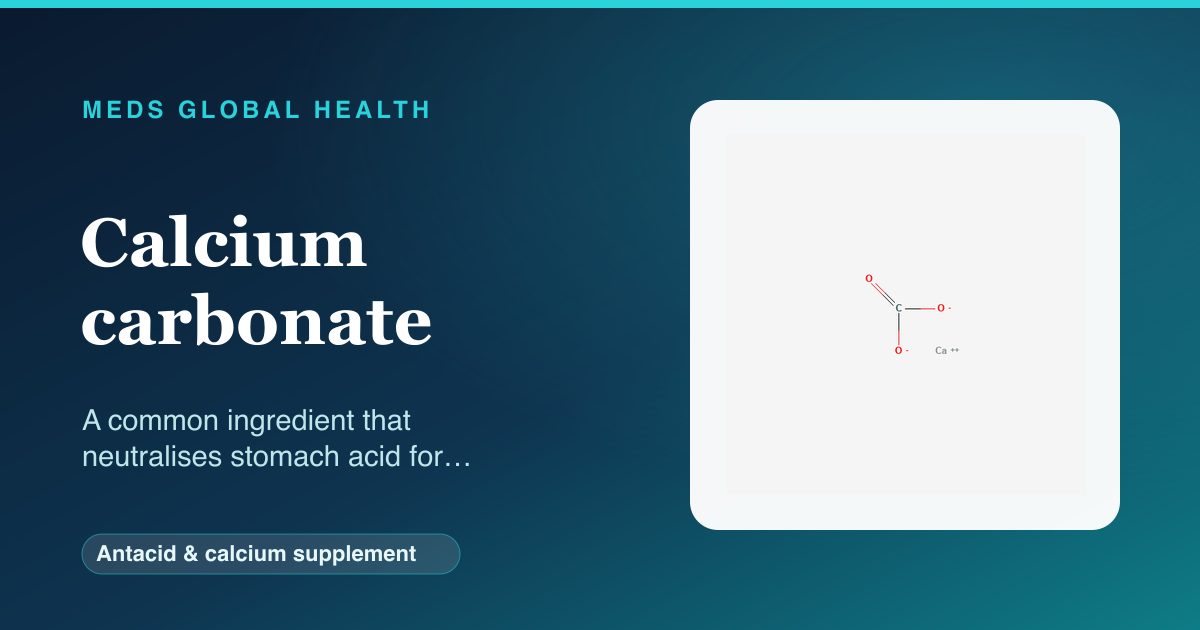
Calcium carbonate is a naturally occurring substance, the same compound found in chalk and limestone, that is used in medicine in several ways. As an antacid it is a key ingredient in well-known indigestion remedies such as Rennie, Setlers and Tums. As a calcium supplement it appears in products such as Calcichew, used to support bone health, often combined with vitamin D. It is also used in people with kidney disease as a 'phosphate binder' to keep blood phosphate levels down. Depending on its use, it comes as chewable tablets, ordinary tablets or a powder, and many forms are available over the counter.
How it works
As an antacid, calcium carbonate works by chemically neutralising acid in the stomach, raising the acidity to a more comfortable level so the burning feeling of indigestion eases; this happens quite quickly, which is why it is popular for fast relief. As a calcium supplement, it simply provides calcium that the body absorbs and uses, mainly for bones and teeth, which is why it is often paired with vitamin D that helps calcium absorption. As a phosphate binder, it grabs hold of phosphate from food in the gut so that less is absorbed, which is helpful for people with kidney problems whose bodies struggle to clear phosphate.
Company & origin
A long-established pharmacy ingredient used across the UK to neutralise stomach acid and to top up calcium, found in products such as Rennie and Calcichew.
Practical use
How to take Calcium carbonate
General, dose-free guidance — always follow your prescriber's and the leaflet's specific instructions.
- For indigestion, chew the antacid tablets when symptoms strike, for quick relief.
- As a calcium supplement, take it as directed, often with or after food, and with vitamin D if prescribed.
- If you take it as a phosphate binder for kidney disease, take it with meals so it can bind phosphate from food.
- Leave a gap of a couple of hours between calcium carbonate and other medicines such as some antibiotics or thyroid tablets.
- Do not take more than advised over a long period, as too much calcium can be harmful.
Weighing it up
Advantages & disadvantages of Calcium carbonate
Advantages
- Neutralises stomach acid quickly, giving fast relief from indigestion and heartburn.
- A simple, well-established way to top up calcium for bone health.
- Also useful in kidney disease as a phosphate binder taken with meals.
Disadvantages
- Can cause wind, belching or constipation in some people.
- Taking large amounts over a long time can raise calcium levels too high.
- Can affect the absorption of some other medicines if taken at the same time.
Practical use
Good to know
The same ingredient is being used for quite different reasons, so it helps to be clear which job yours is for: quick indigestion relief, a calcium top-up, or lowering phosphate in kidney disease. As an antacid it is best chewed, and works fastest taken when symptoms strike; as a phosphate binder it is taken with meals so it can mop up phosphate from food. The most common bothers are wind, belching or constipation. Taking very large amounts over a long time can push calcium levels too high, which is why supplement doses should follow advice rather than be exceeded. It can also affect how other medicines, such as some antibiotics and thyroid tablets, are absorbed, so it is sensible to separate the timing. Indigestion that keeps returning, or that comes with warning signs, should be checked rather than treated indefinitely at home.
Who should not take it / use with caution
- People who already have high blood calcium levels should not take it without medical advice.
- People with certain kidney stones or kidney problems should use it only on a doctor's advice.
- Anyone who has had an allergic reaction to a calcium carbonate product should not use it.
Monitoring
- No routine monitoring is needed for occasional antacid use.
- Blood calcium may be checked with long-term supplement use or in kidney disease.
- Reviewing indigestion symptoms if they keep returning despite treatment.
Side effects
- Wind, belching or a bloated feeling.
- Constipation, especially with regular or higher use.
- Less commonly, raised calcium levels with large or long-term use, which can cause nausea, thirst and tiredness.
Key interactions
- It can reduce the absorption of some antibiotics, such as tetracyclines and quinolones, so separate the timing.
- It can affect thyroid tablets and certain other medicines, so leave a couple of hours between them.
- Tell your pharmacist about your other medicines if you take calcium carbonate regularly.
Available as: Chewable tablets, ordinary tablets and powder taken by mouth.
Answers
Calcium carbonate: frequently asked questions
What is calcium carbonate used for?
It has several uses: as an antacid for indigestion and heartburn, as a calcium supplement for bone health, and as a phosphate binder in kidney disease.
How does it relieve indigestion?
It neutralises excess acid in the stomach, easing the burning feeling of indigestion fairly quickly, which is why it is popular for fast relief.
Can it cause constipation?
Yes, wind and constipation are among the more common side effects, especially with regular or higher use.
Will it affect my other medicines?
It can reduce the absorption of some medicines such as certain antibiotics and thyroid tablets, so it is best to leave a couple of hours between them.
Can I take it as a calcium supplement every day?
Yes, when advised, but follow the recommended amount and do not exceed it, because too much calcium over time can be harmful.
Authoritative sources
- BNF
- NICE CKS
Building a medicines information resource?
We create evidence-led, dose-free drug and formulary references for teams.