An angiotensin-receptor blocker (ARB)
Candesartan
A widely used angiotensin-receptor blocker (ARB) for high blood pressure and heart failure that rarely causes the cough seen with ACE inhibitors.
What is Candesartan?
Candesartan is an angiotensin-receptor blocker (ARB) that relaxes blood vessels to lower blood pressure. It is used for high blood pressure and as a foundation treatment for heart failure with a reduced pumping function, and is often used when an ACE inhibitor cough is a problem.
Education and reference only. This is a plain-language guide to Candesartan — it deliberately contains no doses. Doses depend on the person, the brand and the reason for treatment, and belong with your prescriber. Always check the BNF, the product labelling (SmPC) and follow medical advice.
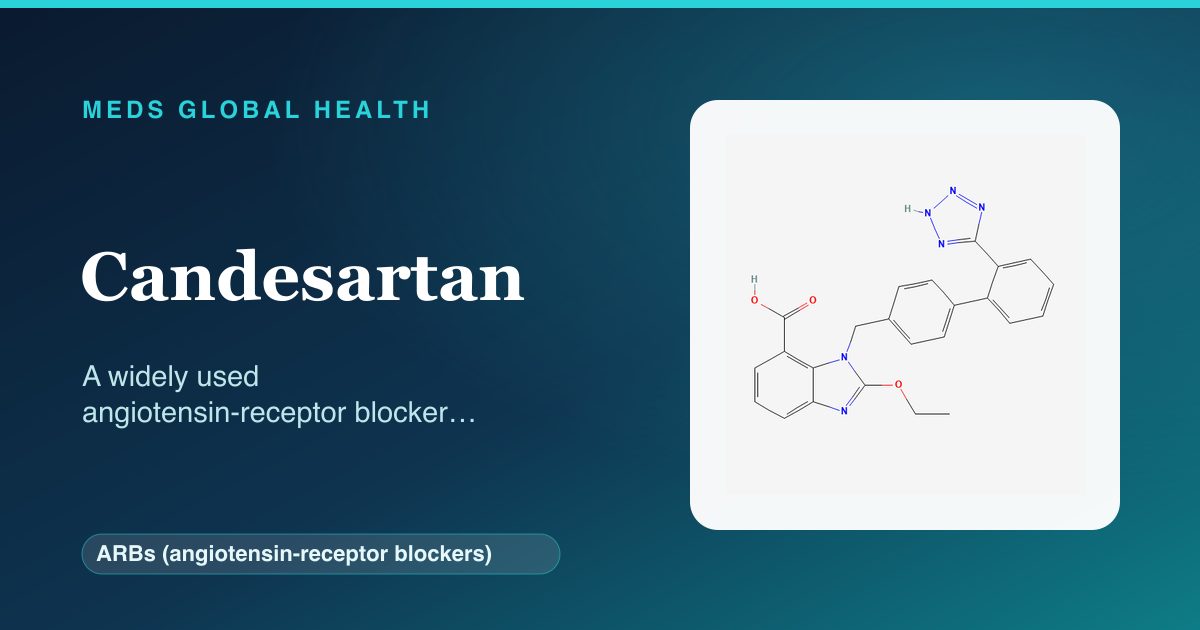
What it is
Candesartan is a commonly prescribed angiotensin-receptor blocker (ARB). It lowers blood pressure and is also used as a foundation treatment for heart failure with a reduced pumping function. ARBs work on the same hormone system as ACE inhibitors but rarely cause the dry cough that some people get with an ACE inhibitor, so candesartan is a frequent choice for people who cannot tolerate that cough. It is taken as a long-term, once-daily tablet, and like other blood-pressure medicines it works quietly in the background — the benefit is measured in lower pressure and reduced cardiovascular risk over time, not in how you feel day to day.
How it works
Candesartan blocks the receptor that angiotensin II acts on. Angiotensin II is a hormone that tightens blood vessels and makes the body hold on to salt and water; by stopping it from binding to its receptor, blood vessels relax and the fluid load falls, so blood pressure drops and the heart has less to work against. Because it acts at the receptor (one step further along than an ACE inhibitor), it does not raise the airway chemicals that cause the ACE-inhibitor cough — which is why cough is rarely a problem.
Company & origin
Originated / developed by: Takeda and AstraZeneca.
Candesartan is an angiotensin-receptor blocker discovered by the Japanese company Takeda and developed in collaboration with Astra (now AstraZeneca). It was first launched in 1997 and approved by the FDA in 1998, marketed as Atacand and in the UK as Amias.
What it treats
Conditions Candesartan is used for
Practical use
How to take Candesartan
General, dose-free guidance — always follow your prescriber's and the leaflet's specific instructions.
- Usually taken once a day at a consistent time.
- Swallow the tablet with water, with or without food.
- In heart failure it is usually started low and increased gradually.
- If you miss a dose, take it when you remember unless the next dose is close, then skip it.
- Avoid NSAID painkillers and salt substitutes unless advised.
- Do not stop suddenly without medical advice, especially in heart failure.
Weighing it up
Advantages & disadvantages of Candesartan
Advantages
- Proven benefit in heart failure as well as high blood pressure.
- Once-daily dosing with a long duration of action.
- Avoids the cough associated with ACE inhibitors.
- Cheap, well-established generic.
Disadvantages
- Can raise potassium and affect kidney function, requiring blood tests.
- May cause dizziness, particularly when first started or increased.
- Must be avoided in pregnancy.
- The benefit is long-term and not something you feel day to day.
Practical use
Good to know
It is taken once a day at a consistent time and is usually started low and built up, with a blood-pressure and blood-test check after starting and after increases — especially in heart failure. Because it relaxes blood vessels, it can cause dizziness when you first start or when the dose goes up. It is a long-term treatment, and stopping it usually allows blood pressure to drift back up.
Who should not take it / use with caution
- Women who are pregnant or planning pregnancy — ARBs are avoided in pregnancy and switched to a safer alternative beforehand; they are also generally avoided while breastfeeding.
- People with significant kidney artery narrowing, a high blood potassium level, or very low blood pressure — used with caution and monitoring.
- Used with care in severe liver impairment and in people who are dehydrated or on a water tablet, as the first effect on blood pressure can be more pronounced.
Monitoring
- Blood pressure
- Kidney function and blood potassium before and after starting/increasing
- Symptoms during dose changes, particularly in heart failure
Side effects
- Dizziness or light-headedness, especially on standing or when starting and increasing.
- A rise in blood potassium or a change in kidney function (watched with blood tests).
- Headache or back/joint pain in some people; unlike ACE inhibitors, a dry cough is uncommon, and angioedema (sudden swelling of the face or throat) is rare but needs emergency care.
Key interactions
- NSAID painkillers (e.g. ibuprofen) can reduce its effect and stress the kidneys, especially alongside a water tablet ("triple whammy").
- Potassium supplements, potassium-based salt substitutes and certain diuretics can push blood potassium too high.
- Care alongside other blood-pressure-lowering medicines, an ACE inhibitor, and with lithium.
Available as: Tablets (several strengths).
Answers
Candesartan: frequently asked questions
Why might I be given candesartan instead of an ACE inhibitor?
Both work on the same hormone system and lower blood pressure equally well, but ACE inhibitors can cause a persistent dry, tickly cough in some people. ARBs such as candesartan act one step further along and rarely cause this cough, so they are the usual switch if an ACE inhibitor is not tolerated.
Does candesartan cause a cough like ramipril?
Rarely. The dry cough linked to ACE inhibitors comes from the build-up of certain airway chemicals; ARBs work in a different way and do not usually cause it, which is one of the main reasons they are chosen.
Is candesartan safe in pregnancy?
No — ARBs are avoided in pregnancy and are usually switched to a safer alternative before conceiving. Tell your doctor promptly if you are pregnant or planning to be.
What is the difference between candesartan and Amias?
They are the same medicine — candesartan is the generic (active-ingredient) name and Amias is a brand name. Generic candesartan contains the identical active ingredient.
Why do I need blood tests on candesartan?
ARBs can affect kidney function and raise blood potassium in some people, so a check before starting and after dose increases makes sure the medicine is suiting you. Your blood pressure is also reviewed to confirm it is working.
The wider class
About ARBs (angiotensin-receptor blockers)
Candesartan belongs to the arbs (angiotensin-receptor blockers) class. For how the class as a whole works, its shared safety principles and monitoring, see the full guide.
Browse by body system
Authoritative sources
- BNF: Candesartan cilexetil.
- electronic Medicines Compendium (SmPC): Candesartan (Amias).
- NICE CKS: Candesartan.
Building a medicines information resource?
We create evidence-led, dose-free drug and formulary references for teams.