A cannabis-derived medicine for rare epilepsies (Epidyolex)
Cannabidiol
A cannabis-derived medicine used to help control seizures in certain rare, severe epilepsies.
What is Cannabidiol?
Cannabidiol, known by the brand name Epidyolex, is a specialist medicine made from the cannabis plant that is used to help control seizures in certain rare, severe epilepsies, including Dravet syndrome, Lennox-Gastaut syndrome and seizures linked to tuberous sclerosis. It is given as a liquid by mouth, alongside other epilepsy medicines. It does not contain the part of cannabis that makes people high. Important things to know are that it can raise liver enzymes, especially when taken with sodium valproate, and that it can make people sleepy and interacts with another epilepsy medicine called clobazam, so blood tests and careful monitoring are needed.
Education and reference only. This is a plain-language guide to Cannabidiol — it deliberately contains no doses. Doses depend on the person, the brand and the reason for treatment, and belong with your prescriber. Always check the BNF, the product labelling (SmPC) and follow medical advice.
What it is
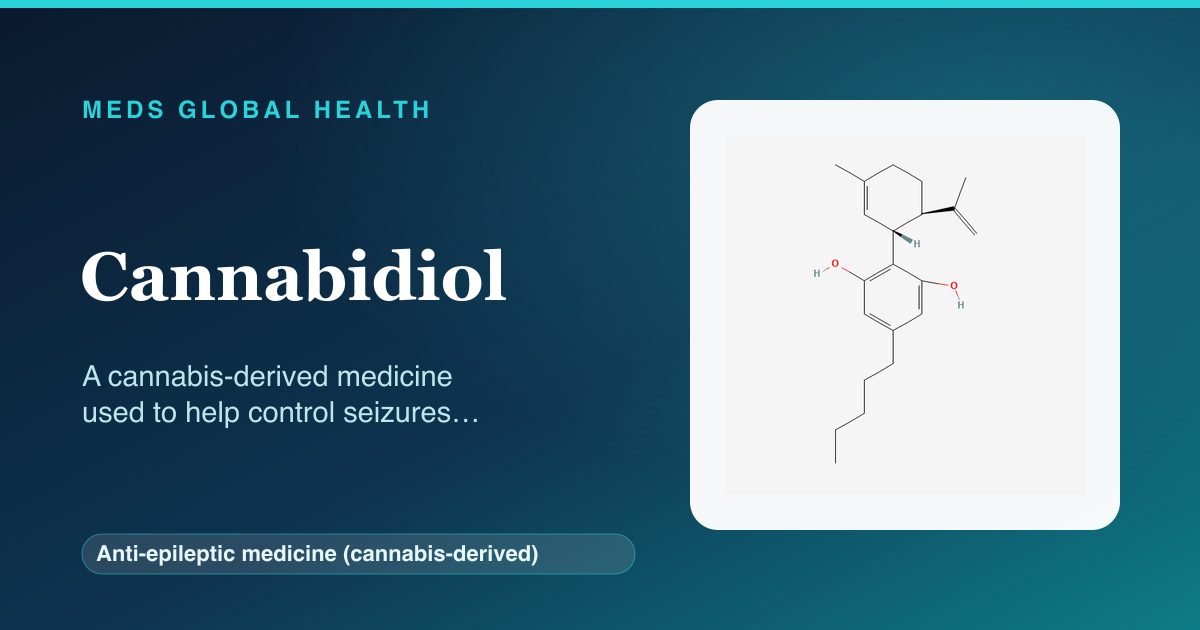
Cannabidiol is a medicine made from a substance found in the cannabis plant, used as an add-on treatment to help control seizures in certain rare and severe forms of epilepsy. In the UK it is used, under the brand name Epidyolex, for Dravet syndrome, Lennox-Gastaut syndrome and seizures associated with tuberous sclerosis, usually in addition to other epilepsy medicines. It is taken by mouth as a liquid and is prescribed and supervised by an epilepsy specialist. Importantly, it does not contain the part of cannabis (THC) that causes a 'high'.
How it works
Cannabidiol acts on the brain in ways that help reduce the abnormal electrical activity that causes seizures, although it works differently from most other epilepsy medicines. Because it is used in rare, hard-to-treat epilepsies, it is added on top of existing treatment rather than used on its own, with the aim of reducing how often seizures happen. It is taken regularly, usually twice a day, to keep a steady effect. As it interacts with the liver and with some other epilepsy medicines, the specialist team builds the dose up gradually and monitors closely.
Company & origin
A specialist cannabis-derived medicine used in the UK to help control seizures in certain rare, severe childhood epilepsies.
What it treats
Conditions Cannabidiol is used for
Practical use
How to take Cannabidiol
General, dose-free guidance — always follow your prescriber's and the leaflet's specific instructions.
- Give it by mouth as a liquid, usually twice a day, measured carefully with the syringe provided.
- Follow the gradual dose build-up the specialist sets, as this reduces side effects.
- Have the blood tests arranged to check the liver, especially if also taking sodium valproate.
- Do not stop it suddenly, as this can trigger more seizures; any changes should be guided by the specialist.
- Tell the team about all other medicines, particularly clobazam and valproate, as it interacts with them.
Weighing it up
Advantages & disadvantages of Cannabidiol
Advantages
- Can reduce how often seizures happen in certain rare, severe epilepsies that are hard to treat.
- Taken as a liquid by mouth, which suits children and people who cannot swallow tablets.
- Does not contain THC, so it does not cause a 'high'.
Disadvantages
- Can raise liver enzymes, especially when combined with sodium valproate, so blood tests are needed.
- Commonly causes sleepiness, which can be stronger when taken with clobazam.
- Interacts with several other medicines and must be built up gradually and not stopped suddenly.
Practical use
Good to know
The most important safety point is the effect on the liver: cannabidiol can raise liver enzymes, and this is more likely when it is taken with the epilepsy medicine sodium valproate, so blood tests are done before and during treatment. It commonly causes sleepiness and tiredness, which can be stronger when it is combined with clobazam, another epilepsy medicine; the levels of clobazam can rise, so doses may need adjusting. It can also cause reduced appetite, diarrhoea and, occasionally, a rash. It does not contain THC and does not cause a 'high'. The dose is built up slowly to reduce side effects, and it should never be stopped suddenly, as this can trigger more seizures. Tell the specialist team about all other medicines, as cannabidiol interacts with several of them.
Who should not take it / use with caution
- People who have had a serious allergic reaction to cannabidiol or the ingredients in the liquid should not take it.
- It is used with caution, and with extra liver monitoring, in people with existing liver problems.
- It should only be used under the supervision of an epilepsy specialist, with the right blood-test monitoring.
Monitoring
- Liver blood tests before and during treatment, especially when taken with sodium valproate.
- Watching for sleepiness, particularly when also taking clobazam.
- Reviewing how well seizures are controlled and checking appetite and weight over time.
Side effects
- Sleepiness and tiredness, which can be more pronounced when taken with clobazam.
- Raised liver enzymes on blood tests, especially alongside sodium valproate.
- Reduced appetite, diarrhoea, vomiting or feeling unwell.
- Less commonly, a rash or other allergic-type reaction, which should be reported.
Key interactions
- Sodium valproate increases the chance of raised liver enzymes, so the liver is monitored closely.
- Clobazam levels can rise when taken with cannabidiol, increasing sleepiness, so doses may need adjusting.
- It interacts with several other medicines, so give the specialist team a full list of everything taken.
Available as: An oral liquid (oral solution) taken by mouth.
Answers
Cannabidiol: frequently asked questions
What is cannabidiol used for?
It is used as an add-on treatment to help control seizures in certain rare, severe epilepsies, including Dravet syndrome, Lennox-Gastaut syndrome and seizures linked to tuberous sclerosis.
Will it make me high?
No. This medicine does not contain THC, the part of cannabis that causes a 'high', so it does not have that effect.
Why do I need liver blood tests?
Cannabidiol can raise liver enzymes, particularly when taken with sodium valproate, so blood tests are done before and during treatment to check the liver.
Why does it interact with clobazam?
Taking it with clobazam can raise clobazam levels and increase sleepiness, so doses may need adjusting and you should be watched for drowsiness.
Can it be stopped suddenly?
No. Stopping epilepsy medicines suddenly can trigger more seizures, so any change should be gradual and guided by the specialist team.
Authoritative sources
- BNF
- NICE CKS
Building a medicines information resource?
We create evidence-led, dose-free drug and formulary references for teams.