A chilli-derived cream and patch for nerve pain and arthritis
Capsaicin
A chilli-derived cream or patch applied to the skin to relieve nerve pain and the pain of osteoarthritis.
What is Capsaicin?
Capsaicin is the substance that makes chilli peppers hot, used as a cream or patch applied to the skin to relieve nerve pain (such as after shingles or in diabetic nerve pain) and the pain of osteoarthritis. The main thing to expect is an intense burning, stinging or warm sensation where it is applied, which usually settles with repeated use. It is important to wash your hands after applying it and to keep it away from the eyes and broken skin. A high-strength patch is applied by healthcare professionals in a clinic rather than at home.
Education and reference only. This is a plain-language guide to Capsaicin — it deliberately contains no doses. Doses depend on the person, the brand and the reason for treatment, and belong with your prescriber. Always check the BNF, the product labelling (SmPC) and follow medical advice.
What it is
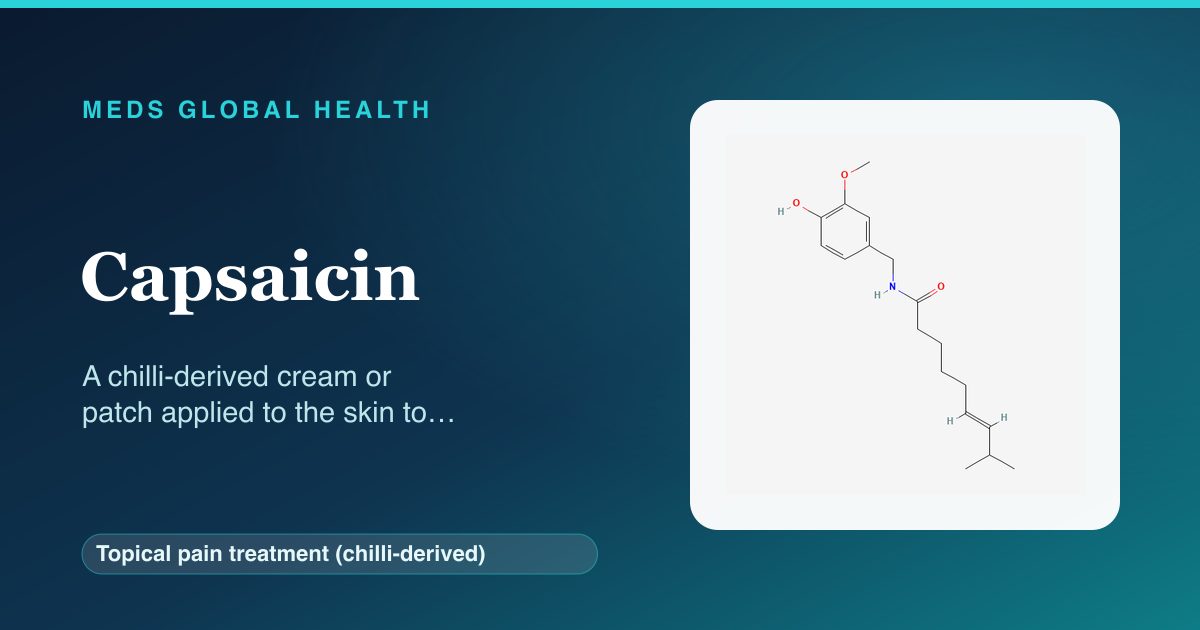
Capsaicin is the natural compound that gives chilli peppers their heat. As a medicine, it is applied to the skin as a cream to ease the pain of osteoarthritis and certain types of nerve pain, such as the pain that can follow shingles or the nerve pain of diabetes. There is also a high-strength patch used for nerve pain, which is applied by healthcare professionals in a clinic setting rather than used at home. It works directly where it is applied, rather than being taken by mouth, so its effects are mainly local to the painful area.
How it works
Capsaicin acts on the nerve endings in the skin that signal pain and heat. At first it stimulates these nerves, which is why it causes a burning or warm sensation when applied. With repeated use, it gradually reduces the amount of a chemical the nerves use to send pain signals, so the pain messages become weaker over time. This is why the cream needs to be used regularly for a while before the benefit builds up, and why the initial burning tends to ease with continued use. The high-strength patch delivers a concentrated dose in one treatment to calm the pain nerves for a longer period.
Company & origin
A treatment derived from chilli peppers, used in the UK as a cream for osteoarthritis and as creams and a specialist patch for nerve pain.
What it treats
Conditions Capsaicin is used for
Practical use
How to take Capsaicin
General, dose-free guidance — always follow your prescriber's and the leaflet's specific instructions.
- Apply a thin layer of cream to the painful area as directed, usually several times a day, and rub it in gently.
- Wash your hands thoroughly straight after applying it, or wear gloves, and avoid touching your eyes, mouth or other delicate areas.
- Apply it to cool, dry, intact skin, and avoid hot baths or showers just before or after, as heat makes the burning worse.
- Expect a burning or warm sensation at first; keep using it regularly, as this usually settles and the pain relief builds over a few weeks.
- Have the high-strength patch applied by a healthcare professional in a clinic, not at home.
Weighing it up
Advantages & disadvantages of Capsaicin
Advantages
- Relieves nerve pain and the pain of osteoarthritis by acting directly where it is applied.
- Works on the skin rather than being taken by mouth, so it avoids many whole-body side effects.
- Offers an option for nerve pain that can be hard to treat, including a longer-acting clinic patch.
Disadvantages
- Causes an intense burning, stinging or warm sensation where it is applied, especially at first.
- Needs careful handling to avoid the eyes, broken skin and delicate areas, and thorough hand-washing afterwards.
- The cream needs regular use over weeks to build up its effect, and the strong patch must be applied by professionals.
Practical use
Good to know
The most striking feature of capsaicin is the intense burning, stinging or warm feeling it causes where it is applied; this is expected and usually fades as your skin gets used to it with regular use, but it can be off-putting at first. Practical care matters a great deal: wash your hands thoroughly after applying the cream (or use gloves), and keep it well away from your eyes, mouth, other delicate areas and broken or irritated skin, as it stings sharply on contact. The burning can feel worse with heat, such as in a hot bath or shower, so it is best applied to cool, dry skin. The cream needs regular, consistent use over a few weeks for the full benefit. The high-strength patch is a clinic procedure: it is applied by trained professionals, who manage the strong burning it can cause and watch your blood pressure during treatment.
Who should not take it / use with caution
- People who have had a serious allergic reaction to capsaicin should not use it.
- It should not be applied to broken, irritated or inflamed skin.
- It is used with care, and the high-strength patch is applied only under professional supervision; medical advice should be sought before using it on children or during pregnancy.
Monitoring
- Checking how well the pain responds over the weeks of regular use.
- Watching the skin for excessive irritation or a reaction at the application site.
- With the high-strength patch, monitoring during the clinic procedure, including blood pressure.
Side effects
- A burning, stinging, warm or red sensation where it is applied, usually settling with repeated use.
- Skin irritation, itching or dryness at the site.
- With the high-strength patch, more intense pain and redness during and after application, which the clinic team manages, and occasionally a temporary rise in blood pressure.
Key interactions
- It has few interactions with other medicines, as it works mainly on the skin.
- Heat sources such as hot baths, heating pads or strong sun can intensify the burning sensation.
- Other creams or dressings on the same area should be discussed with your prescriber to avoid irritation.
Available as: Creams applied to the skin and a high-strength patch applied by healthcare professionals.
Answers
Capsaicin: frequently asked questions
What is capsaicin used for?
It is a chilli-derived cream or patch applied to the skin to relieve nerve pain, such as after shingles or in diabetic nerve pain, and the pain of osteoarthritis.
Why does it burn so much?
Capsaicin first stimulates the pain and heat nerves in the skin, causing a burning or warm sensation; this is expected and usually settles with regular use as the pain relief builds.
How should I handle it safely?
Wash your hands thoroughly after applying it, or wear gloves, and keep it well away from your eyes, mouth, other delicate areas and any broken skin, as it stings sharply.
How long before it helps?
The cream needs regular, consistent use over a few weeks before the full pain-relieving benefit builds up, so it is important to keep using it.
Can I use the strong patch at home?
No. The high-strength capsaicin patch is applied by trained healthcare professionals in a clinic, who manage the strong burning and monitor you during treatment.
Authoritative sources
- BNF
- NICE CKS
Building a medicines information resource?
We create evidence-led, dose-free drug and formulary references for teams.