A cholinergic medicine used in eye surgery
Carbachol
A cholinergic medicine used mainly during eye surgery to constrict the pupil, and in some glaucoma situations.
What is Carbachol?
Carbachol is a cholinergic medicine used mainly in eye surgery, where it is placed in the eye during or after an operation to make the pupil smaller. Tightening the pupil this way helps the surgeon and can help control the pressure inside the eye after surgery. It is also sometimes used as eye drops in certain glaucoma situations. It usually causes only brief eye effects, but if enough is absorbed it can cause wider cholinergic effects such as sweating, watery eyes, tummy cramps or a slow heartbeat. It is used by eye specialists.
Education and reference only. This is a plain-language guide to Carbachol — it deliberately contains no doses. Doses depend on the person, the brand and the reason for treatment, and belong with your prescriber. Always check the BNF, the product labelling (SmPC) and follow medical advice.
What it is
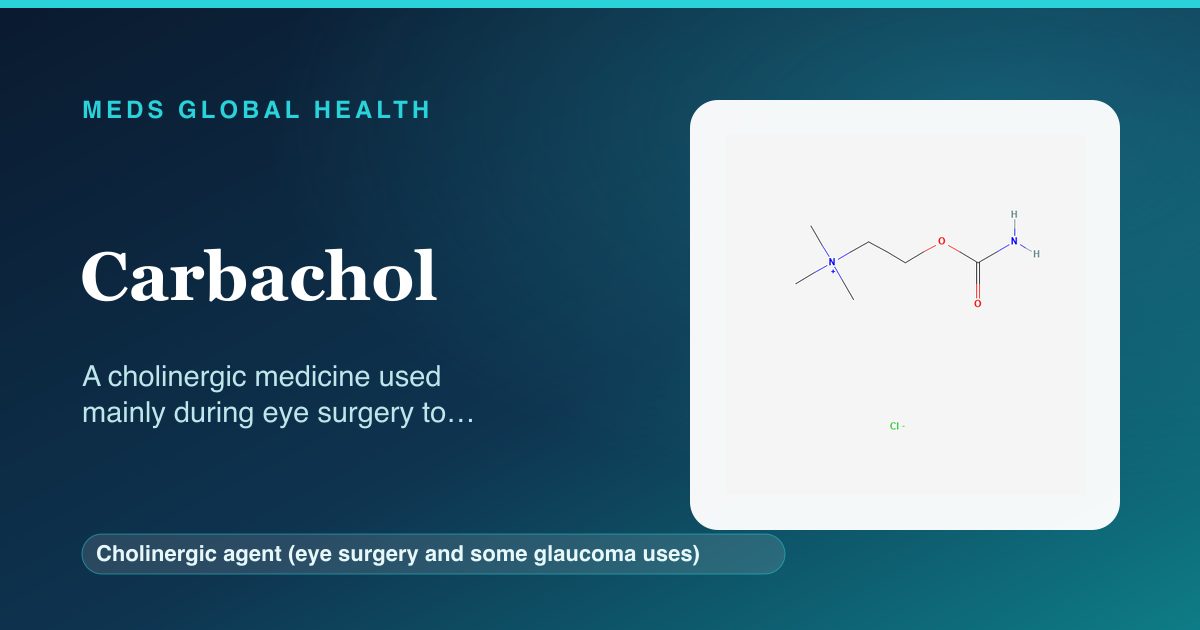
Carbachol is a cholinergic medicine, which means it mimics a natural body signal that, in the eye, makes the pupil constrict (get smaller) and helps the eye drain fluid. Its main use is in eye surgery, where it is applied inside the eye during or after an operation to tighten the pupil and help manage the pressure inside the eye afterwards. It is also used, less commonly, as eye drops in certain glaucoma situations to help lower eye pressure. It is a specialist medicine used by eye-care professionals and surgeons.
How it works
Carbachol acts on cholinergic receptors in the eye. This makes the tiny muscles of the iris contract, so the pupil becomes smaller, and it helps the eye's drainage channels open up so fluid can flow out more easily. In surgery, a smaller pupil can help the surgeon and, by improving drainage, the medicine helps keep the pressure inside the eye from rising after an operation. In its glaucoma use, the same improvement in fluid drainage helps lower the raised pressure that can damage the eye. Its effects are mostly local to the eye, but if enough is absorbed into the body it can cause wider cholinergic effects.
Company & origin
Originated / developed by: Eye-care manufacturers.
A specialist medicine used in the UK mainly during eye surgery to make the pupil smaller, and in some glaucoma situations.
Practical use
How to take Carbachol
General, dose-free guidance — always follow your prescriber's and the leaflet's specific instructions.
- In surgery it is applied inside the eye by the surgeon; you do not use this yourself.
- If prescribed as drops, use them in the affected eye exactly as directed and at the right times.
- Expect brief dimming or blurring of vision and a smaller pupil; wait until vision clears before driving.
- Report sweating, watering of the eyes or mouth, tummy cramps, a slow heartbeat or feeling faint.
- Tell your eye specialist about heart, breathing, gut or bladder conditions and all your medicines.
Weighing it up
Advantages & disadvantages of Carbachol
Advantages
- Reliably makes the pupil smaller during eye surgery, which can help the surgeon.
- Helps control the pressure inside the eye after an operation.
- Can also help lower raised eye pressure in certain glaucoma situations.
Disadvantages
- Can cause brief dimming or blurring of vision and aching around the eye.
- If enough is absorbed, it can cause wider cholinergic effects such as sweating, cramps or a slow heartbeat.
- Used with caution in people with certain heart, breathing, gut or bladder conditions.
Practical use
Good to know
It helps to know that carbachol is mainly a medicine used by eye surgeons during operations rather than something you take yourself, though it is sometimes prescribed as drops for certain glaucoma situations. In the eye it usually causes only brief effects, such as a smaller pupil, some dimming or blurring of vision, or a mild ache or headache around the eye. The important safety point is that, because it mimics a natural body signal, if enough is absorbed beyond the eye it can cause wider cholinergic effects such as sweating, watery eyes and mouth, tummy cramps, a slow heartbeat or feeling faint; these should be reported. Because of these effects, it is used carefully in people with certain heart, breathing, gut or bladder conditions, and always under specialist eye-care supervision.
Who should not take it / use with caution
- People who have had a serious allergic reaction to carbachol should not be given it.
- It is used with caution, or avoided, in people with certain heart, breathing, gut or bladder conditions, or some types of eye problem.
- It is used with care, and on specialist advice, in pregnancy and breastfeeding.
Monitoring
- Checking the pupil and eye pressure during and after surgery where it is used.
- Watching for wider cholinergic effects such as a slow heartbeat or sweating.
- Reviewing how well any glaucoma use controls eye pressure over time.
Side effects
- Brief dimming or blurring of vision and a smaller pupil after it is used in the eye.
- Mild aching, headache or irritation around the eye.
- If enough is absorbed beyond the eye, wider effects such as sweating, watery eyes and mouth, tummy cramps, a slow heartbeat or feeling faint.
Key interactions
- It can add to the effects of other cholinergic medicines, so tell your specialist what you take.
- Other eye drops should usually be separated by a short time so they do not wash each other out.
- Mention heart and breathing medicines and conditions, as wider cholinergic effects could matter for these.
Available as: A solution applied inside the eye during surgery, and eye drops.
Answers
Carbachol: frequently asked questions
What is carbachol used for?
It is used mainly in eye surgery to make the pupil smaller and help control eye pressure afterwards, and sometimes as eye drops in certain glaucoma situations.
Why does it make my vision dim?
It makes the pupil smaller, which can cause brief dimming or blurring of vision; this usually settles, so wait until your vision clears before driving.
Is it something I use myself?
Mostly it is applied by the surgeon during an operation, though it is sometimes prescribed as drops for certain glaucoma situations to use as directed.
What wider effects should I report?
If enough is absorbed beyond the eye it can cause sweating, watery eyes and mouth, tummy cramps, a slow heartbeat or feeling faint, which should be reported.
Why does my eye specialist ask about other conditions?
Because its cholinergic effects could matter in people with certain heart, breathing, gut or bladder conditions, so it is used carefully in those situations.
Authoritative sources
- BNF
- NICE CKS
Building a medicines information resource?
We create evidence-led, dose-free drug and formulary references for teams.