An older medicine for mouth ulcers and inflammation
Carbenoxolone
An older liquorice-derived medicine used mainly for mouth ulcers and inflammation in the mouth.
What is Carbenoxolone?
Carbenoxolone is an older medicine, originally derived from liquorice, used mainly for mouth ulcers and inflammation in and around the mouth, and in the past for stomach ulcers. It is most often applied to the affected area in the mouth as a gel or used as a mouthwash. The most important thing to know is that, when significant amounts are absorbed, it acts a little like the hormone aldosterone, causing the body to hold on to salt and water, raise blood pressure and lose potassium. Because of this it is used with caution in people with heart, kidney or liver disease and in older people.
Education and reference only. This is a plain-language guide to Carbenoxolone — it deliberately contains no doses. Doses depend on the person, the brand and the reason for treatment, and belong with your prescriber. Always check the BNF, the product labelling (SmPC) and follow medical advice.
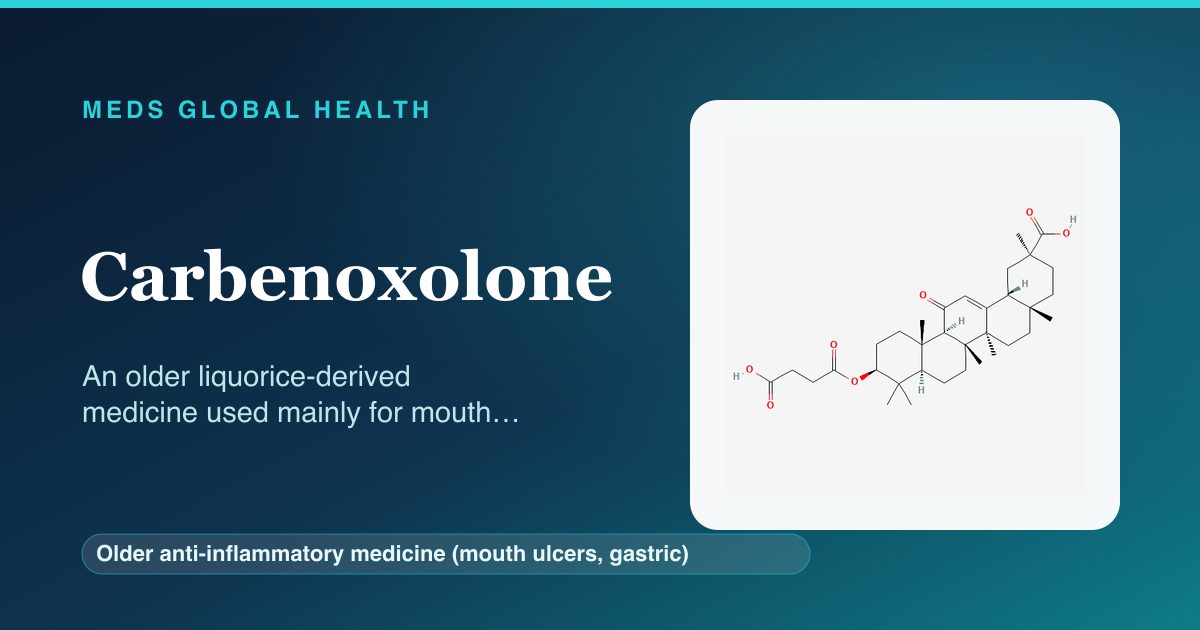
What it is
Carbenoxolone is an older medicine that comes from liquorice. It is used mainly to help mouth ulcers and inflammation in the mouth, where it is applied directly to the sore area or used as a mouthwash. In the past it was also taken by mouth for stomach (gastric) ulcers, before modern acid-lowering medicines became the usual treatment. It works by helping protect and soothe the lining where it is applied. It is an established but now less commonly used medicine, with an important effect on the body's salt, water and potassium balance when much of it is absorbed.
How it works
Carbenoxolone helps protect and soothe inflamed or ulcerated lining, such as in the mouth, supporting healing of the sore area. Its most important wider effect comes from the way it behaves a little like the hormone aldosterone: it can make the body hold on to salt and water and lose potassium. This mineralocorticoid-like effect is more likely when a meaningful amount is absorbed into the body, and it is the reason carbenoxolone can raise blood pressure, cause fluid retention and lower potassium, which is why people with heart, kidney or liver problems and older people are watched carefully.
Company & origin
An older medicine, derived from liquorice, used in the UK mainly for mouth ulcers and inflammation in the mouth, and historically for stomach ulcers.
Practical use
How to take Carbenoxolone
General, dose-free guidance — always follow your prescriber's and the leaflet's specific instructions.
- For mouth ulcers, apply it directly to the sore areas or use it as a mouthwash as directed, after meals and at bedtime.
- Use it for the shortest time needed, as longer or heavier use makes salt-and-water effects more likely.
- Tell your prescriber if you have high blood pressure, heart, kidney or liver problems before using it.
- Report ankle swelling, breathlessness, unusual tiredness or muscle weakness, which can signal fluid retention or low potassium.
- Follow your prescriber's advice if you also take water tablets or other medicines that affect potassium.
Weighing it up
Advantages & disadvantages of Carbenoxolone
Advantages
- Helps soothe and heal mouth ulcers and inflammation in the mouth.
- Applied directly to the affected area, which keeps much of it where it is needed.
- A long-established medicine with decades of experience behind its use.
Disadvantages
- When much is absorbed, it can cause salt and water retention, raised blood pressure and low potassium.
- Used with caution or avoided in people with heart, kidney or liver disease and in older people.
- An older medicine, now used much less often than modern alternatives, especially for stomach ulcers.
Practical use
Good to know
The single most important thing to understand about carbenoxolone is its liquorice-like effect on the body's salt and water balance. When enough is absorbed, it can make the body retain salt and water, raise blood pressure and lower potassium, which in turn can cause tiredness, muscle weakness or, with low potassium, heart-rhythm effects. For this reason it is used with caution, or avoided, in people with high blood pressure, heart failure, kidney disease or liver disease, and in older people, who are more vulnerable to these changes. Used in the mouth for ulcers, less is absorbed, but the same cautions still apply if it is used a lot or for a long time. If you notice ankle swelling, breathlessness, unusual tiredness or muscle weakness, tell your prescriber. Anyone with heart, kidney or liver conditions should make sure their prescriber knows before using it.
Who should not take it / use with caution
- People who have had a serious allergic reaction to carbenoxolone should not use it.
- It is generally avoided in people with heart failure, poorly controlled high blood pressure or significant kidney or liver disease.
- It is used with particular caution in older people, who are more prone to its salt, water and potassium effects.
- It is used with care alongside water tablets (diuretics) and other medicines that lower potassium.
Monitoring
- Checking blood pressure, especially with longer or heavier use.
- Watching for fluid retention, such as ankle swelling or breathlessness.
- Checking potassium and kidney function where significant amounts may be absorbed.
Side effects
- Salt and water retention, which can cause ankle swelling and raise blood pressure.
- Low potassium, which can cause tiredness, muscle weakness and, if severe, heart-rhythm effects.
- Local irritation or stinging where it is applied in the mouth.
- Unusual tiredness or breathlessness, which should be reported as they may signal fluid overload.
Key interactions
- Water tablets (diuretics) can add to its potassium-lowering effect, so they are used together with care.
- Low potassium caused by carbenoxolone can increase the effects and risks of digoxin.
- It may work against blood-pressure medicines because it tends to raise blood pressure.
Available as: An oral gel, paste or granules for the mouth, and historically tablets.
Answers
Carbenoxolone: frequently asked questions
What is carbenoxolone used for?
It is an older liquorice-derived medicine used mainly for mouth ulcers and inflammation in the mouth, and in the past for stomach ulcers.
Why does it affect blood pressure and potassium?
When enough is absorbed it acts a little like the hormone aldosterone, making the body hold on to salt and water and lose potassium, which can raise blood pressure.
Who needs to be careful with it?
People with heart failure, high blood pressure, kidney or liver disease and older people, because they are more prone to its salt, water and potassium effects.
What warning signs should I watch for?
Ankle swelling, breathlessness, unusual tiredness or muscle weakness can suggest fluid retention or low potassium and should be reported to your prescriber.
Is it still commonly used?
No. It is an older medicine used much less often today, especially for stomach ulcers, where modern acid-lowering medicines are now usual.
Authoritative sources
- BNF
- NICE CKS
Building a medicines information resource?
We create evidence-led, dose-free drug and formulary references for teams.