A targeted tablet for ALK-positive lung cancer
Ceritinib
A targeted tablet for ALK-positive advanced lung cancer, used after crizotinib; it is taken with food and commonly upsets the stomach.
What is Ceritinib?
Ceritinib is a specialist targeted cancer medicine used to treat advanced non-small-cell lung cancer that has a fault in a gene called ALK. It is taken as a tablet by mouth and blocks the faulty signal that drives this cancer to grow. The most common problems are tummy-related, such as diarrhoea, nausea and vomiting, which can usually be managed. It can also affect the liver, raise blood sugar, change the heart's rhythm and, less often, inflame the pancreas, so regular blood tests and monitoring are needed. Like other targeted cancer medicines, it can harm a developing baby, so reliable contraception is essential.
Education and reference only. This is a plain-language guide to Ceritinib — it deliberately contains no doses. Doses depend on the person, the brand and the reason for treatment, and belong with your prescriber. Always check the BNF, the product labelling (SmPC) and follow medical advice.
What it is
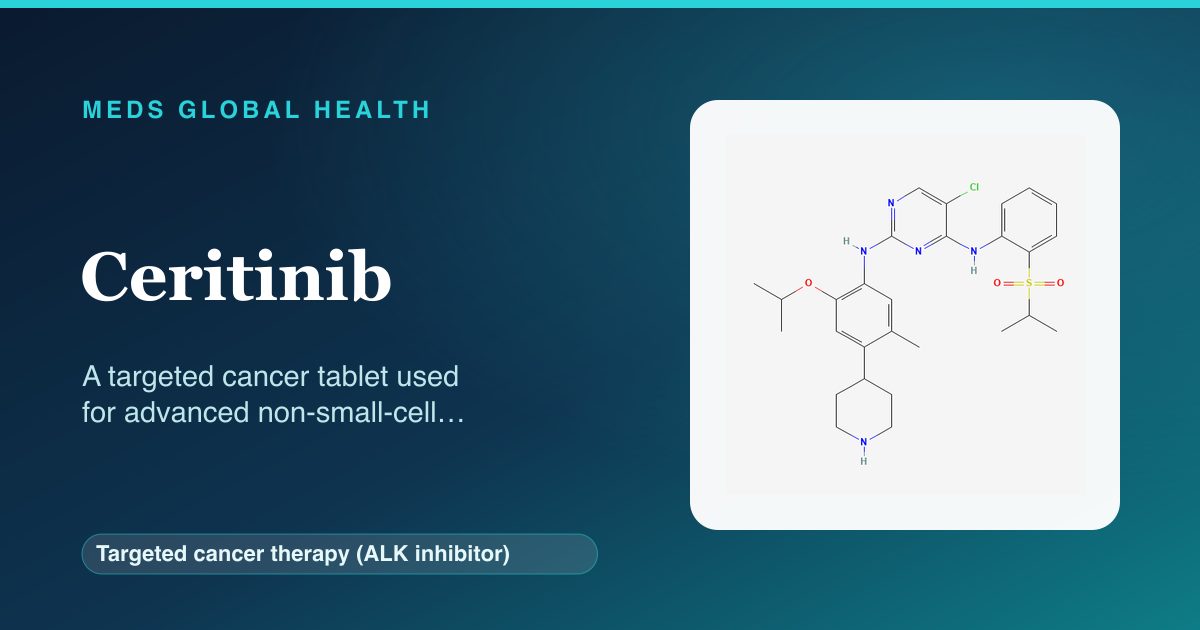
Ceritinib is a targeted cancer medicine, sometimes called an ALK inhibitor, used to treat advanced non-small-cell lung cancer in people whose cancer has a specific gene fault known as ALK-positive. It is taken by mouth as a tablet, under the care of a cancer specialist, and a test confirming the ALK fault is needed before it is used. Unlike standard chemotherapy, it is aimed at the particular fault driving this cancer. It is a long-term treatment that continues for as long as it keeps the cancer under control and is tolerated.
How it works
In ALK-positive lung cancer, a fault in the ALK gene produces a signal that constantly drives the cancer cells to grow. Ceritinib blocks this faulty ALK signal, slowing or stopping the cancer and helping it shrink, including where it has spread to the brain. Because it targets the specific driver of this cancer, it works well in people whose tumours carry the ALK fault. It is taken every day so the signal stays blocked, and treatment continues while it remains effective. How it is taken in relation to food is important, as this affects how much is absorbed.
Company & origin
A specialist targeted medicine used in the UK to treat a particular type of advanced lung cancer that has a fault in the ALK gene.
Practical use
How to take Ceritinib
General, dose-free guidance — always follow your prescriber's and the leaflet's specific instructions.
- Take the tablets by mouth as prescribed, following the specific instructions about taking them with or without food.
- Swallow them whole with water at about the same time each day, and avoid grapefruit while taking it.
- Tell your team about diarrhoea, nausea or vomiting, as these are common and can usually be managed.
- Report severe tummy pain, which can signal pancreas inflammation, straight away.
- Use reliable contraception during treatment and for the time afterwards your team advises, as it can harm a baby.
Weighing it up
Advantages & disadvantages of Ceritinib
Advantages
- An effective targeted treatment for ALK-positive lung cancer, including where it has spread to the brain.
- Taken as a tablet at home rather than as an infusion.
- Aimed at the specific fault driving the cancer, often working when this fault is present.
Disadvantages
- Commonly causes tummy upset such as diarrhoea, nausea and vomiting.
- Can affect the liver, raise blood sugar and change the heart's rhythm, so regular monitoring is needed.
- Can harm a developing baby, so reliable contraception is essential, and it interacts with several other medicines.
Practical use
Good to know
The most common issues with ceritinib are tummy-related: diarrhoea, nausea and vomiting are frequent, so it helps to have a plan from your team to manage these, and the dose may be adjusted if they are troublesome. It can affect the liver, so liver blood tests are done regularly, and it can raise blood sugar, with checks for this too. It can change the heart's electrical rhythm (the QT interval), so this may be monitored, particularly if you take other medicines that do the same. Less commonly it can inflame the pancreas, so severe tummy pain must be reported. How you take it around food matters for absorption, so follow the specific instructions you are given. Because it can harm a developing baby, reliable contraception is essential, and you should tell your team about all your other medicines.
Who should not take it / use with caution
- It must not be used in pregnancy, as it can harm a developing baby.
- People who have had a serious allergic reaction to ceritinib should not take it.
- It is used with caution in people with liver problems, certain heart-rhythm problems, diabetes or a history of pancreas problems, under specialist supervision.
Monitoring
- Regular blood tests for liver function and blood sugar.
- Checking the heart's rhythm where appropriate, especially alongside other medicines that affect it.
- Watching for tummy upset and severe tummy pain, and reviewing how well the cancer is controlled.
Side effects
- Diarrhoea, nausea, vomiting and tummy pain, which are common.
- Changes in liver blood tests and raised blood sugar.
- Tiredness, reduced appetite and weight loss.
- Less commonly but seriously, inflammation of the pancreas or changes in the heart's rhythm (the QT interval).
Key interactions
- Some medicines and grapefruit can raise ceritinib levels and increase side effects.
- Other medicines and supplements, such as St John's wort, can lower its levels and make it less effective.
- Medicines that affect the heart's QT interval or blood sugar may need reviewing, so give your team a full list of what you take.
Available as: Tablets taken by mouth.
Answers
Ceritinib: frequently asked questions
What is ceritinib used for?
It is a targeted medicine used to treat advanced non-small-cell lung cancer that has a fault in the ALK gene, blocking the faulty signal that drives the cancer.
Why does it upset my stomach?
Diarrhoea, nausea and vomiting are common with ceritinib; your team can give you a plan to manage them and may adjust the dose if they are troublesome.
Does how I take it with food matter?
Yes. How it is taken in relation to food affects how much your body absorbs, so follow the specific instructions you are given.
What serious tummy symptom should I report?
Severe tummy pain should be reported straight away, as it can be a sign of inflammation of the pancreas, which is a less common but serious effect.
Can I take it if I might become pregnant?
It can harm a developing baby, so you should use reliable contraception during treatment and for the time afterwards your team advises, and it is not used in pregnancy.
Authoritative sources
- BNF
- NICE CKS
Building a medicines information resource?
We create evidence-led, dose-free drug and formulary references for teams.