A cough suppressant for a dry, tickly cough
Chlophedianol
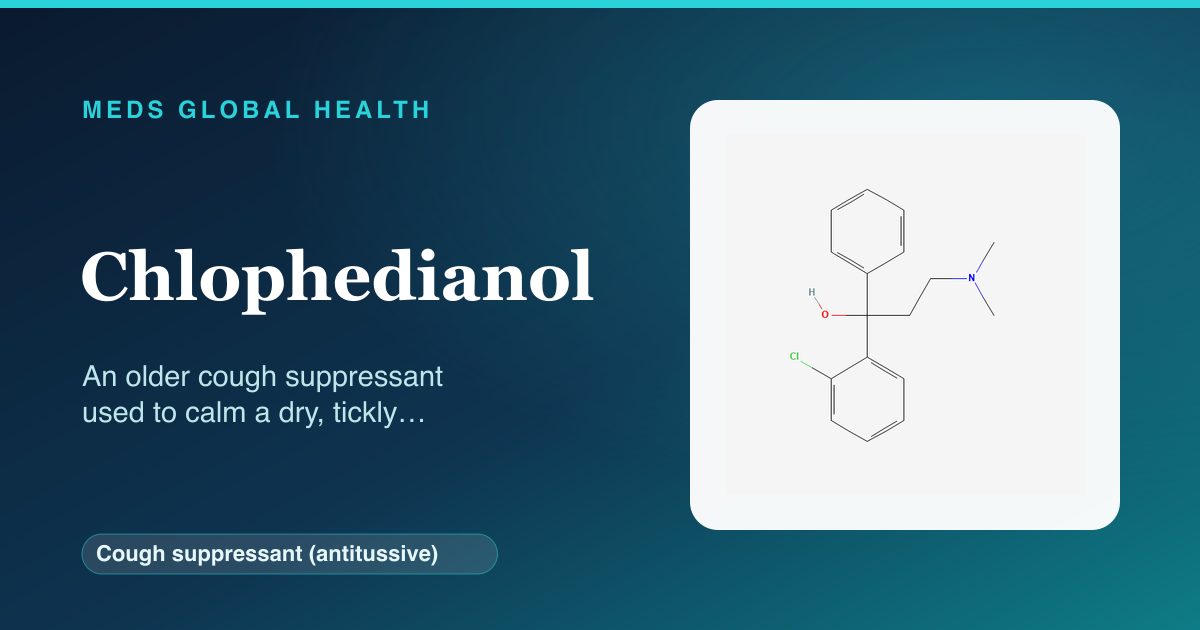
An older cough suppressant used to calm a dry, tickly cough that has no useful purpose.
What is Chlophedianol?
Chlophedianol is an older cough suppressant (antitussive) used to calm a dry, tickly cough that is not bringing up phlegm. It works by damping down the cough reflex so the urge to cough settles. It can cause drowsiness and dry-mouth type effects, so it is best avoided when you need to be alert, such as driving. It is largely a product found outside the UK rather than a mainstream UK medicine, where other cough remedies are more usual. It does not treat the cause of a cough, only the symptom.
Education and reference only. This is a plain-language guide to Chlophedianol — it deliberately contains no doses. Doses depend on the person, the brand and the reason for treatment, and belong with your prescriber. Always check the BNF, the product labelling (SmPC) and follow medical advice.
What it is
Chlophedianol is a cough-suppressing medicine, known as an antitussive, used to ease a dry, tickly cough that serves no useful purpose. It works in the part of the brain that controls the cough reflex, calming the urge to cough rather than treating whatever is causing it. It is taken by mouth, usually as a liquid. It is an older medicine that is mainly found in cough preparations in some countries and is rarely used in the UK, where simpler measures and other cough remedies are generally preferred.
How it works
Coughing is driven by a reflex controlled in the brain. Chlophedianol acts centrally to dampen this cough reflex, so the constant urge to cough settles and a dry, irritating cough becomes less troublesome. Because it works on the reflex rather than on the underlying problem, it is only useful for a dry cough that has no helpful role; it does not clear phlegm or treat an infection. Its calming effect on the nervous system is also why it can cause drowsiness and dry-mouth type effects in some people.
Company & origin
An older cough-suppressing medicine, mostly found in some cough preparations; rarely used in the UK, where other antitussives are more common.
Practical use
How to take Chlophedianol
General, dose-free guidance — always follow your prescriber's and the leaflet's specific instructions.
- Take it by mouth as directed on the preparation, usually as a measured liquid, for a dry, tickly cough.
- Avoid driving or operating machinery until you know whether it makes you drowsy.
- Be cautious about taking it with alcohol or other medicines that cause drowsiness.
- Use it only for a short time for a dry cough, and seek advice if the cough lasts or you bring up phlegm.
- Check with a pharmacist before using it alongside other cough or cold remedies, which may contain similar ingredients.
Weighing it up
Advantages & disadvantages of Chlophedianol
Advantages
- Can calm a dry, tickly cough that is disturbing sleep or daily life.
- Taken by mouth, usually as a simple liquid.
- A long-established medicine for symptom relief of a non-productive cough.
Disadvantages
- Treats only the symptom, not the cause of a cough.
- Can cause drowsiness and dry-mouth type effects, so caution is needed with driving.
- Rarely used in the UK, where other cough remedies are more usual.
Practical use
Good to know
The most important thing to understand is that chlophedianol only treats the symptom of a dry, tickly cough; it does not treat the cause, so a cough that is bringing up phlegm, or one that lingers, may need a different approach or a check-up. It can make you feel drowsy, so it is sensible to avoid driving or operating machinery until you know how it affects you, and to be careful about combining it with alcohol or other medicines that cause drowsiness. It can also cause dry mouth and other antimuscarinic type effects such as blurred vision, which tend to be mild. It is largely a product found outside the UK rather than a routine UK medicine, so always follow the specific instructions on the preparation you have and ask a pharmacist if you are unsure.
Who should not take it / use with caution
- People who have had a serious allergic reaction to chlophedianol should not take it.
- It should be used with caution in children, in older people, and in anyone for whom drowsiness is a concern; check with a pharmacist first.
- It is generally not suitable for a productive (phlegmy) cough, which usually should not be suppressed.
Monitoring
- Reviewing whether the cough is settling and whether it might need further assessment.
- Watching for excessive drowsiness, particularly in children and older people.
- Checking that the cough is dry rather than productive before continuing to suppress it.
Side effects
- Drowsiness or feeling sleepy.
- Dry mouth, and sometimes blurred vision or other mild antimuscarinic effects.
- Occasionally, dizziness, nausea or feeling restless or excitable in some people.
Key interactions
- Alcohol and other medicines that cause drowsiness can add to its sedating effect.
- Other cough and cold remedies may contain similar ingredients, so check before combining them.
- Tell a pharmacist or prescriber about your other medicines, especially sedatives and antihistamines.
Available as: Usually an oral liquid; sometimes part of combined cough preparations.
Answers
Chlophedianol: frequently asked questions
What is chlophedianol used for?
It is a cough suppressant used to calm a dry, tickly cough that is not bringing up phlegm, by damping down the cough reflex.
Will it make me drowsy?
It can cause drowsiness in some people, so it is best to avoid driving or operating machinery until you know how it affects you.
Can I use it for a chesty cough?
No. It is for a dry cough; a productive, phlegmy cough usually should not be suppressed, so ask a pharmacist for advice.
Is it commonly used in the UK?
It is largely a product found outside the UK and is rarely used here, where other cough remedies and simple measures are more usual.
Does it treat the cause of my cough?
No. It only eases the symptom of coughing; if a cough lasts or you feel unwell, it is worth getting it checked.
Authoritative sources
- BNF
- NICE CKS
Building a medicines information resource?
We create evidence-led, dose-free drug and formulary references for teams.