An antiseptic and disinfectant, the active ingredient in Dettol
Chloroxylenol
An over-the-counter antiseptic and disinfectant used on the skin, minor wounds and surfaces, familiar as the active ingredient in Dettol.
What is Chloroxylenol?
Chloroxylenol is a widely used antiseptic and disinfectant, best known as the active ingredient in Dettol. It kills bacteria and some other germs and is used to clean the skin, bathe minor cuts and grazes, and disinfect surfaces. For skin use, the liquid is usually diluted in water as directed on the pack before being applied. It is for external use and should be kept away from the eyes and out of deep or serious wounds. It is generally well tolerated but, like all antiseptics, it can sometimes irritate the skin, especially if used undiluted or too strong.
Education and reference only. This is a plain-language guide to Chloroxylenol — it deliberately contains no doses. Doses depend on the person, the brand and the reason for treatment, and belong with your prescriber. Always check the BNF, the product labelling (SmPC) and follow medical advice.
What it is
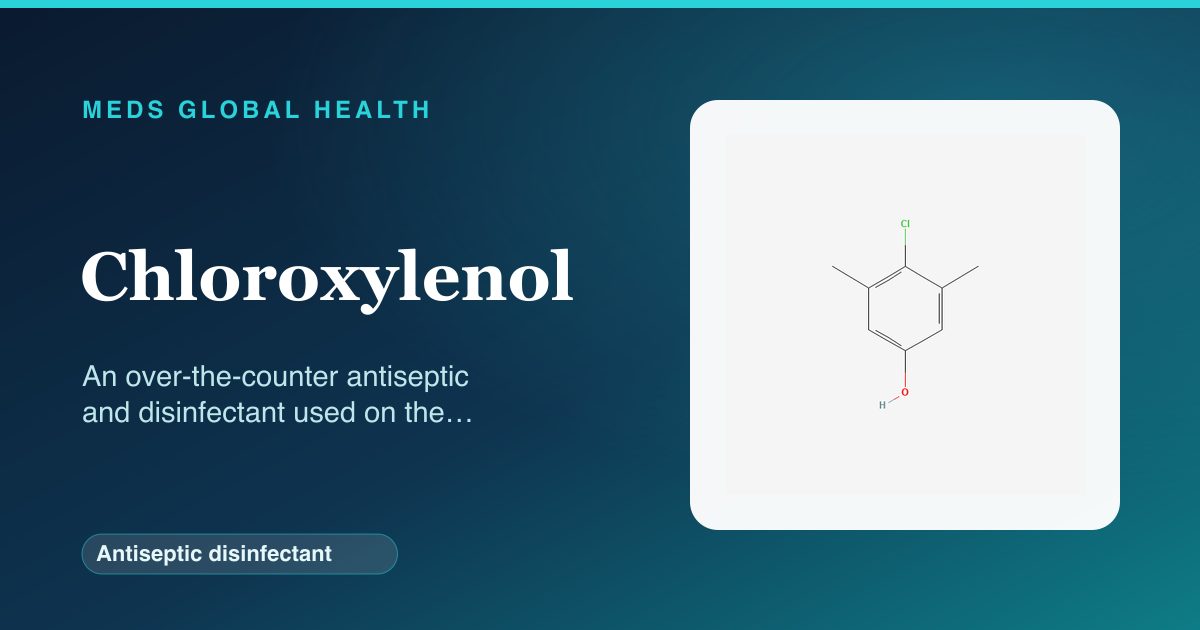
Chloroxylenol is an antiseptic and disinfectant that has been used in homes and healthcare for many years, most famously as the active ingredient in Dettol products. It is used to reduce germs on the skin, to clean minor cuts, grazes and bites, and to disinfect surfaces and household items. It comes as a concentrated liquid that is usually diluted in water for skin use, as well as in ready-to-use sprays, washes and wipes. It is available without a prescription and is valued for its broad action against many common bacteria and for being a familiar, trusted general-purpose antiseptic.
How it works
Chloroxylenol works by disrupting the outer structures and important systems of bacteria and some other germs, stopping them from functioning and causing them to die. It is effective against a broad range of common bacteria and helps reduce the number of germs on the skin, on minor wounds and on surfaces. The strength of its effect depends on how concentrated it is, which is why the liquid is usually diluted to the recommended amount for skin use rather than applied neat. Its action is local, working where it is applied, which is why it is used to clean specific areas rather than being taken into the body.
Company & origin
A household name antiseptic across the UK, best known as the active ingredient in Dettol, used to clean skin, minor wounds and surfaces.
Practical use
How to take Chloroxylenol
General, dose-free guidance — always follow your prescriber's and the leaflet's specific instructions.
- Dilute the liquid in water as directed on the pack before using it on the skin.
- Apply it to clean minor cuts, grazes and intact skin, using a clean swab or cloth.
- Keep it away from the eyes and out of deep or serious wounds.
- Stop using it if the skin becomes red, sore or develops a rash.
- See a pharmacist or GP if a wound looks infected or is not healing.
Weighing it up
Advantages & disadvantages of Chloroxylenol
Advantages
- A familiar, broad-acting antiseptic for skin, minor wounds and surfaces.
- Available in flexible forms, from concentrated liquid to ready-to-use sprays and wipes.
- Effective against many common bacteria when used at the right strength.
Disadvantages
- Needs to be diluted correctly, as it can irritate if used too strong or undiluted.
- For external use only and not suitable for deep or serious wounds.
- Some people become sensitised and develop a skin reaction with repeated use.
Practical use
Good to know
Chloroxylenol is for external use and should be diluted in water as directed before being put on the skin, because using it too strong or undiluted is more likely to irritate. It is suited to cleaning minor cuts, grazes and intact skin rather than deep, large or seriously contaminated wounds, which need proper medical care, and it should be kept out of the eyes. Some people find it irritating, and a few become sensitised with repeated use, so it should be stopped if a rash appears. The same product range is often used to disinfect surfaces, but the skin-cleansing and surface-cleaning instructions can differ, so it is important to follow the directions for the use you intend. If a wound looks infected, with spreading redness, swelling or pus, it should be seen by a pharmacist or GP.
Who should not take it / use with caution
- People who have had an allergic or irritant reaction to chloroxylenol or Dettol should not use it.
- It should not be used in the eyes, swallowed, or applied to deep or serious wounds.
- Anyone whose skin reacts badly should stop and choose a gentler antiseptic.
Monitoring
- No routine monitoring is needed for ordinary short-term skin use.
- Checking the skin for irritation or allergy with repeated use.
- Watching wounds for signs of infection that need medical review.
Side effects
- Stinging, redness or mild irritation where it is applied, especially if used too strong.
- An itchy rash or contact allergy in people who become sensitised.
- Rarely, a more marked allergic reaction needing medical attention.
Key interactions
- Soaps and some detergents can reduce its antiseptic effect, so rinse them off first.
- Avoid combining it with other strong antiseptics on the same area of skin.
- Tell the pharmacist about other skin products you are using nearby.
Available as: Concentrated antiseptic liquid for dilution, plus ready-to-use sprays, washes and wipes.
Answers
Chloroxylenol: frequently asked questions
What is chloroxylenol used for?
It is an antiseptic and disinfectant, best known as the active ingredient in Dettol. It is used to clean the skin, bathe minor cuts and grazes, and disinfect surfaces.
Do I need to dilute it?
For skin use, the concentrated liquid is usually diluted in water as directed on the pack. Using it too strong or undiluted is more likely to irritate the skin.
Can I use it on a deep wound?
No. It is meant for minor cuts, grazes and intact skin. Deep, large or heavily contaminated wounds need proper medical assessment.
Why does it sometimes irritate my skin?
Antiseptics can irritate, particularly if used at too high a strength. Diluting correctly helps, and you should stop using it if your skin becomes red or develops a rash.
Is it safe to swallow?
No. It is for external use only and should not be swallowed. Keep it away from the eyes and out of the reach of children.
Authoritative sources
- BNF
- NICE CKS
Building a medicines information resource?
We create evidence-led, dose-free drug and formulary references for teams.