A pain-relieving gel for mouth ulcers and gum pain
Choline salicylate
A salicylate gel used to ease the pain of mouth ulcers and sore gums in adults.
What is Choline salicylate?
Choline salicylate is a pain-relieving ingredient in mouth and gum gels, best known in products such as Bonjela and Bonjela Adult. It belongs to the salicylate family (related to aspirin) and is applied directly to the sore area to ease the pain of mouth ulcers and minor mouth and gum discomfort. Because it is a salicylate, these gels are not for children under 16 years or for teething babies, due to a rare but serious risk linked to salicylates in children. It is for short-term relief; mouth ulcers or soreness that do not heal within about three weeks should be checked.
Education and reference only. This is a plain-language guide to Choline salicylate — it deliberately contains no doses. Doses depend on the person, the brand and the reason for treatment, and belong with your prescriber. Always check the BNF, the product labelling (SmPC) and follow medical advice.
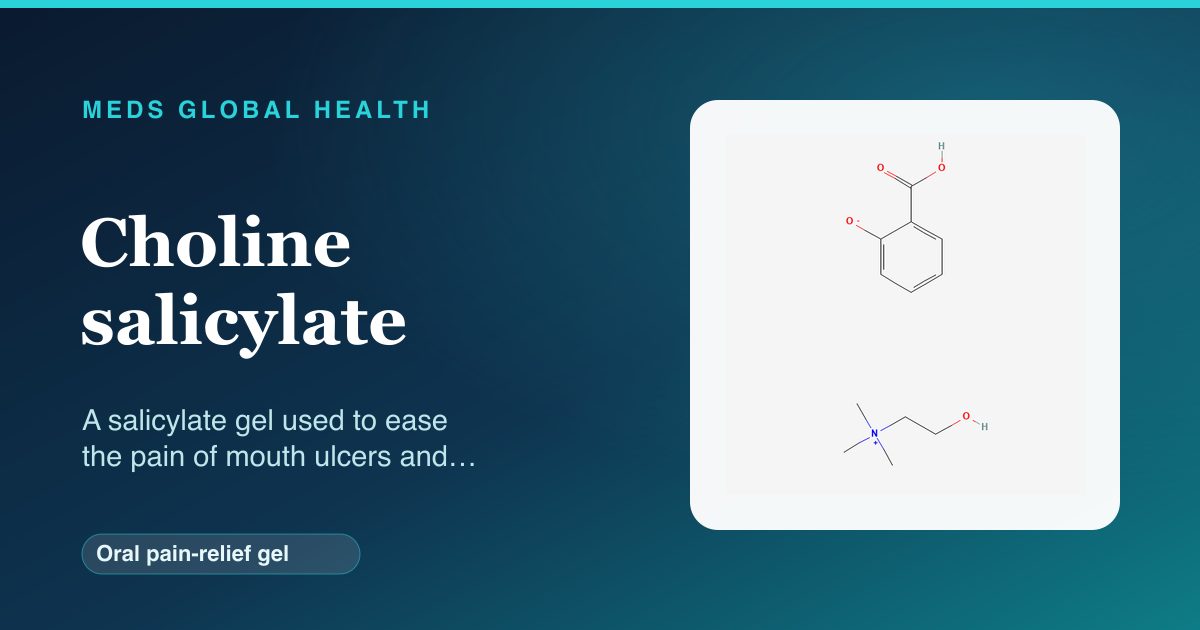
What it is
Choline salicylate is a member of the salicylate family of medicines, which includes aspirin, used in gel form to relieve pain in the mouth. It is the active ingredient in products such as Bonjela and Bonjela Adult, applied directly to mouth ulcers, sore spots or aching gums. The gel works where it is put rather than throughout the body, giving targeted relief. An important point is that because it is a salicylate, the salicylate-containing gels are intended for adults and children aged 16 and over only, and must not be used in children under 16 years or for teething babies. It is an over-the-counter product for short-term use.
How it works
Choline salicylate is an anti-inflammatory pain reliever from the salicylate family. When the gel is applied to a mouth ulcer or sore area, it acts on the inflamed tissue to dampen down the inflammation and ease the pain locally, so the area feels more comfortable. Because it is rubbed onto the spot that hurts, the relief is targeted to where it is needed. The gel base also helps it stick to the moist surfaces of the mouth for a short time. It eases discomfort while the ulcer or soreness heals naturally, rather than speeding up healing itself.
Company & origin
A pain-relieving gel ingredient used in the UK for mouth ulcers and adult mouth and gum discomfort, found in products such as Bonjela.
Practical use
How to take Choline salicylate
General, dose-free guidance — always follow your prescriber's and the leaflet's specific instructions.
- Apply a small amount of gel to the sore area in the mouth with a clean finger, as directed on the pack.
- Avoid eating or drinking straight after applying it, so it has time to work.
- Use the salicylate gel only in adults and children aged 16 and over — never in children under 16 years or for teething babies.
- Use it for short-term relief while the ulcer or soreness heals, rather than long term.
- See a dentist, pharmacist or GP if a mouth ulcer or sore patch does not heal within about three weeks.
Weighing it up
Advantages & disadvantages of Choline salicylate
Advantages
- Eases the pain of mouth ulcers and sore gums applied directly where it hurts.
- Works locally for targeted relief while the area heals.
- Easy to apply and widely available over the counter.
Disadvantages
- Not suitable for any child under 16 years or for teething, because it is a salicylate.
- Can cause a brief stinging or tingling when applied.
- Relieves pain rather than speeding up healing of the ulcer itself.
Practical use
Good to know
The most important safety point is the salicylate connection: because choline salicylate is related to aspirin, the salicylate-containing mouth gels should not be used in any child under 16 years or for teething, as salicylates in children are linked to a rare but serious condition called Reye's syndrome; teething-specific gels for babies use different ingredients, so always check the pack and ages. The gel is for short-term relief while a mouth ulcer or sore area heals, and it is normal to feel a brief tingling or stinging when it is applied. It is best applied to a clean area and not eaten or drunk over straight away so it has time to work. Mouth ulcers usually heal within a week or two; any ulcer or sore patch that does not heal within about three weeks, or that keeps coming back, should be checked by a dentist, pharmacist or GP.
Who should not take it / use with caution
- Children under 16 years should not use salicylate mouth gels, because of the rare but serious risk linked to salicylates in children.
- People who are allergic to aspirin or other salicylates should not use it.
- People advised to avoid aspirin-type medicines should check with a pharmacist before using it.
Monitoring
- No routine monitoring is needed for short-term use.
- Reviewing a mouth ulcer or sore patch that does not heal within about three weeks.
- Seeking advice if soreness keeps coming back.
Side effects
- A brief stinging or tingling feeling where the gel is applied.
- Occasionally mild irritation of the area.
- Rarely, an allergic reaction to salicylate, which needs medical attention.
Key interactions
- Because it is a salicylate, mention it if you take other aspirin-type or blood-thinning medicines.
- Used as directed on a small area, it acts locally, but tell your pharmacist about other salicylate products you use.
- Avoid combining several salicylate-containing products without advice.
Available as: A gel applied to the inside of the mouth.
Answers
Choline salicylate: frequently asked questions
What is choline salicylate used for?
It is a pain-relieving gel used to ease the discomfort of mouth ulcers and minor mouth and gum pain in adults and children aged 16 and over.
Can I use it for my baby's teething?
No. Salicylate mouth gels are not for children under 16 years or for teething because, as salicylates, they carry a rare but serious risk in children. Use a baby-suitable product instead.
Why does it sting when I apply it?
A brief stinging or tingling when the gel is applied is common and usually settles quickly.
Does it heal the ulcer faster?
It mainly relieves the pain while the ulcer heals naturally, rather than speeding up the healing itself.
When should I see someone about a mouth ulcer?
See a dentist, pharmacist or GP if a mouth ulcer or sore patch does not heal within about three weeks or keeps coming back.
Authoritative sources
- BNF
- NICE CKS
Building a medicines information resource?
We create evidence-led, dose-free drug and formulary references for teams.