A medicine for leg pain on walking
Cilostazol
A medicine that eases leg pain on walking from poor circulation, but must not be used by people with heart failure.
What is Cilostazol?
Cilostazol is used to ease the cramping leg pain that comes on with walking and eases with rest, known as intermittent claudication, which is caused by narrowed leg arteries. It can help people walk further before the pain starts. It works by both widening blood vessels and making the blood less sticky. Importantly, it must not be used by people with heart failure. Headache is a common side effect. In the UK it is known by the brand Pletal.
Education and reference only. This is a plain-language guide to Cilostazol — it deliberately contains no doses. Doses depend on the person, the brand and the reason for treatment, and belong with your prescriber. Always check the BNF, the product labelling (SmPC) and follow medical advice.
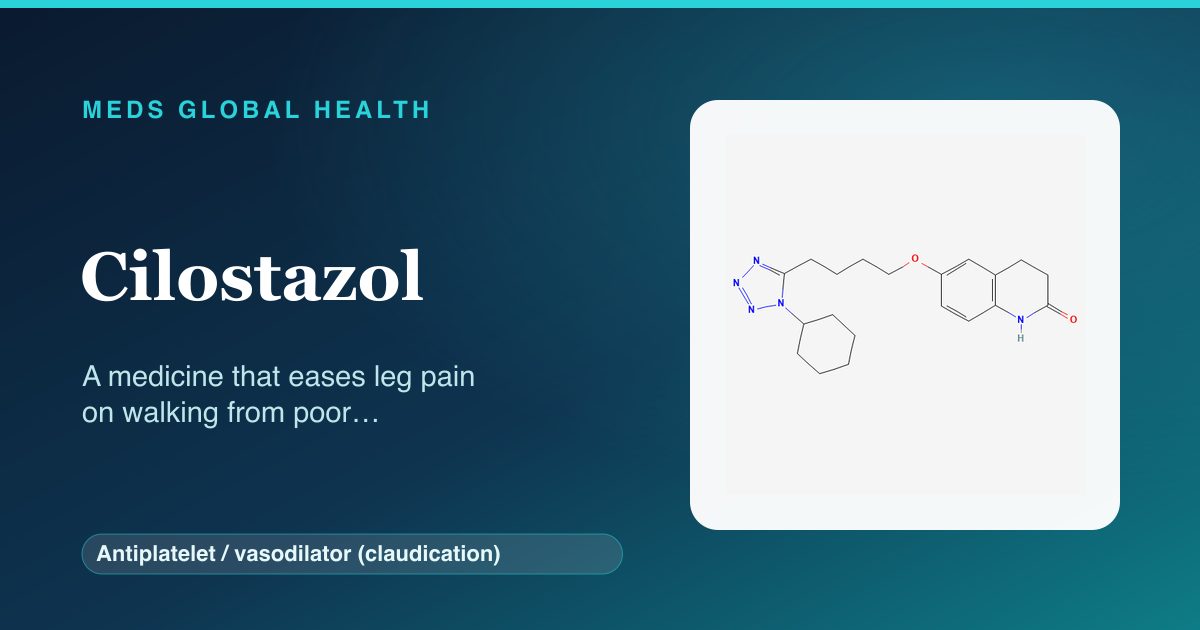
What it is
Cilostazol is a prescription medicine for intermittent claudication, the cramping pain in the calves, thighs or buttocks that comes on while walking and settles with rest because of narrowed leg arteries. It is taken as a tablet to help people walk further and more comfortably. It is considered when lifestyle measures such as a structured walking programme and stopping smoking have not given enough relief on their own.
How it works
Cilostazol works in two ways: it relaxes and widens blood vessels to improve blood flow to the legs, and it makes platelets in the blood less likely to clump, so blood flows more easily. Together these effects can help more oxygen-rich blood reach the leg muscles during walking, easing the cramping pain and allowing people to walk further before it comes on. It does not cure the narrowing of the arteries, so it is used alongside lifestyle changes.
Company & origin
Originated / developed by: Otsuka.
A medicine used in the UK to ease the leg pain on walking caused by poor circulation (intermittent claudication).
Practical use
How to take Cilostazol
General, dose-free guidance — always follow your prescriber's and the leaflet's specific instructions.
- Take it as prescribed, usually twice a day, around half an hour before or two hours after food.
- Do not take it if you have heart failure, and tell your prescriber about any heart condition.
- Expect that headache is common at first and often settles after a few weeks.
- Tell your prescriber about any blood-thinning or antiplatelet medicines you take.
- Keep up a regular walking programme and stop smoking, as these are central to treatment.
Weighing it up
Advantages & disadvantages of Cilostazol
Advantages
- Can help people with claudication walk further before leg pain starts.
- Works in two ways, widening blood vessels and reducing the stickiness of the blood.
- Taken as a simple tablet alongside lifestyle measures.
Disadvantages
- Must not be used by people with heart failure.
- Commonly causes headache, which can be troublesome at first.
- Does not cure the underlying narrowing of the arteries.
Practical use
Good to know
The single most important safety point is that cilostazol must not be used by anyone with heart failure, as it can be harmful in that condition. It is also generally avoided if you have certain heart rhythm problems or have had recent bleeding. A very common side effect is headache, which often settles after the first few weeks but can lead some people to stop. Because it affects platelets, tell your prescriber if you take other blood-thinning or antiplatelet medicines. It is usually reviewed after a few months to check it is genuinely helping you walk further; if it is not, it may be stopped. It works best alongside a supervised walking programme and stopping smoking.
Who should not take it / use with caution
- It must not be used by people with heart failure.
- It is avoided in those with certain heart rhythm problems or active bleeding.
- It is used with caution alongside other blood-thinning or antiplatelet medicines.
Monitoring
- Reviewing after a few months whether it is genuinely helping you walk further.
- Watching for headache, palpitations and any signs of bleeding.
- Checking heart health and that it is still appropriate to continue.
Side effects
- Headache is very common, especially in the first few weeks.
- Palpitations, a fast heartbeat, dizziness and diarrhoea or loose stools.
- Increased risk of bruising or bleeding, and rarely more serious bleeding.
Key interactions
- Care is needed with other antiplatelet or blood-thinning medicines because of bleeding risk.
- Some medicines that affect the liver can raise its levels, so doses may be adjusted.
- Grapefruit juice can increase its levels and is best avoided.
Available as: Tablets taken by mouth.
Answers
Cilostazol: frequently asked questions
What is cilostazol used for?
It is used to ease the cramping leg pain on walking caused by narrowed leg arteries (intermittent claudication) and can help people walk further before the pain starts.
Can I take it if I have heart failure?
No. Cilostazol must not be used by people with heart failure, so always tell your prescriber about any heart condition.
Why does it give me a headache?
Headache is a common effect because it widens blood vessels; it often settles after the first few weeks of treatment.
How will I know if it is working?
It is usually reviewed after a few months to see whether you can walk further before leg pain starts; if it is not helping, it may be stopped.
Does it replace walking exercise?
No. It works best alongside a regular, ideally supervised, walking programme and stopping smoking, which remain central to treatment.
Authoritative sources
- BNF
- NICE CKS
Building a medicines information resource?
We create evidence-led, dose-free drug and formulary references for teams.