A calcimimetic
Cinacalcet
A tablet that lowers an overactive parathyroid hormone in kidney disease on dialysis and some parathyroid conditions.
What is Cinacalcet?
Cinacalcet is a calcimimetic, a medicine that lowers an overactive parathyroid hormone (PTH). It is mainly used in people with kidney disease who are on dialysis, where the parathyroid glands become overactive, and in some cases of parathyroid cancer or high calcium from overactive parathyroid glands. By calming the parathyroid glands it also lowers blood calcium, so its main risk is calcium falling too low, causing muscle cramps and tingling. Nausea is common, and it is best taken with or just after food.
Education and reference only. This is a plain-language guide to Cinacalcet — it deliberately contains no doses. Doses depend on the person, the brand and the reason for treatment, and belong with your prescriber. Always check the BNF, the product labelling (SmPC) and follow medical advice.
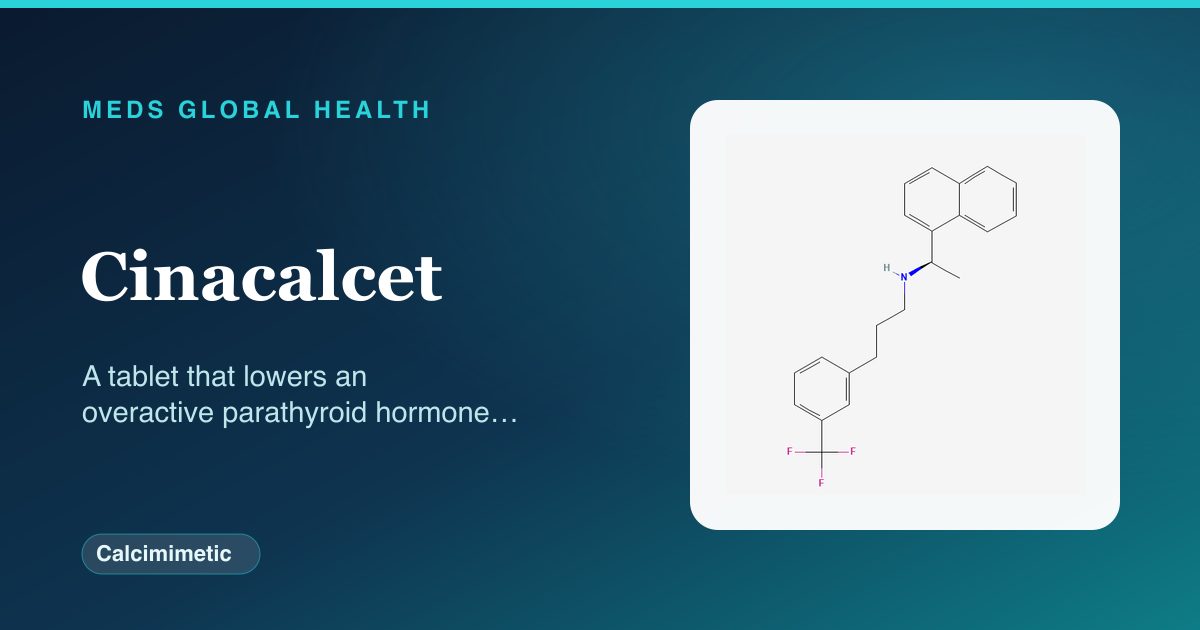
What it is
Cinacalcet is a tablet from a group of medicines called calcimimetics. The parathyroid glands in the neck make parathyroid hormone (PTH), which controls calcium in the blood. In long-standing kidney disease, and in some parathyroid conditions, these glands can become overactive and release too much PTH, which over time pulls calcium from the bones and harms them. Cinacalcet helps bring this overactive hormone back down. It is used in people on dialysis, in some parathyroid cancers, and in primary overactivity of the parathyroid glands when surgery is not suitable.
How it works
The parathyroid glands have sensors that detect calcium in the blood. Cinacalcet makes these sensors behave as though there is more calcium present, so the glands release less parathyroid hormone. With less PTH circulating, the body stops pulling so much calcium from the bones, and blood calcium levels fall. This is helpful when PTH is too high, but it also means calcium can drop too low if it is not watched, which is why regular blood tests are part of treatment.
Company & origin
Originated / developed by: Amgen.
A calcimimetic tablet used in the UK to lower an overactive parathyroid hormone in kidney disease and certain other conditions.
What it treats
Conditions Cinacalcet is used for
Practical use
How to take Cinacalcet
General, dose-free guidance — always follow your prescriber's and the leaflet's specific instructions.
- Take it with food or just after a meal, which reduces nausea and helps it work steadily.
- Swallow the tablets whole rather than crushing or splitting them.
- Take it at the same time each day, often in the evening, as advised by your team.
- Do not stop it suddenly without advice, as your parathyroid hormone can rise again.
- Report tingling around the mouth or fingers, muscle cramps or twitching, as these can be signs of low calcium.
Weighing it up
Advantages & disadvantages of Cinacalcet
Advantages
- Lowers an overactive parathyroid hormone without the need for surgery.
- Helps protect the bones from the harm of long-standing high parathyroid hormone in kidney disease.
- Useful when high calcium from parathyroid problems cannot be treated with an operation.
Disadvantages
- Can lower blood calcium too far, causing cramps, tingling and, rarely, more serious effects.
- Frequently causes nausea and vomiting, particularly when first started.
- Needs regular blood tests and careful adjustment, and is taken long term.
Practical use
Good to know
The most important thing to watch for is low calcium, because cinacalcet works by bringing both parathyroid hormone and calcium down. Signs of low calcium include tingling around the mouth or in the fingers, muscle cramps, twitching and, if severe, a fast heartbeat, fits or fainting — these should be reported promptly. Nausea and vomiting are common, especially early on, and taking it with or just after food, often in the evening, can help. It is started at a low amount and adjusted using regular blood tests for calcium and parathyroid hormone. It is used as part of a wider plan for bone and mineral problems in kidney disease, which may also include phosphate binders and vitamin D, so it works alongside other treatments rather than on its own.
Who should not take it / use with caution
- It should not be started if blood calcium is already low until that has been corrected.
- It is used with caution in people with a history of fits or significant heart rhythm problems.
- Its safety is not established in children for most uses, so it is generally a treatment for adults.
Monitoring
- Regular blood tests for calcium, phosphate and parathyroid hormone to guide treatment.
- Watching closely for signs of low calcium, especially when starting or increasing it.
- Reviewing it alongside other bone and mineral treatments in kidney disease.
Side effects
- Nausea and vomiting are common, especially early in treatment.
- Low calcium can cause tingling, muscle cramps and twitching, and rarely fits or heart rhythm changes.
- Tiredness, loss of appetite, muscle aches and dizziness can also occur.
Key interactions
- Some medicines for depression, fungal infections and heart rhythm can change cinacalcet levels in the body.
- It can affect the levels of certain other medicines processed by the liver, such as some used for depression or pain.
- Other treatments that lower calcium can add to the risk of calcium falling too low.
Available as: Tablets taken by mouth.
Answers
Cinacalcet: frequently asked questions
What does cinacalcet do?
It lowers an overactive parathyroid hormone, mainly in people with kidney disease on dialysis and in some parathyroid conditions, which also brings blood calcium down.
Why do I need so many blood tests?
Because it lowers both parathyroid hormone and calcium, regular tests are needed to make sure your calcium does not drop too low and to guide how much you take.
Why does it make me feel sick?
Nausea is common, especially at first; taking it with or just after food, often in the evening, usually helps.
What are the warning signs of low calcium?
Tingling around the mouth or in the fingers, muscle cramps and twitching are early signs; a fast heartbeat, fits or fainting are more serious and need urgent attention.
Is it an alternative to parathyroid surgery?
It can be, particularly when an operation is not suitable, but the right approach depends on your situation and is decided with your specialist.
Authoritative sources
- BNF
- NICE CKS
Building a medicines information resource?
We create evidence-led, dose-free drug and formulary references for teams.