Vitamin D3, used to treat and prevent vitamin D deficiency
Colecalciferol (vitamin D3)
A vitamin D3 supplement used to treat or prevent low vitamin D and to help the body use calcium for healthy bones.
What is Colecalciferol (vitamin D3)?
Colecalciferol is vitamin D3, the same form of vitamin D the skin makes from sunlight. It is used to treat people who are low in vitamin D and to prevent deficiency in those at risk, and it helps the body absorb calcium to keep bones and muscles healthy. It is usually taken by mouth as a tablet, capsule, liquid or chewable, sometimes daily and sometimes less often depending on the preparation. It is generally very safe, with problems only really seen if far too much is taken over a long time. It is often given alongside calcium when bone health is the concern.
Education and reference only. This is a plain-language guide to Colecalciferol (vitamin D3) — it deliberately contains no doses. Doses depend on the person, the brand and the reason for treatment, and belong with your prescriber. Always check the BNF, the product labelling (SmPC) and follow medical advice.
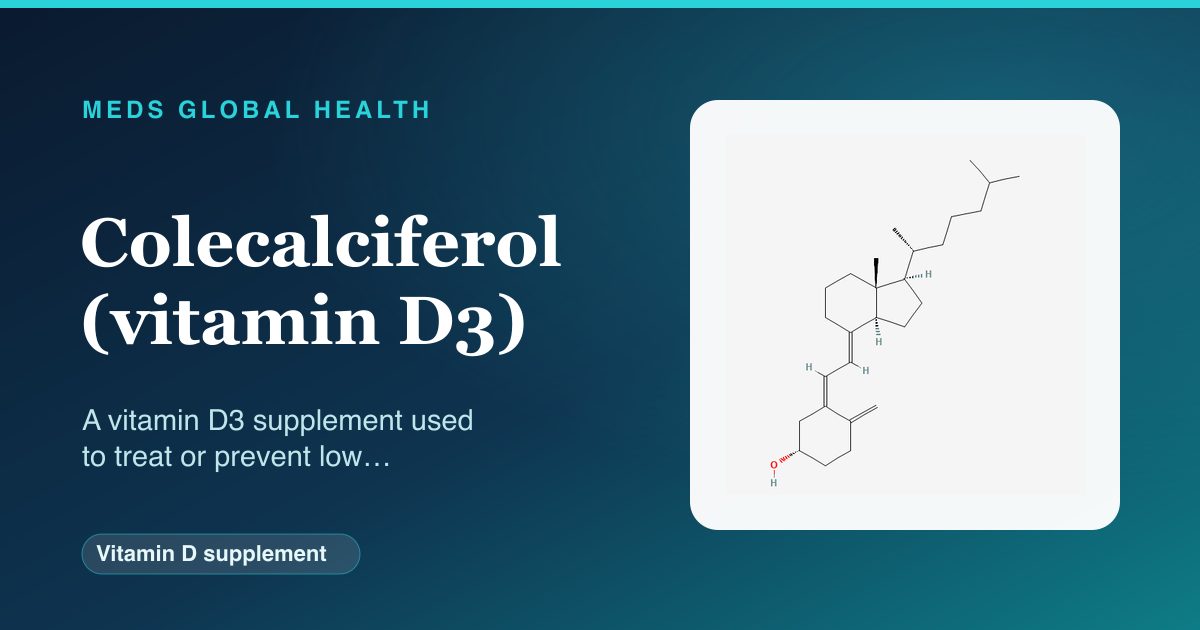
What it is
Colecalciferol is a supplement form of vitamin D3, the type of vitamin D that the body normally produces in the skin in response to sunlight and gets in small amounts from food. Many people in the UK become low in vitamin D, especially in winter, if they cover up or stay indoors, or have darker skin, so a supplement is used to top it up. It is used both to correct a confirmed deficiency and to prevent one in people at higher risk. It comes in several forms taken by mouth, and is often paired with calcium when the goal is to protect or strengthen bones.
How it works
Vitamin D's main job is to help the gut absorb calcium and phosphate from food, which the body needs to build and maintain strong bones and to keep muscles and nerves working well. When vitamin D is low, the body cannot use calcium properly, which over time can weaken bones, cause aches and, in children, affect bone development. Colecalciferol restores vitamin D to a healthy level so calcium can be absorbed and used as it should be. The body stores vitamin D, which is why some preparations can be taken less often rather than every day.
Company & origin
A vitamin D3 supplement used in the UK to treat and prevent vitamin D deficiency and to support calcium and bone health.
Practical use
How to take Colecalciferol (vitamin D3)
General, dose-free guidance — always follow your prescriber's and the leaflet's specific instructions.
- Take it by mouth as directed, following the schedule for your particular product, which may be daily or less often.
- Taking it with a meal can help your body absorb it, as vitamin D dissolves in fat.
- Do not take more than recommended over a long time, as too much vitamin D can raise calcium too high.
- If it is prescribed with calcium for your bones, take both as advised by your team.
- Tell your doctor if you have kidney stones, high calcium or kidney problems before taking it.
Weighing it up
Advantages & disadvantages of Colecalciferol (vitamin D3)
Advantages
- An effective and generally very safe way to correct or prevent low vitamin D.
- Helps the body absorb calcium, supporting healthy bones and muscles.
- Comes in several forms, including some that need taking only weekly or less often.
Disadvantages
- Taking far too much over a long time can push calcium too high and cause problems.
- Different products have different schedules, so it is easy to take the wrong amount if instructions are not followed.
- It is used with caution in people with certain conditions that raise calcium or affect the kidneys.
Practical use
Good to know
The reassuring thing about colecalciferol is that it is generally very safe and widely used, and problems only really arise if a great deal more than recommended is taken over a long period, which can push calcium too high. Because the body stores vitamin D, some products are designed to be taken daily and others weekly or even less often, so it helps to know which type you have and to follow its specific instructions. Vitamin D is fat-soluble, so taking it with a meal can help it absorb. It is often given with calcium for bone protection, particularly in older people or those with osteoporosis. If you have a condition that raises calcium, kidney stones, or certain other illnesses, your doctor will check before recommending it.
Who should not take it / use with caution
- People who have had a serious allergic reaction to colecalciferol or a product's ingredients should not take it.
- It is avoided or used very carefully in people who already have high calcium levels.
- It is used with caution in people with kidney stones, kidney problems or certain conditions such as sarcoidosis, under medical advice.
Monitoring
- Checking vitamin D levels in some people to guide treatment, especially when correcting a deficiency.
- Checking calcium levels if larger amounts are used or in people at risk of high calcium.
- Reviewing bone health over time when it is used to protect the bones.
Side effects
- It is usually very well tolerated, with side effects uncommon at recommended amounts.
- If too much is taken over time, raised calcium can cause nausea, thirst, frequent urination, tiredness or constipation.
- Rarely, very high calcium can affect the kidneys and heart, which needs medical attention.
Key interactions
- Taken with calcium supplements or a calcium-rich diet, the effects on calcium add up, so balance is needed.
- Some medicines, such as certain water tablets (thiazide diuretics), can raise calcium further alongside it.
- Tell your pharmacist or doctor about all supplements and medicines, as some affect how vitamin D is handled.
Available as: Tablets, capsules, chewable tablets and liquid taken by mouth.
Answers
Colecalciferol (vitamin D3): frequently asked questions
What is colecalciferol used for?
It is a vitamin D3 supplement used to treat and prevent low vitamin D and to help the body absorb calcium for healthy bones and muscles.
Is it the same as the vitamin D from sunlight?
Yes, colecalciferol (vitamin D3) is the same form your skin makes from sunlight, which is why a supplement is useful when you get little sun.
How often do I take it?
It depends on your product; because the body stores vitamin D, some are taken daily and others weekly or less often, so follow your specific instructions.
Can I take too much?
It is very safe at recommended amounts, but taking far more than advised over a long time can raise calcium too high and cause problems.
Should I take it with calcium?
For bone protection it is often given alongside calcium, particularly in older people or those with osteoporosis; take both as your team advises.
Authoritative sources
- BNF
- NICE CKS
Building a medicines information resource?
We create evidence-led, dose-free drug and formulary references for teams.