A targeted tablet for certain lung cancers
Crizotinib
A targeted cancer tablet for certain lung cancers with specific gene changes; specialist use.
What is Crizotinib?
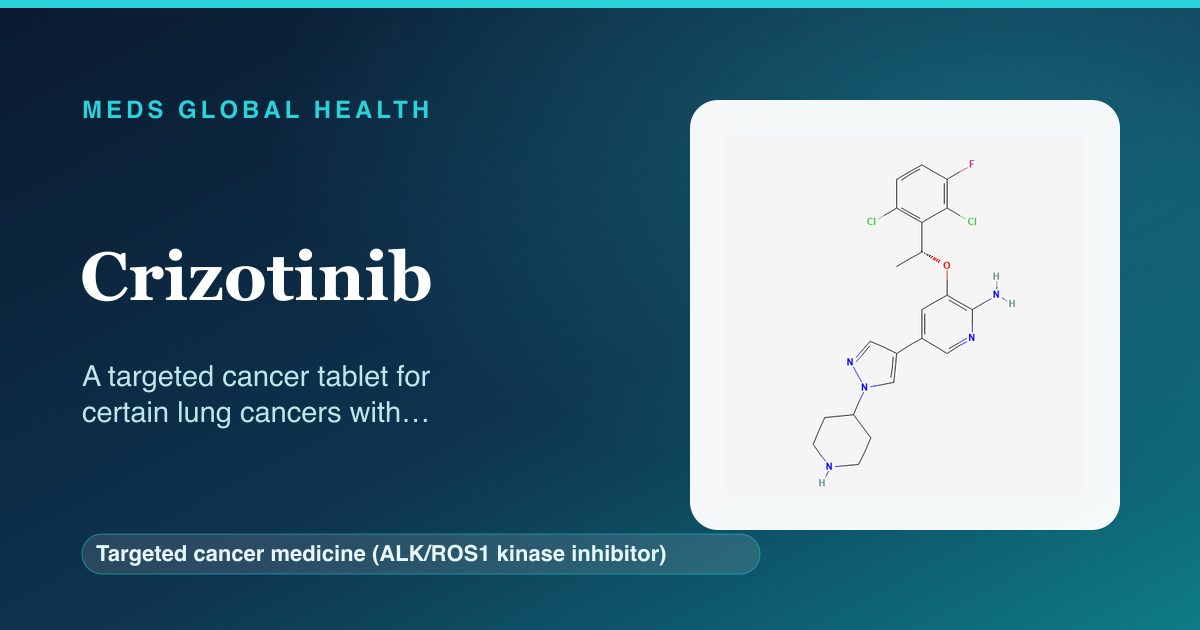
Crizotinib is a targeted cancer medicine, a kinase inhibitor, used to treat certain advanced lung cancers that have particular gene changes affecting proteins called ALK or ROS1. It is taken as a capsule and works by blocking the faulty signal that drives these cancers to grow. Its important side effects include vision disturbances (such as changes or flashes in eyesight), effects on the heart (slowing of the heart rate and a change in heart rhythm called QT prolongation), liver problems, and rarely inflammation of the lungs. It is prescribed and monitored by a cancer specialist, with regular checks of the eyes, heart, liver and lungs.
Education and reference only. This is a plain-language guide to Crizotinib — it deliberately contains no doses. Doses depend on the person, the brand and the reason for treatment, and belong with your prescriber. Always check the BNF, the product labelling (SmPC) and follow medical advice.
What it is
Crizotinib is a targeted cancer medicine used to treat some types of non-small-cell lung cancer that have specific changes in genes producing proteins called ALK or ROS1. These changes act as a switch that drives the cancer to grow, and crizotinib is designed to block that switch. It is taken by mouth as a capsule, usually until it stops working or side effects become a problem. It is a specialist medicine, prescribed only after testing has shown the cancer has the relevant gene change, and it is given and monitored by a cancer (oncology) team. It is not a general chemotherapy but a more selective, targeted treatment.
How it works
Some lung cancers grow because of a fault in a gene that makes an overactive protein (ALK or ROS1) acting like a stuck-on growth signal. Crizotinib is a kinase inhibitor, meaning it blocks this overactive protein, switching off the signal that tells the cancer cells to grow and divide. By targeting the specific fault that drives these cancers, it can shrink them or slow their growth while having a different side-effect pattern from traditional chemotherapy. Because it acts on this signal throughout the body, it can also affect the eyes, heart, liver and lungs, which is why these are watched closely during treatment.
Company & origin
A specialist targeted cancer medicine used in the UK for certain types of advanced lung cancer that have particular gene changes (ALK or ROS1).
Practical use
How to take Crizotinib
General, dose-free guidance — always follow your prescriber's and the leaflet's specific instructions.
- Take the capsules by mouth as prescribed, swallowing them whole, at about the same times each day.
- Report any changes in your eyesight, such as flashes, trails of light or blurring, to your cancer team.
- Tell your team about dizziness, fainting or a slow heartbeat, and attend any heart (ECG) checks arranged.
- Avoid grapefruit and grapefruit juice, which can raise the medicine's levels, and give a full medicines list.
- Seek urgent advice for new or worsening breathlessness or cough, which could be lung inflammation.
Weighing it up
Advantages & disadvantages of Crizotinib
Advantages
- Targets the specific gene fault driving certain lung cancers, shrinking or slowing them.
- Taken as a capsule by mouth rather than by drip.
- Has a different side-effect pattern from traditional chemotherapy.
Disadvantages
- Commonly causes vision disturbances such as flashes or changes in eyesight.
- Can affect the heart, slowing the rate and changing the rhythm (QT prolongation), and can harm the liver.
- Rarely causes inflammation of the lungs, which can be serious, and interacts with several other medicines.
Practical use
Good to know
The most important things to know about crizotinib are its main side effects, which the cancer team monitors closely. Vision disturbances are common, such as changes in eyesight, flashes or trails of light, especially in dim conditions, and these should be reported. It can affect the heart in two ways: by slowing the heart rate, which may cause dizziness or tiredness, and by changing the heart's electrical rhythm (QT prolongation), so the heart may be checked with an ECG. It can also affect the liver, so liver blood tests are done regularly, and rarely it can cause inflammation of the lungs (pneumonitis), which causes new or worsening breathlessness or cough and needs urgent attention. Because it is broken down in the body in a way that other medicines can change, telling the team about everything you take, including over-the-counter remedies and grapefruit, matters.
Who should not take it / use with caution
- People who have had a serious allergic reaction to crizotinib should not take it.
- It is used with great caution in people with certain heart-rhythm problems or a slow heart rate.
- It is used with caution in people with liver problems, and is avoided in pregnancy because it can harm a baby.
- It is only suitable for cancers shown by testing to have the relevant ALK or ROS1 gene change.
Monitoring
- Regular liver blood tests during treatment.
- Heart checks, including an ECG, for the heart rate and rhythm (QT interval).
- Watching for vision changes and for signs of lung inflammation such as breathlessness or cough.
Side effects
- Vision disturbances, such as flashes, trails of light or blurred or changed eyesight.
- A slow heart rate and changes in the heart's rhythm (QT prolongation).
- Liver problems, picked up on liver blood tests, and nausea, vomiting or diarrhoea.
- Rarely, inflammation of the lungs (pneumonitis), causing new or worsening breathlessness or cough.
Key interactions
- Grapefruit and grapefruit juice can raise the level of crizotinib in the body and should be avoided.
- Some medicines can raise or lower its levels, so a full and up-to-date medicines list is important.
- Other medicines that affect the heart's rhythm or rate can add to its heart effects.
Available as: Capsules taken by mouth.
Answers
Crizotinib: frequently asked questions
What is crizotinib used for?
It is a targeted medicine for certain advanced lung cancers that have particular gene changes (ALK or ROS1), blocking the faulty signal that drives the cancer to grow.
Why does it affect my eyesight?
Vision disturbances such as flashes, trails of light or blurring are a common side effect, especially in dim light, and should be reported to your cancer team.
How does it affect the heart?
It can slow the heart rate and change the heart's electrical rhythm (QT prolongation), so your team may arrange ECG checks and ask about dizziness or fainting.
Why must I avoid grapefruit?
Grapefruit and its juice can raise the level of crizotinib in your body, increasing the risk of side effects, so they should be avoided.
What should I watch for with my lungs?
Rarely it can cause lung inflammation; new or worsening breathlessness or cough needs urgent medical attention.
Authoritative sources
- BNF
- NICE CKS
Building a medicines information resource?
We create evidence-led, dose-free drug and formulary references for teams.