A cystine-depleting agent for cystinosis
Cysteamine
A specialist medicine that lowers the build-up of cystine in cells in the inherited condition cystinosis.
What is Cysteamine?
Cysteamine is a specialist medicine for cystinosis, a rare inherited condition in which a substance called cystine builds up inside cells and gradually damages the kidneys, eyes and other organs. It works by helping cells break down and remove the trapped cystine, which protects organs when started early and taken faithfully. It must be taken very regularly, day and night, to keep cystine low, and a strong sulphur-like smell on the breath and body, along with stomach upset, are common. It is also used as eye drops for cystine crystals in the eye, and is managed by a metabolic team with regular monitoring.
Education and reference only. This is a plain-language guide to Cysteamine — it deliberately contains no doses. Doses depend on the person, the brand and the reason for treatment, and belong with your prescriber. Always check the BNF, the product labelling (SmPC) and follow medical advice.
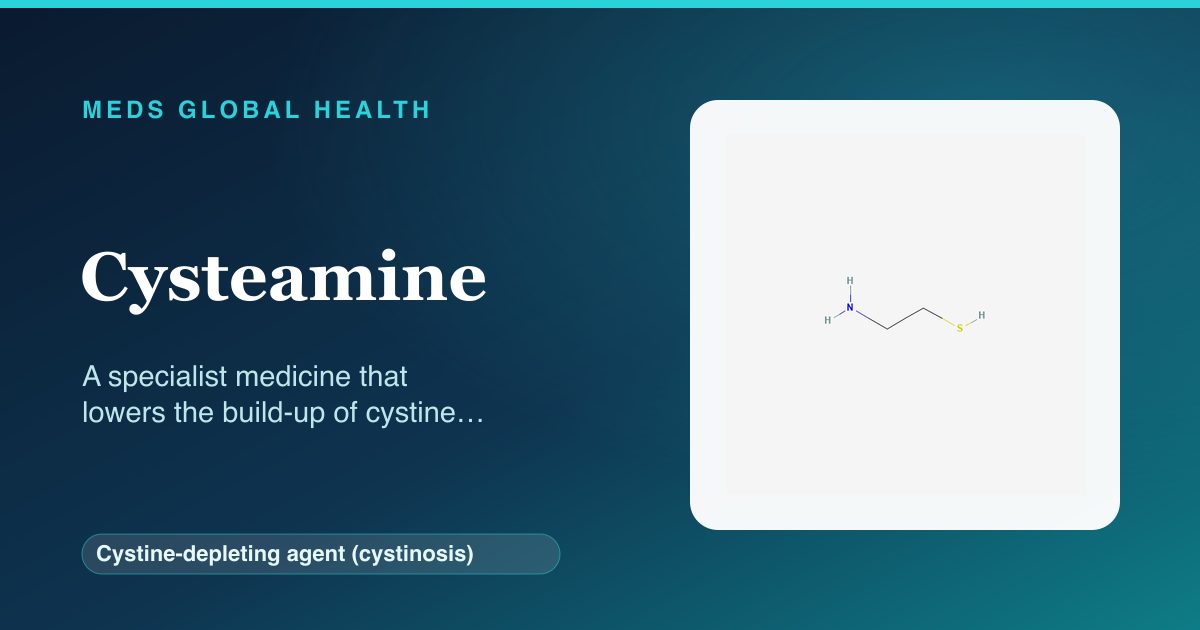
What it is
Cysteamine is a treatment for cystinosis, a rare inherited (genetic) condition in which the amino acid cystine cannot leave the cells properly and builds up, forming crystals that damage the kidneys, eyes and other organs over time. Taken by mouth, cysteamine lowers the cystine inside cells; as eye drops it tackles cystine crystals that collect in the surface of the eye. It is taken very regularly and managed by a specialist metabolic centre.
How it works
Inside cells, cysteamine reacts with the trapped cystine and converts it into forms that can leave the cell using a different exit route, lowering the harmful build-up. Keeping cystine low protects the kidneys and other organs, which is why starting early and taking it on time matters so much. The benefit depends on steady levels around the clock, so the medicine is taken at regular intervals, day and night, rather than just during the day; eye drops are needed separately because the medicine taken by mouth does not reach the eye crystals well.
Company & origin
Originated / developed by: Mylan / Chiesi.
A specialist medicine used in the UK by metabolic centres to treat cystinosis, taken very regularly to protect the kidneys and other organs.
Practical use
How to take Cysteamine
General, dose-free guidance — always follow your prescriber's and the leaflet's specific instructions.
- Take it at regular, evenly spaced times as your team directs, which for the standard form means doses through the day and night.
- Keep to the timing closely, as steady levels are what keep cystine low and protect your organs.
- Use the eye drops separately and as prescribed if you have cystine crystals in your eyes.
- Do not stop the medicine without your metabolic team's advice, even if the smell or stomach upset is troublesome.
- Tell your team about side effects so they can help, and attend your blood tests to check cystine levels.
Weighing it up
Advantages & disadvantages of Cysteamine
Advantages
- Protects the kidneys and other organs in cystinosis, especially when started early and taken faithfully.
- Works inside cells to remove the harmful cystine build-up.
- Available as eye drops as well, to treat cystine crystals in the eyes.
Disadvantages
- Must be taken very regularly, including overnight for the standard form, which is demanding.
- Commonly causes a strong sulphur-like smell on the breath and body, which can be socially difficult.
- Often causes stomach upset, and needs lifelong specialist care and monitoring.
Practical use
Good to know
Two things stand out. First, it must be taken very regularly to keep cystine low; the standard form is taken several times a day and night at set intervals, while a longer-acting form is taken less often, but either way keeping to the timing is what protects the organs. Second, a strong sulphur-like smell on the breath, sweat and body is common and can be socially difficult, and stomach upset is also common; these are well recognised and the team can offer ways to help rather than stopping treatment. The eye drops are a separate part of treatment for cystine in the eyes. It is a lifelong treatment, must not be stopped without advice, and needs regular blood tests to check cystine levels and overall health.
Who should not take it / use with caution
- Used with caution in people with a history of certain stomach ulcers or significant stomach problems.
- It should only be used under a metabolic centre experienced in cystinosis.
- Use in pregnancy or breastfeeding is decided by the specialist team after weighing benefits and risks.
Monitoring
- Regular blood tests to check cystine levels inside cells and adjust treatment.
- Monitoring kidney function, growth and the eyes over time.
- Reviewing side effects and how well the strict timing is being kept.
Side effects
- A strong sulphur-like smell on the breath, sweat and body, and bad breath.
- Nausea, vomiting, stomach pain or reduced appetite.
- Tiredness, headache, or skin and bone problems reported less often.
Key interactions
- The longer-acting form should be taken following its specific food instructions, as advised.
- Tell your team about all other medicines, as treatment is overseen by a specialist centre.
- Other treatments for the kidney problems of cystinosis are co-ordinated by your team.
Available as: Capsules taken by mouth (standard and longer-acting forms) and eye drops.
Answers
Cysteamine: frequently asked questions
Why do I have to take it so often, even at night?
Keeping cystine low depends on steady levels around the clock, so the standard form is taken at set intervals day and night; a longer-acting form is taken less often but still on a strict schedule.
Why do I have a strong smell on my breath and body?
A sulphur-like smell on the breath, sweat and body is a common and well-recognised effect; tell your team, as they can suggest ways to help rather than stopping treatment.
What are the eye drops for?
Cysteamine taken by mouth does not reach cystine crystals in the eyes well, so separate eye drops are used to treat the crystals that collect there.
Can I stop it if it upsets my stomach?
Stomach upset is common, but do not stop without your team's advice; they can help manage it, and stopping leaves the organs unprotected.
Does it cure cystinosis?
No. It lowers the harmful cystine build-up to protect the organs, but it is a lifelong treatment and needs to be taken faithfully with regular monitoring.
Authoritative sources
- BNF
- NICE CKS
Building a medicines information resource?
We create evidence-led, dose-free drug and formulary references for teams.