A sulfone antibacterial and anti-inflammatory
Dapsone
A sulfone medicine used for leprosy, dermatitis herpetiformis and some immune skin conditions, and to help prevent a particular pneumonia.
What is Dapsone?
Dapsone is a long-established medicine that acts both against certain bacteria and as an anti-inflammatory. It is used to treat leprosy, the itchy blistering skin condition dermatitis herpetiformis, and some other skin and immune conditions, and it forms part of the prevention of a particular lung infection called pneumocystis pneumonia. Its most important safety issue is that it can break down red blood cells, causing anaemia, and this is much worse in people with an inherited enzyme problem called G6PD deficiency, so this is checked before starting. It can also turn the blood's oxygen-carrying pigment into a form that works less well, causing a bluish tinge and breathlessness. You will have regular blood tests while taking it.
Education and reference only. This is a plain-language guide to Dapsone — it deliberately contains no doses. Doses depend on the person, the brand and the reason for treatment, and belong with your prescriber. Always check the BNF, the product labelling (SmPC) and follow medical advice.
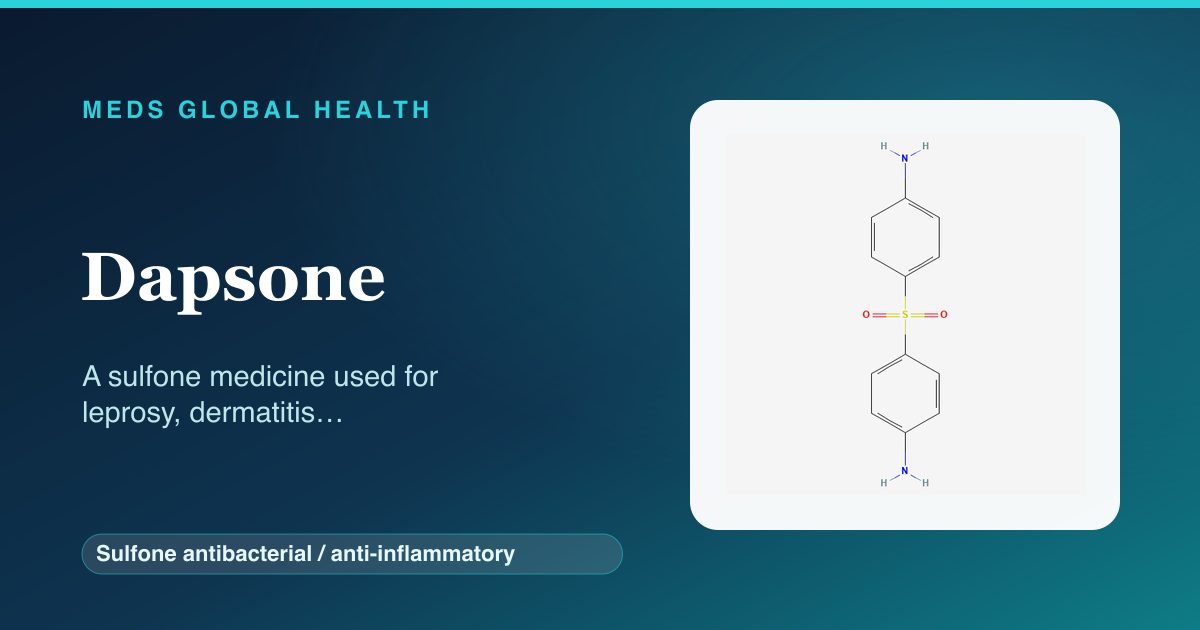
What it is
Dapsone is a sulfone medicine with both antibacterial and anti-inflammatory actions, taken by mouth as a tablet (a skin cream form exists in some countries). In the UK it is used to treat leprosy, usually combined with other medicines, and the itchy blistering skin condition dermatitis herpetiformis, where it often works strikingly well. It is also used in some other inflammatory skin and immune conditions and as part of the prevention of pneumocystis pneumonia in people whose immune systems are weakened.
How it works
Against bacteria, dapsone blocks a step the organisms need to make folate, stopping them from multiplying, which is how it treats leprosy and helps prevent pneumocystis pneumonia. Separately, it calms certain types of inflammation by damping down particular immune cells, which is why it helps inflammatory skin conditions like dermatitis herpetiformis. A by-product of how the body handles it is stress on red blood cells, which explains its main side effects.
Company & origin
A long-established sulfone medicine used in the UK for leprosy, the skin condition dermatitis herpetiformis, and as part of pneumocystis pneumonia prevention.
Practical use
How to take Dapsone
General, dose-free guidance — always follow your prescriber's and the leaflet's specific instructions.
- Take the tablets regularly as prescribed, with or without food.
- Make sure you have had the G6PD blood test before starting, as it guides whether and how it is used.
- Attend your blood test appointments, which are more frequent early on to check for anaemia.
- Report tiredness, breathlessness, a bluish tinge to the lips or skin, or dark urine, which can signal blood effects.
- Seek urgent help for fever with a spreading rash or feeling generally unwell in the first weeks of treatment.
- If you have dermatitis herpetiformis, follow the gluten-free diet your team recommends alongside it.
Weighing it up
Advantages & disadvantages of Dapsone
Advantages
- Often very effective for dermatitis herpetiformis, frequently easing the itch and blisters quickly.
- A well-established treatment for leprosy and a useful option for preventing pneumocystis pneumonia.
- Available as an inexpensive long-established tablet.
Disadvantages
- Causes breakdown of red blood cells and can lead to anaemia, much worse in G6PD deficiency.
- Can cause a bluish colour and breathlessness by changing how the blood carries oxygen.
- Carries a rare but serious hypersensitivity reaction and needs regular blood monitoring.
Practical use
Good to know
The dominant safety message is its effect on red blood cells: dapsone causes some breakdown of red cells (haemolysis) in almost everyone, and this can lead to anaemia, but it is far more severe in people with the inherited condition G6PD deficiency, so a blood test for this is done before starting. It can also change haemoglobin into a form called methaemoglobin that carries oxygen poorly, which can cause a bluish colour to the lips or skin and breathlessness, especially at higher amounts. Because of these effects you have regular blood tests, particularly early on. A rare but serious reaction called dapsone hypersensitivity syndrome can cause fever, rash and organ problems in the first weeks, so any fever with a spreading rash should be reported urgently. In dermatitis herpetiformis it is usually combined with a strict gluten-free diet.
Who should not take it / use with caution
- People with significant G6PD deficiency may be unable to take it or need special caution, so it is checked first.
- Those with a previous serious allergic or hypersensitivity reaction to dapsone or related sulfones should avoid it.
- Used with caution in people with significant anaemia, heart or lung disease, where reduced oxygen carrying is risky.
Monitoring
- A G6PD blood test before starting to gauge the risk of severe red-cell breakdown.
- Regular blood counts, more often early on, to detect anaemia.
- Watching for breathlessness, a bluish colour, or fever with rash suggesting a hypersensitivity reaction.
Side effects
- Breakdown of red blood cells and anaemia, with tiredness, breathlessness or dark urine.
- A bluish tinge to the lips or skin from methaemoglobin, sometimes with headache or breathlessness.
- Rarely, a serious hypersensitivity reaction with fever, rash and organ involvement, especially early on.
Key interactions
- Other medicines that stress red blood cells or raise methaemoglobin can add to its blood effects.
- Some medicines, such as certain stomach-acid and malaria treatments, can increase its levels or its blood effects.
- Tell your prescriber about all your medicines, as several can worsen the effects on the blood.
Available as: Tablets taken by mouth; a skin cream is available in some countries.
Answers
Dapsone: frequently asked questions
Why do I need a blood test before starting dapsone?
It checks for G6PD deficiency, an inherited condition in which dapsone can cause severe breakdown of red blood cells, so it is important to know before you begin.
Why might my lips or skin look bluish?
Dapsone can change the blood's oxygen-carrying pigment into a form called methaemoglobin that works less well, causing a bluish tinge and sometimes breathlessness; report this to your team.
What is it used for in skin disease?
It is highly effective for dermatitis herpetiformis, an itchy blistering condition, and is used in some other inflammatory skin conditions, usually alongside a gluten-free diet for that disease.
Do I need ongoing blood tests?
Yes, you have regular blood counts, more frequently at first, to check for anaemia from red-cell breakdown.
What serious reaction should I watch for early on?
A rare hypersensitivity reaction can cause fever, a spreading rash and organ problems in the first weeks; seek urgent help if this happens.
Authoritative sources
- BNF
- NICE CKS
Building a medicines information resource?
We create evidence-led, dose-free drug and formulary references for teams.