A tablet treatment for prostate cancer
Darolutamide
A tablet used to treat prostate cancer by blocking the effect of male hormones that the cancer feeds on.
What is Darolutamide?
Darolutamide is a specialist medicine used to treat prostate cancer. It belongs to a group called androgen receptor inhibitors, which block the effect of male hormones (androgens) such as testosterone that prostate cancer relies on to grow. It is taken as tablets by mouth, usually with food, alongside other hormone treatment that lowers testosterone. It is a specialist treatment prescribed and supervised by a cancer team, who monitor for side effects such as tiredness, and check blood tests over time.
Education and reference only. This is a plain-language guide to Darolutamide — it deliberately contains no doses. Doses depend on the person, the brand and the reason for treatment, and belong with your prescriber. Always check the BNF, the product labelling (SmPC) and follow medical advice.
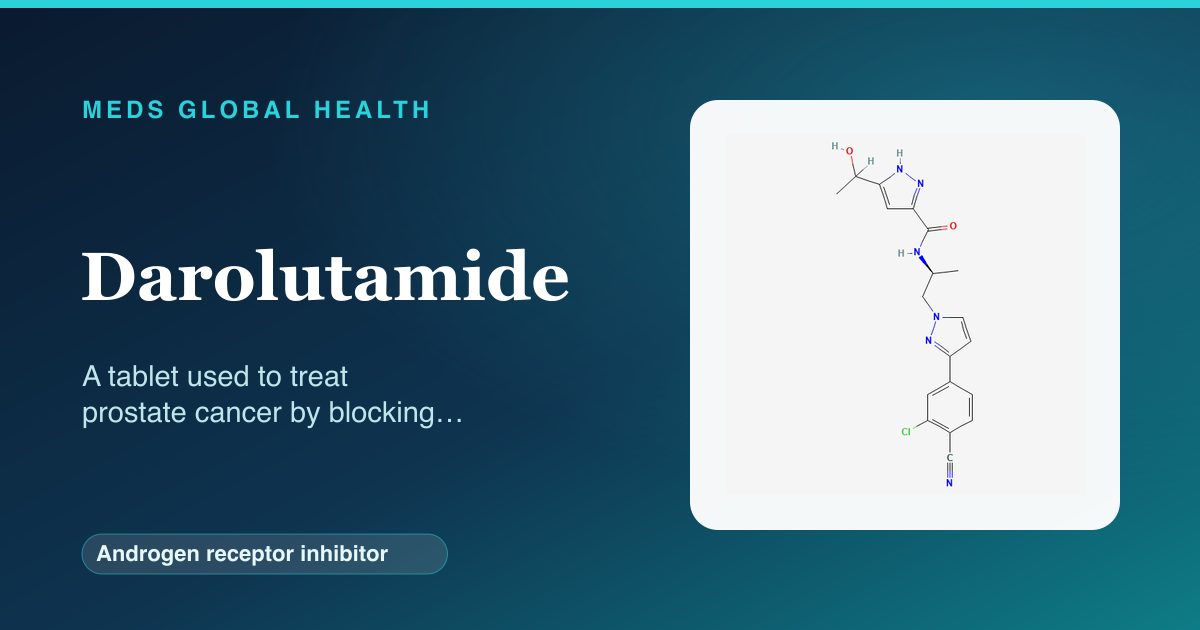
What it is
Darolutamide is a medicine used to treat prostate cancer. It is an androgen receptor inhibitor, which means it blocks the docking points (receptors) that male hormones use to act on prostate cancer cells. Prostate cancer often depends on these hormones to grow, so blocking them helps slow the cancer down. It is taken by mouth as tablets, generally with food, and is used together with treatment that reduces the body's testosterone. It is a specialist medicine, started and supervised by a hospital cancer team.
How it works
Prostate cancer cells usually grow in response to male hormones, mainly testosterone, which act on the cancer through receptors on the cells. Darolutamide blocks these receptors so the hormones can no longer switch on the signals that make the cancer grow. It is given alongside other hormone treatment that lowers the amount of testosterone in the body, so the two work together: one lowers the hormone level, and darolutamide blocks its effect. By cutting off this hormonal fuel, it helps slow the cancer and delay its progress. It is taken regularly, with food, to keep its effect steady.
Company & origin
A specialist oral medicine used in the UK to treat prostate cancer, working by blocking the effect of male hormones on the cancer.
Practical use
How to take Darolutamide
General, dose-free guidance — always follow your prescriber's and the leaflet's specific instructions.
- Take the tablets by mouth with food, as advised, to help your body absorb the medicine.
- Keep taking your other hormone treatment that lowers testosterone alongside it, as the two work together.
- Take it regularly at the times your team recommends, and try not to miss doses.
- Tell your cancer team about all your other medicines, as darolutamide can interact with some of them.
- Do not stop taking it without specialist advice, as continued treatment helps keep the cancer in check.
Weighing it up
Advantages & disadvantages of Darolutamide
Advantages
- An effective tablet treatment that helps slow prostate cancer by blocking the male hormones it feeds on.
- Taken by mouth at home rather than needing infusions.
- Generally well tolerated, often with fewer effects on thinking and balance than some similar medicines.
Disadvantages
- Can cause tiredness and effects linked to lower male hormone levels, such as hot flushes.
- Needs to be taken with food and alongside other hormone treatment.
- Requires specialist supervision, regular blood tests and attention to interactions with other medicines.
Practical use
Good to know
Darolutamide is part of an overall prostate cancer treatment plan rather than a standalone cure, and it is usually given together with treatment that lowers testosterone, so it is important to keep up both as directed. It is taken with food, which helps the body absorb it properly. Common effects include tiredness and aching, and because it changes hormone levels, men may notice effects linked to lower testosterone such as hot flushes. The cancer team monitors blood tests, including those that check the cancer's activity, as well as for less common effects on the blood and liver. Tell your team about all your other medicines, as darolutamide can interact with some of them. Do not stop it without advice, as continued treatment is what keeps the cancer in check.
Who should not take it / use with caution
- People who have had a serious allergic reaction to darolutamide should not take it.
- It is not for use in women and must not be taken in pregnancy, as it acts on male hormones.
- It is used with care in people with significant liver or kidney problems, under specialist guidance.
- It should only be used under the supervision of a specialist cancer team.
Monitoring
- Regular blood tests, including those that track the cancer's activity.
- Checking blood counts and liver function over time.
- Reviewing side effects such as tiredness and how well treatment is being tolerated.
Side effects
- Tiredness or weakness, which is common.
- Effects linked to lower male hormone levels, such as hot flushes.
- Aching joints, rash, or changes in blood tests such as those for the blood count or liver.
- Less commonly, a fall in certain blood cells, which monitoring is designed to catch.
Key interactions
- It can interact with several other medicines, raising or lowering their levels, so give your team a full medicines list.
- Some medicines can change how well darolutamide itself works, so tell your team about everything you take.
- Check with your pharmacist before starting any new medicine, including ones bought over the counter.
Available as: Tablets taken by mouth.
Answers
Darolutamide: frequently asked questions
What is darolutamide used for?
It is a specialist medicine used to treat prostate cancer by blocking the effect of male hormones, such as testosterone, that the cancer feeds on to grow.
Why do I take it with other hormone treatment?
Darolutamide blocks the effect of male hormones, while the other treatment lowers the amount of testosterone, so the two work together to slow the cancer.
Should I take it with food?
Yes. Taking the tablets with food helps your body absorb the medicine properly, so follow the advice you are given.
Will it make me tired?
Tiredness is one of the more common side effects, and you may also notice effects linked to lower male hormone levels, such as hot flushes; tell your team if these trouble you.
Can I stop it if I feel well?
No. Continued treatment is what keeps the cancer in check, so do not stop it without advice from your specialist cancer team.
Authoritative sources
- BNF
- NICE CKS
Building a medicines information resource?
We create evidence-led, dose-free drug and formulary references for teams.