A targeted cancer tablet
Dasatinib
A targeted cancer tablet for some leukaemias, started and monitored by blood-cancer specialists.
What is Dasatinib?
Dasatinib is a targeted cancer tablet, a tyrosine kinase inhibitor, used for chronic myeloid leukaemia (CML) and some types of acute lymphoblastic leukaemia (ALL). It is started and closely monitored by a blood-cancer specialist but taken regularly at home. A particular effect to watch for is fluid building up around the lungs (pleural effusion), which can cause breathlessness or a cough. It can also lower blood counts and increase the risk of bleeding. It has many drug interactions and grapefruit should be avoided.
Education and reference only. This is a plain-language guide to Dasatinib — it deliberately contains no doses. Doses depend on the person, the brand and the reason for treatment, and belong with your prescriber. Always check the BNF, the product labelling (SmPC) and follow medical advice.
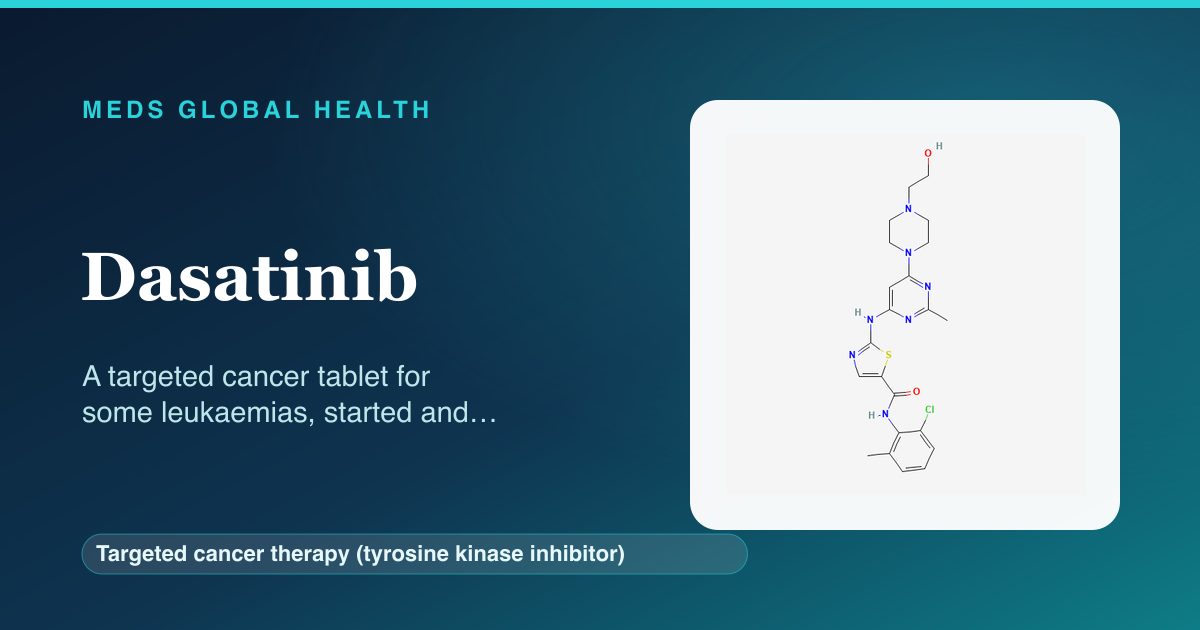
What it is
Dasatinib is a targeted cancer therapy belonging to the tyrosine kinase inhibitor group. It is used to treat chronic myeloid leukaemia and some forms of acute lymphoblastic leukaemia, often when an earlier treatment has not worked well or is not suitable. It is taken as a tablet at home, but treatment is always started and supervised by a haematology team who monitor how the disease responds and watch for side effects.
How it works
These leukaemias are driven by an overactive enzyme (a tyrosine kinase) that keeps telling the blood cells to multiply abnormally. Dasatinib blocks this faulty signal, slowing or stopping the growth of the leukaemia cells. Because it switches off a precise cancer driver, it is taken continuously, and specialists use regular blood tests to confirm the disease is responding and to keep an eye on side effects.
Company & origin
Originated / developed by: Originally Bristol Myers Squibb (now also generic).
A targeted cancer tablet used in the UK for certain leukaemias, especially when other treatments are not suitable.
Practical use
How to take Dasatinib
General, dose-free guidance — always follow your prescriber's and the leaflet's specific instructions.
- Take it once a day at around the same time, with or without food, exactly as your specialist team prescribes.
- Do not change or stop the dose on your own, even if you feel well, unless your team advises it.
- Avoid grapefruit and grapefruit juice, which can raise the level of the medicine in your body.
- Check with your cancer team or pharmacist before starting any new medicine, supplement or remedy, including indigestion treatments.
- Report new breathlessness, cough, swelling, unusual bleeding or bruising, or signs of infection promptly.
Weighing it up
Advantages & disadvantages of Dasatinib
Advantages
- An effective targeted option for leukaemias that have not responded to, or are not suited to, other treatments.
- Taken at home as a tablet while overseen by a blood-cancer team.
- Works on a specific cancer driver, which can bring the disease under good control.
Disadvantages
- Can cause fluid to build up around the lungs (pleural effusion), leading to breathlessness.
- Lowers blood counts and increases the risk of bleeding and bruising.
- Has many drug and grapefruit interactions, so combinations need careful checking.
Practical use
Good to know
A specific thing to be aware of with dasatinib is fluid building up around the lungs, called a pleural effusion, which can make you breathless or bring on a cough — report new or worsening breathlessness straight away. It can also lower your blood counts and raise the risk of bleeding, so tell your team about unusual bruising, nosebleeds or any bleeding that does not stop. It is processed by the same liver enzyme as many medicines and interacts with grapefruit, so always check before adding anything new. Report signs of infection, do not stop it without advice, and avoid pregnancy while taking it.
Who should not take it / use with caution
- It must not be used in pregnancy, and effective contraception is needed because it can harm an unborn baby.
- It is used with caution, and closer monitoring, in people with heart, lung or bleeding problems.
- People with conditions that raise the risk of fluid retention or bleeding may need extra care or alternative treatment.
Monitoring
- Regular blood tests to track the leukaemia response and check blood counts.
- Watching for breathlessness, cough or chest symptoms that could mean fluid around the lungs.
- Reviewing for signs of bleeding and checking heart and other organ function as needed.
Side effects
- Fluid around the lungs (pleural effusion) causing breathlessness or cough, headache, tiredness and diarrhoea.
- Low blood counts can cause infections, easy bruising or bleeding and anaemia, so are monitored.
- Less commonly, bleeding problems, heart-rhythm changes or fluid build-up elsewhere that need prompt review.
Key interactions
- Processed by the same liver enzyme as many medicines, so some antibiotics, antifungals, epilepsy and heart drugs can change its level.
- Grapefruit and grapefruit juice can raise its level and should be avoided.
- Indigestion remedies and acid-reducing medicines can lower how much is absorbed, and it can add to the bleeding risk of blood thinners.
Available as: Tablets taken by mouth.
Answers
Dasatinib: frequently asked questions
Why might I become breathless on dasatinib?
It can cause fluid to build up around the lungs, called a pleural effusion, which may lead to breathlessness or a cough; report new or worsening breathlessness to your team straight away.
Should I worry about bruising or bleeding?
Dasatinib can lower blood counts and increase bleeding risk, so tell your team about unusual bruising, nosebleeds or bleeding that will not stop.
Can I take indigestion tablets with it?
Some acid-reducing and indigestion medicines can lower how much dasatinib is absorbed, so check with your pharmacist or team about timing or alternatives.
Why must I avoid grapefruit?
Grapefruit affects the liver enzyme that processes dasatinib and can raise its level in the body, increasing side effects, so it is best avoided.
Can I stop it if I feel well?
No. Even when the leukaemia is well controlled, stopping on your own can let it return, so any change should be decided with your specialist team.
Authoritative sources
- BNF
- NICE CKS
Building a medicines information resource?
We create evidence-led, dose-free drug and formulary references for teams.