An oral iron-removing medicine
Deferiprone
An oral specialist iron-removing medicine for iron overload, with regular blood-count checks to watch for a serious drop in white cells.
What is Deferiprone?
Deferiprone is a specialist medicine taken by mouth to remove excess iron from the body in people with iron overload, often from repeated blood transfusions. Its most important risk is a serious drop in infection-fighting white blood cells (called agranulocytosis), which can be dangerous, so blood counts are checked regularly and any fever or sore throat must be reported urgently. It is prescribed and closely monitored by a specialist team. It is taken by mouth, usually several times a day or as a liquid.
Education and reference only. This is a plain-language guide to Deferiprone — it deliberately contains no doses. Doses depend on the person, the brand and the reason for treatment, and belong with your prescriber. Always check the BNF, the product labelling (SmPC) and follow medical advice.
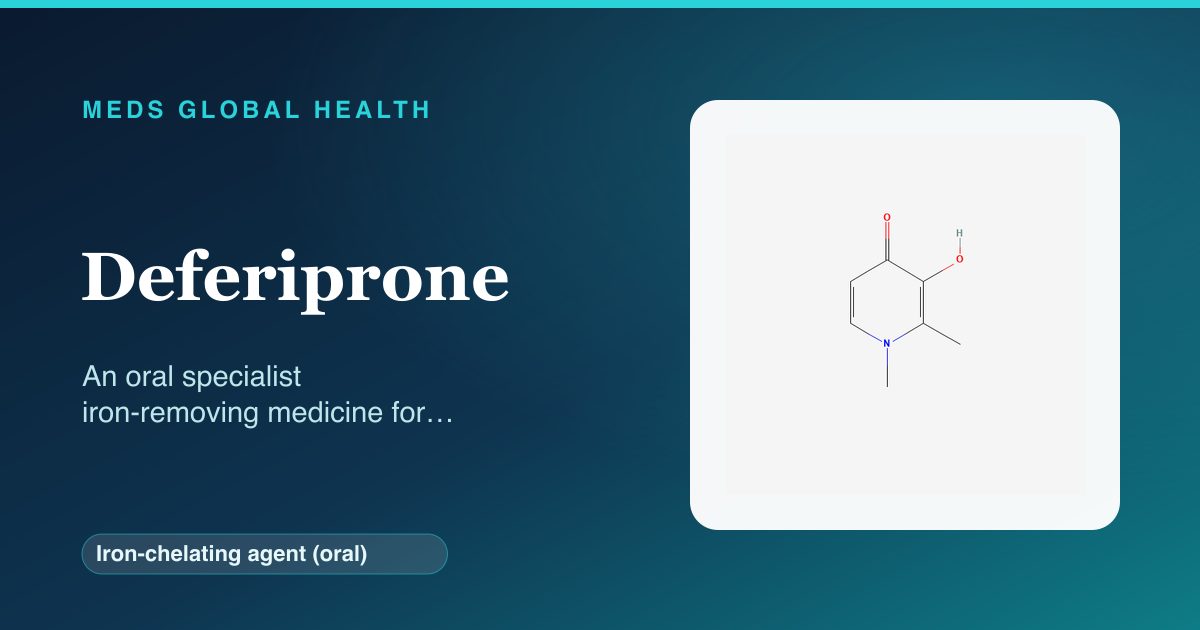
What it is
Deferiprone is a prescription-only iron chelator, a medicine that binds to iron so the body can remove it. It is used to treat iron overload, which builds up in people who need many blood transfusions, such as those with thalassaemia. Too much iron can damage the heart, liver and other organs, so removing it is important. Deferiprone is taken by mouth and is often used when other iron-removing treatments are not suitable or not enough on their own. It is supervised closely by a specialist team because of an important effect on the blood.
How it works
Deferiprone binds to excess iron in the body, forming a compound that is then removed, mainly in the urine. By regularly clearing some of the iron that builds up from transfusions, it lowers the overall iron load and helps protect organs such as the heart from iron damage. It is sometimes used together with another iron-removing medicine when iron levels are very high. Because it can affect how the bone marrow makes white blood cells, it is used with careful, regular blood-count monitoring.
Company & origin
Originated / developed by: Chiesi.
A specialist medicine used in the UK to remove excess iron from iron overload, often when other treatments are not enough.
Practical use
How to take Deferiprone
General, dose-free guidance — always follow your prescriber's and the leaflet's specific instructions.
- Take it by mouth as directed by your specialist team, usually spread through the day, or as a liquid.
- Attend all your blood tests, as regular blood-count checks are essential while taking it.
- Report any fever, sore throat, mouth ulcers or other signs of infection urgently, and stop the medicine if advised.
- Do not be alarmed if your urine turns a reddish-brown colour, as this is a harmless and expected effect.
- Do not stop it on your own except when told to for infection or blood-count concerns; otherwise follow your team's advice.
Weighing it up
Advantages & disadvantages of Deferiprone
Advantages
- Removes excess iron and helps protect organs such as the heart from iron damage.
- Taken by mouth, and can be combined with another iron-removing medicine when iron levels are very high.
- Offers an option when other iron-removing treatments are not suitable or not enough on their own.
Disadvantages
- Can cause a serious drop in infection-fighting white cells (agranulocytosis), which can be dangerous.
- Requires regular blood-count monitoring and urgent action if signs of infection appear.
- Can affect the liver and must be taken consistently over the long term.
Practical use
Good to know
The single most important thing to understand about deferiprone is that it can cause a serious drop in the white blood cells that fight infection, a condition called agranulocytosis. This can be life-threatening if an infection takes hold, so regular blood counts are essential, and you must report any fever, sore throat, mouth ulcers or other signs of infection urgently and stop the medicine if advised. It can also affect the liver, so liver tests are monitored, and it often turns the urine a reddish-brown colour, which is harmless. It is a long-term treatment that must be taken regularly, and you should not stop it without advice except when told to because of infection or blood-count concerns.
Who should not take it / use with caution
- It is avoided in people who already have a low white blood cell count or a history of agranulocytosis with it.
- It is used with caution in people with liver problems, who need closer monitoring.
- It is generally avoided in pregnancy unless a specialist decides it is necessary, with contraception advised.
Monitoring
- Regular, frequent blood counts to detect any fall in infection-fighting white cells early.
- Liver blood tests during treatment, with the dose reviewed if results change.
- Checking iron levels over time so the treatment can be adjusted to the person's iron load.
Side effects
- Reddish-brown urine, which is harmless, and stomach upset or nausea.
- Joint pain and changes in liver blood tests can occur.
- Rarely but importantly, a serious drop in infection-fighting white cells (agranulocytosis), which can be life-threatening.
Key interactions
- Indigestion remedies and supplements containing iron, aluminium or zinc are usually kept apart from it.
- Other medicines that can lower the white blood cell count are combined only with extra caution.
- Tell your team about all medicines and supplements, as some can affect how it works or add to its risks.
Available as: Tablets and oral liquid taken by mouth.
Answers
Deferiprone: frequently asked questions
What is the most important risk with deferiprone?
It can cause a serious drop in infection-fighting white blood cells (agranulocytosis), so blood counts are checked regularly and fever or sore throat must be reported urgently.
What should I do if I get a fever or sore throat?
Report it urgently and contact your specialist team straight away, as it could be a sign your white cells have dropped; stop the medicine if advised.
Why has my urine turned reddish-brown?
Deferiprone often turns the urine a reddish-brown colour; this is harmless and expected and is not a sign of a problem.
Can it be used with another iron-removing medicine?
Yes, it is sometimes combined with another iron chelator when iron levels are very high, under specialist supervision.
Why do I need so many blood tests?
Frequent blood counts are essential to catch any fall in white cells early, because this is the most serious risk of the medicine.
Authoritative sources
- BNF
- NICE CKS
Building a medicines information resource?
We create evidence-led, dose-free drug and formulary references for teams.