A medicine that protects the heart during anthracycline chemotherapy
Dexrazoxane
A specialist medicine used to protect the heart from anthracycline chemotherapy and to treat anthracycline that has leaked out of a vein.
What is Dexrazoxane?
Dexrazoxane is a specialist medicine used in cancer care for two purposes: to protect the heart from damage caused by anthracycline chemotherapy (a group of strong chemotherapy medicines that can harm the heart), and to treat tissue damage when an anthracycline leaks out of a vein into the surrounding tissue (extravasation). It is given as a drip into a vein by the cancer team. Because it can lower blood counts (myelosuppression), it is given under close specialist supervision with regular blood tests.
Education and reference only. This is a plain-language guide to Dexrazoxane — it deliberately contains no doses. Doses depend on the person, the brand and the reason for treatment, and belong with your prescriber. Always check the BNF, the product labelling (SmPC) and follow medical advice.
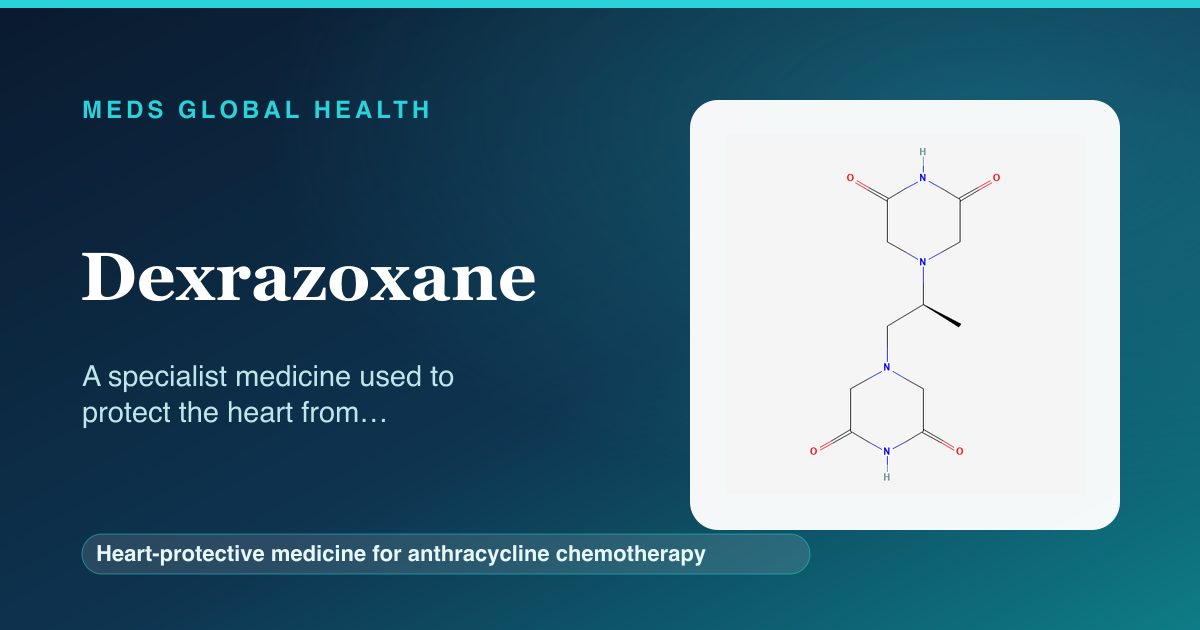
What it is
Dexrazoxane is a specialist medicine used alongside certain cancer treatments. It has two main roles. First, it helps protect the heart from the damage that anthracycline chemotherapy medicines can cause over time. Second, it is used as an emergency treatment if an anthracycline leaks out of the vein during a drip and damages the surrounding tissue, a problem called extravasation. It is given as a drip into a vein by the cancer team in hospital. It is not a cancer treatment itself; it is used to reduce harm from the chemotherapy.
How it works
Anthracycline chemotherapy can harm the heart partly through the build-up of damaging by-products, helped along by iron in the body. Dexrazoxane is thought to bind iron and reduce the formation of these harmful by-products, which helps shield the heart muscle from injury. When an anthracycline leaks into the tissue around a vein, dexrazoxane given soon afterwards can limit the tissue damage. Because it also affects rapidly dividing cells in the bone marrow, it can lower the blood counts, which is why it is used carefully and with blood monitoring.
Company & origin
A specialist cancer-care medicine used in the UK to protect the heart from anthracycline chemotherapy and to treat anthracycline leakage from a vein.
Practical use
How to take Dexrazoxane
General, dose-free guidance — always follow your prescriber's and the leaflet's specific instructions.
- It is given as a drip into a vein by the cancer team in hospital, so it is fully managed for you.
- It is used to protect the heart from anthracycline chemotherapy or, urgently, to treat an anthracycline that has leaked from a vein.
- Expect regular blood tests, as it can lower your blood counts, and attend these appointments.
- Report any fever, sore throat, unusual bruising or bleeding, or signs of infection straight away.
- Tell the team how you are feeling during and after treatment so they can adjust your care.
Weighing it up
Advantages & disadvantages of Dexrazoxane
Advantages
- Helps protect the heart from the damage anthracycline chemotherapy can cause.
- Can limit tissue damage when an anthracycline leaks out of a vein (extravasation).
- Given and closely monitored by a cancer specialist team.
Disadvantages
- Can lower the blood counts (myelosuppression), adding to the effects of chemotherapy.
- Given as a drip in hospital under specialist supervision rather than at home.
- Used only in specific situations decided by the cancer team.
Practical use
Good to know
Dexrazoxane is given only by a cancer specialist team in hospital, so it is fully managed for you. Its purpose is protective: it does not treat the cancer but is used to reduce harm to the heart from anthracycline chemotherapy, or to limit tissue damage if an anthracycline leaks from a vein. The main thing to be aware of is that it can lower the blood counts (myelosuppression), which can add to the effect of the chemotherapy, so the team checks your blood regularly and watches for signs of infection, tiredness or unusual bruising or bleeding. Because of how it works it is reserved for specific situations decided by the specialist team. Tell the team how you feel during and after treatment, and report fevers or signs of infection promptly.
Who should not take it / use with caution
- People who have had a serious allergic reaction to dexrazoxane should not be given it.
- It is used with particular care, or avoided, in people with already very low blood counts or significant bone-marrow problems.
- It is used with care in people with serious liver or kidney problems, guided by the specialist team.
Monitoring
- Regular blood tests to check the blood counts.
- Watching for signs of infection, bleeding or bruising.
- Checking heart function and liver tests as part of overall cancer care.
Side effects
- A fall in the blood counts, which can cause tiredness, infections or easy bruising and bleeding.
- Feeling sick or being sick.
- A reaction at the site where the drip is given.
- Less commonly, effects on the liver, which the team monitors.
Key interactions
- It adds to the blood-count-lowering effects of chemotherapy and other medicines that affect the bone marrow.
- The team takes all your cancer and supportive medicines into account when using it.
- Tell the team about every medicine and supplement you take.
Available as: A powder made up into a drip given into a vein in hospital.
Answers
Dexrazoxane: frequently asked questions
What is dexrazoxane used for?
It is used to protect the heart from the damage anthracycline chemotherapy can cause, and to treat tissue damage when an anthracycline leaks out of a vein.
Does it treat the cancer?
No. It is not a cancer treatment itself; it is used to reduce harm to the heart or tissues from anthracycline chemotherapy.
How is it given?
It is given as a drip into a vein by the cancer team in hospital, so it is fully managed for you.
Why do I need blood tests?
Dexrazoxane can lower the blood counts, which can add to the effects of chemotherapy, so the team checks your blood regularly and watches for infection.
What should I report during treatment?
Tell the team straight away about any fever, sore throat, unusual bruising or bleeding, or other signs of infection.
Authoritative sources
- BNF
- NICE CKS
Building a medicines information resource?
We create evidence-led, dose-free drug and formulary references for teams.