A synthetic oestrogen, now rarely used
Diethylstilbestrol
A synthetic oestrogen, now rarely used, that was historically given for some prostate and breast cancers.
What is Diethylstilbestrol?
Diethylstilbestrol is a man-made (synthetic) oestrogen that was once used widely but is now only very rarely prescribed in the UK, under close specialist supervision. In the past it was used to treat some advanced prostate cancers and certain breast cancers by acting on the body's hormone signals. It is largely a medicine of historical interest because it carries serious risks, especially blood clots and other heart and circulation problems. It also caused lasting harm to some babies exposed to it in the womb, including a rare cancer of the vagina in daughters, which is why its use was stopped for that purpose long ago.
Education and reference only. This is a plain-language guide to Diethylstilbestrol — it deliberately contains no doses. Doses depend on the person, the brand and the reason for treatment, and belong with your prescriber. Always check the BNF, the product labelling (SmPC) and follow medical advice.
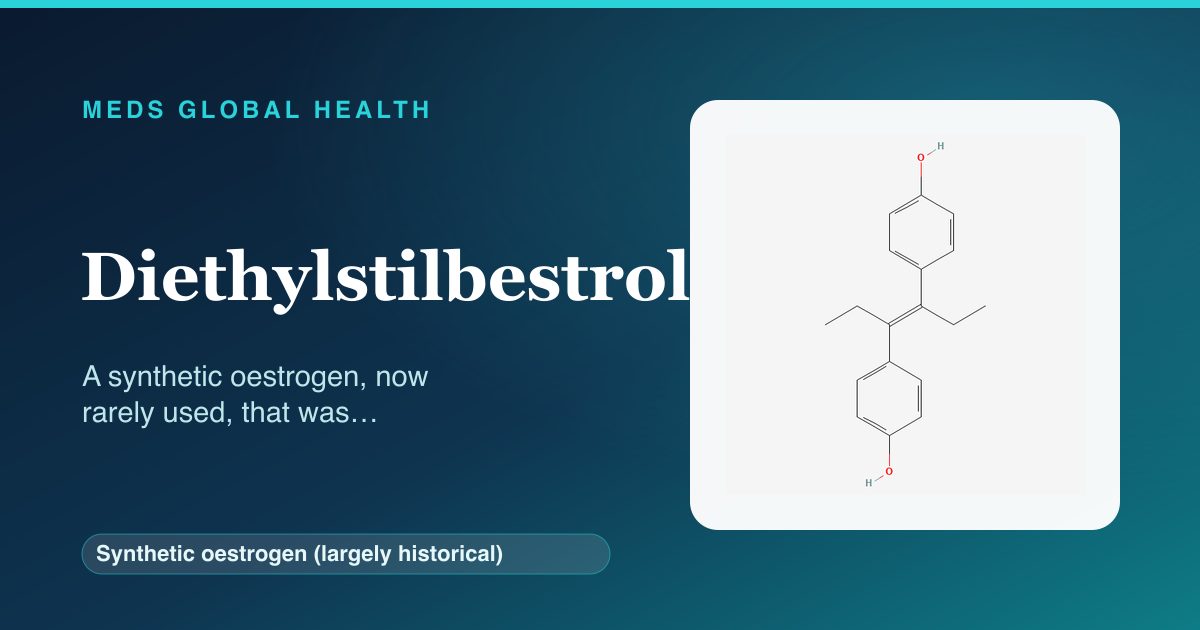
What it is
Diethylstilbestrol is a synthetic form of oestrogen, the female sex hormone. It is one of the oldest man-made hormone medicines and was once used very widely for many reasons. Today it is only rarely used in the UK, and only by specialists, mainly because newer and safer treatments have replaced it. Historically it was given for some advanced prostate cancers and certain breast cancers, where altering the body's hormone balance could slow the cancer. It is now best understood as a largely historical medicine, remembered partly for the serious harm it caused when given in pregnancy in the past.
How it works
Diethylstilbestrol acts like the body's own oestrogen, switching on oestrogen signals throughout the body. In prostate cancer, this hormone effect lowers the male hormone activity that the cancer depends on, which can slow its growth. In some breast cancers, high oestrogen activity was used to change how the cancer behaved. Because it acts powerfully on hormone systems and on blood clotting, it can cause widespread effects, including a raised risk of clots and strain on the heart and circulation, which is a major reason it has fallen out of routine use.
Company & origin
A man-made oestrogen developed many decades ago and once used widely, now used only rarely in the UK under specialist care.
Practical use
How to take Diethylstilbestrol
General, dose-free guidance — always follow your prescriber's and the leaflet's specific instructions.
- Take it exactly as your specialist prescribes; this is a rarely used medicine that needs close supervision.
- Tell your specialist straight away about any leg pain, swelling, breathlessness or chest pain, as these can be signs of a blood clot.
- Do not take it if there is any chance you could be pregnant, as it can seriously harm a developing baby.
- Attend all your monitoring appointments so your heart, circulation and response to treatment can be checked.
- Keep your specialist informed of all your other medicines and any heart or clotting problems.
Weighing it up
Advantages & disadvantages of Diethylstilbestrol
Advantages
- Historically offered a way to influence hormone-driven prostate and some breast cancers.
- A long-established medicine with decades of experience behind it.
- Taken by mouth in the situations where it was used.
Disadvantages
- Carries a serious risk of blood clots and other heart and circulation problems.
- Caused lasting harm to babies exposed in the womb, including a rare vaginal cancer in daughters.
- Now largely historical and replaced by newer, safer treatments.
Practical use
Good to know
The most important things to understand about diethylstilbestrol are about safety and history rather than everyday use. It carries a serious risk of blood clots in the legs or lungs and of other heart and circulation problems, which is the main reason it is now so rarely used. Its place in history is dominated by the harm it caused when given to pregnant women many decades ago: some babies exposed to it in the womb were later affected, with daughters having a raised risk of a rare cancer of the vagina and other reproductive problems. For this reason it is never used in pregnancy. If it is used at all today, it is only by a specialist who has weighed the risks very carefully and who will monitor closely. Anyone who knows they were exposed to it before birth should mention this to their doctor.
Who should not take it / use with caution
- It must not be used in pregnancy, or where pregnancy is possible, because it can seriously harm a developing baby.
- People with a history of blood clots or significant heart or circulation problems should not normally take it.
- People who have had a serious allergic reaction to it should not take it.
- It should only ever be used under close specialist supervision.
Monitoring
- Watching closely for signs of blood clots in the legs or lungs.
- Reviewing heart and circulation health during treatment.
- Checking how the cancer responds and whether the medicine remains appropriate.
Side effects
- Blood clots in the legs or lungs, which can be serious and need urgent attention.
- Fluid retention, breast tenderness or nausea.
- Strain on the heart and circulation, especially with longer use.
- Rarely, lasting harm in babies exposed before birth, which is why it is never used in pregnancy.
Key interactions
- It can add to the clot risk of other medicines that affect the blood, so a full medicines list is important.
- It may interact with blood-thinning medicines, so these need careful review.
- Tell your specialist about everything you take, including other hormone medicines.
Available as: Tablets taken by mouth.
Answers
Diethylstilbestrol: frequently asked questions
What is diethylstilbestrol used for?
It is a synthetic oestrogen that was historically used for some advanced prostate cancers and certain breast cancers, but it is now only very rarely used in the UK under specialist care.
Why is it hardly used any more?
It carries serious risks, especially blood clots and other heart and circulation problems, and newer, safer treatments have largely replaced it.
Why is it never given in pregnancy?
In the past, babies exposed to it in the womb were harmed, including a raised risk of a rare vaginal cancer in daughters, so it must never be used during pregnancy.
I was exposed to it before birth — what should I do?
Tell your doctor, as people exposed to it in the womb may need particular checks; your doctor can advise on what monitoring is appropriate for you.
What warning signs should I watch for?
Seek urgent help for leg pain or swelling, breathlessness or chest pain, as these can be signs of a blood clot, which is a serious risk with this medicine.
Authoritative sources
- BNF
- NICE CKS
Building a medicines information resource?
We create evidence-led, dose-free drug and formulary references for teams.