A potent steroid cream for inflamed skin
Diflucortolone
A potent steroid cream or ointment used to calm inflamed, itchy skin conditions such as eczema.
What is Diflucortolone?
Diflucortolone is a potent topical corticosteroid, a steroid cream or ointment applied to the skin to calm redness, itching and inflammation in conditions such as eczema and dermatitis. It works by reducing the immune activity in the skin that causes the flare. Because it is a potent steroid, it is used in a thin layer on the affected area for as short a time as needed, usually under a doctor's guidance, to lower the chance of skin thinning and other local effects. It is not for long-term continuous use on large areas or on the face unless specifically advised.
Education and reference only. This is a plain-language guide to Diflucortolone — it deliberately contains no doses. Doses depend on the person, the brand and the reason for treatment, and belong with your prescriber. Always check the BNF, the product labelling (SmPC) and follow medical advice.
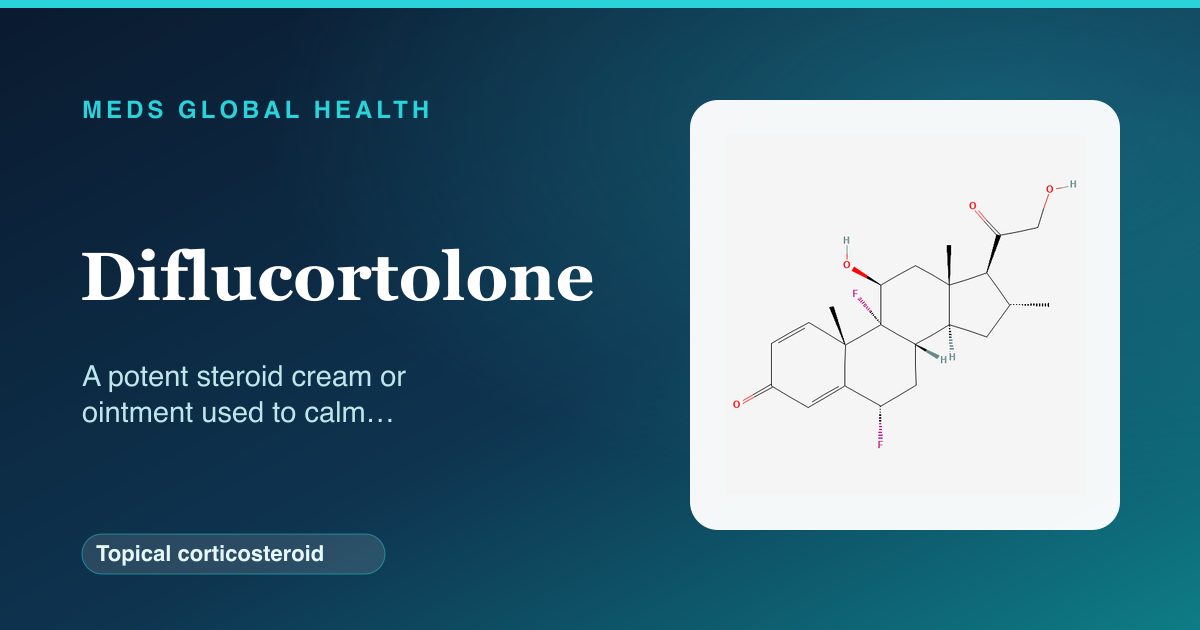
What it is
Diflucortolone is a potent topical corticosteroid, meaning it is a fairly strong steroid that is applied directly to the skin rather than taken by mouth. It comes as a cream and an ointment, sold under the brand Nerisone, and is used for inflammatory skin conditions such as eczema and dermatitis, particularly when milder steroids have not been enough. It calms the inflamed, itchy, red skin of a flare. Because it is potent, it is usually prescribed by a doctor and used carefully on the affected areas for a limited time.
How it works
Diflucortolone works by dampening down the immune and inflammatory activity in the skin that causes a flare. When applied to the affected area, it reduces the redness, swelling, itching and irritation that come with conditions such as eczema, allowing the skin to settle and heal. The ointment tends to suit drier, thicker or scalier skin, while the cream suits weepier or less dry areas. Because it acts locally where it is applied, it can bring a flare under control, but the same potency that makes it effective means it should be used in a thin layer and not for longer than needed.
Company & origin
A potent steroid cream and ointment used in the UK for inflammatory skin conditions that have not settled with milder treatments.
What it treats
Conditions Diflucortolone is used for
Practical use
How to take Diflucortolone
General, dose-free guidance — always follow your prescriber's and the leaflet's specific instructions.
- Apply a thin layer to the affected skin only, gently rubbing it in, as your doctor or pharmacist advises.
- Use it for the shortest time that brings the flare under control, rather than continuously.
- Avoid the face, skin folds and broken skin unless your doctor has specifically told you to use it there.
- Keep using your regular moisturiser between flares, leaving a little time between moisturiser and the steroid.
- Wash your hands after applying it, unless your hands are the area being treated.
Weighing it up
Advantages & disadvantages of Diflucortolone
Advantages
- An effective potent steroid for calming flares of eczema and dermatitis that milder treatments have not settled.
- Available as both a cream and an ointment, so it can be matched to weepy or dry skin.
- Works locally on the affected skin to quickly reduce itching, redness and inflammation.
Disadvantages
- As a potent steroid, longer or heavy use can thin the skin or cause stretch marks and visible blood vessels.
- Generally not suitable for the face, skin folds or broken skin unless specifically advised.
- Treats flares rather than curing the underlying skin condition, so flares can return.
Practical use
Good to know
The key thing to understand is that diflucortolone is a potent steroid, so it is used to bring a flare under control rather than as something to slather on continuously. Apply a thin layer only to the affected skin, and use it for the shortest time that works, as advised, because long or heavy use can thin the skin, cause stretch marks, or make small blood vessels more visible, especially on delicate areas. It is generally avoided on the face, in skin folds and on broken or infected skin unless your doctor specifically says otherwise, as these areas absorb more steroid. Once the skin improves, your doctor may step you down to a milder steroid and keep up regular moisturisers, which remain the mainstay of eczema care between flares. Wash your hands after applying it, unless your hands are the area being treated.
Who should not take it / use with caution
- People who have had a serious allergic reaction to diflucortolone or the cream or ointment ingredients should not use it.
- It should not be used on skin infected with bacteria, viruses or fungi unless the infection is also being treated.
- It is used with particular care in children and on delicate areas, under medical guidance.
- It is used with care in pregnancy, on the advice of a doctor.
Monitoring
- Reviewing how the skin responds and stepping down to a milder steroid as it improves.
- Watching for signs of skin thinning, stretch marks or visible blood vessels with longer use.
- Checking that any skin infection is recognised and treated rather than masked.
Side effects
- Burning, stinging or irritation where it is applied, especially at first.
- With longer or heavy use, thinning of the skin, stretch marks or more visible small blood vessels.
- Occasionally, worsening of an untreated skin infection, or spots and changes around the mouth.
- Rarely, with very heavy use over large areas, enough steroid is absorbed to cause body-wide effects.
Key interactions
- There are few important interactions with other medicines, as it works mainly on the skin.
- Tell your doctor about other creams or ointments you use on the same area, so they can be timed sensibly.
- If used on infected skin, it is usually combined with or follows treatment for the infection.
Available as: Cream and ointment applied to the skin.
Answers
Diflucortolone: frequently asked questions
What is diflucortolone used for?
It is a potent steroid cream or ointment used to calm inflamed, itchy skin conditions such as eczema and dermatitis, particularly when milder steroids have not been enough.
Can I use it on my face?
It is generally avoided on the face and skin folds because these areas absorb more steroid, so only use it there if your doctor specifically tells you to.
Will it thin my skin?
As a potent steroid, longer or heavy use can thin the skin, so it is used in a thin layer for the shortest time that works, then stepped down as the skin improves.
Should I still use my moisturiser?
Yes. Regular moisturisers remain the mainstay of eczema care between flares; leave a little time between moisturiser and the steroid cream.
How long should I use it for?
It is used to bring a flare under control rather than continuously, so follow your doctor's advice and stop or step down once the skin settles.
Authoritative sources
- BNF
- NICE CKS
Building a medicines information resource?
We create evidence-led, dose-free drug and formulary references for teams.