A platelet-boosting tablet
Eltrombopag
An oral medicine that helps the body make more platelets in some low-platelet conditions.
What is Eltrombopag?
Eltrombopag is a tablet that helps the body make more platelets, the tiny blood cells that help blood to clot. It is used in conditions where platelets are too low, including chronic immune thrombocytopenia (ITP), some cases of aplastic anaemia, and low platelets linked to hepatitis C treatment. It works by switching on the body's platelet-making signal in the bone marrow. It needs to be kept apart from dairy, antacids and supplements containing iron or calcium, which stop it being absorbed, and it requires liver and platelet monitoring, with a small risk of clots. Its brand name is Revolade.
Education and reference only. This is a plain-language guide to Eltrombopag — it deliberately contains no doses. Doses depend on the person, the brand and the reason for treatment, and belong with your prescriber. Always check the BNF, the product labelling (SmPC) and follow medical advice.
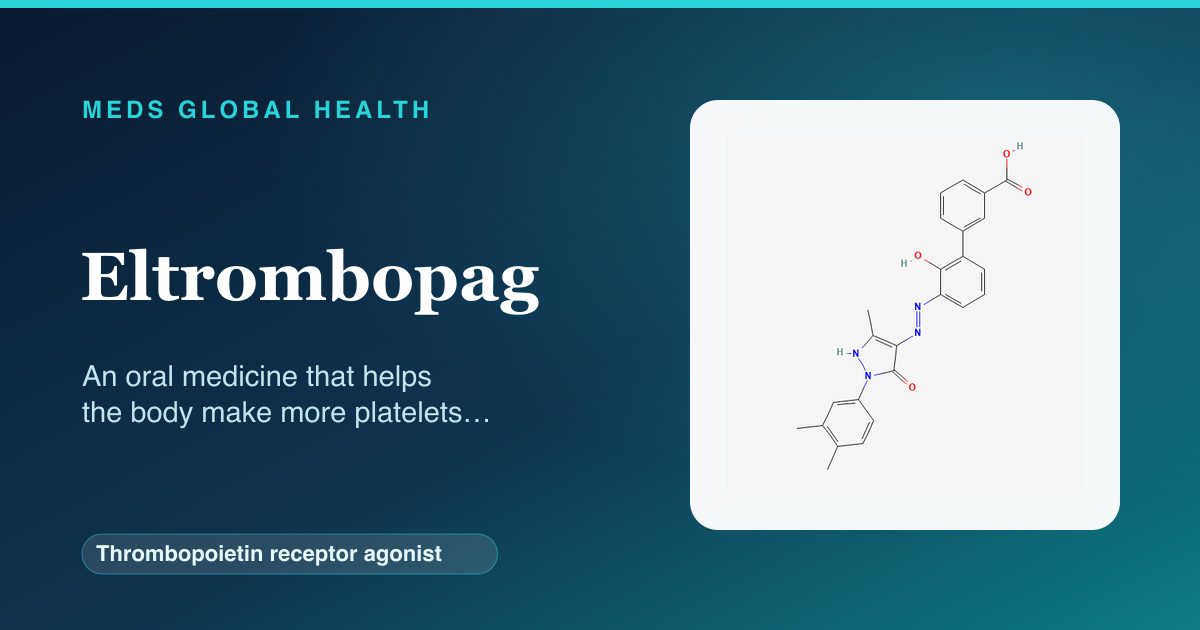
What it is
Eltrombopag is a thrombopoietin receptor agonist, a medicine that mimics the body's natural signal to make platelets. Platelets are the cells that help blood clot and stop bleeding, so when they are too low there is a risk of bruising and bleeding. Eltrombopag is taken as a tablet to raise platelet counts in certain conditions, including chronic immune thrombocytopenia, some forms of aplastic anaemia, and low platelets associated with hepatitis C. It is a specialist medicine prescribed and monitored by a haematology or specialist team.
How it works
The bone marrow makes platelets in response to a natural hormone called thrombopoietin, which acts on a receptor on the cells that produce platelets. Eltrombopag attaches to that same receptor and switches it on, encouraging the marrow to make more platelets and lifting the platelet count over time. It does not cure the underlying condition, but it helps keep platelets at a safer level to reduce the risk of bleeding while the person remains on treatment.
Company & origin
Originated / developed by: Novartis.
A specialist oral medicine used in the UK to raise platelet counts in certain low-platelet conditions.
Practical use
How to take Eltrombopag
General, dose-free guidance — always follow your prescriber's and the leaflet's specific instructions.
- Take it as a tablet on an empty stomach, separated by several hours from food and drinks.
- Keep it well apart from dairy products and from supplements or antacids containing iron, calcium, magnesium, aluminium or zinc, which stop it being absorbed.
- Have your blood tests as arranged, so the dose can be adjusted to keep platelets in a safe range.
- Do not stop or change the dose yourself, as your platelet count can swing if treatment is altered suddenly.
- Report symptoms of a possible clot, such as leg swelling, chest pain or breathlessness, or signs of liver trouble such as yellowing skin.
Weighing it up
Advantages & disadvantages of Eltrombopag
Advantages
- Raises platelet counts in certain low-platelet conditions, reducing the risk of bleeding.
- Taken as a tablet at home rather than by injection.
- Offers an option in conditions such as chronic ITP and some aplastic anaemia where other treatments have not worked.
Disadvantages
- Must be carefully separated from dairy, antacids and iron, calcium or similar supplements, which block its absorption.
- Requires regular liver and platelet blood tests.
- Carries a small risk of clots, particularly if the platelet count rises too high.
Practical use
Good to know
Eltrombopag is an ongoing specialist treatment, not a quick fix, and it works while it is being taken. A very important practical point is how it is taken: it binds to dairy products and to supplements or medicines containing iron, calcium, magnesium, aluminium or zinc (including many antacids and multivitamins), which greatly reduce how much is absorbed, so it must be separated from these by several hours and ideally taken on an empty stomach. It needs regular blood tests to monitor both the platelet count, so the dose can be adjusted to a safe level rather than too high, and the liver, as it can affect liver tests. Because raising platelets can encourage clotting, there is a small risk of clots, especially if the count rises too high. People of East Asian background or with liver problems may need extra care with dosing.
Who should not take it / use with caution
- People with significant liver problems may need extra caution or may be advised against it.
- Used carefully in people with a high risk of clots, with close monitoring of the platelet count.
- People with a known allergy to eltrombopag or its ingredients.
Monitoring
- Regular platelet counts to adjust the dose and avoid the count rising too high.
- Liver blood tests, as it can affect the liver.
- Watching for signs of clots and, in some conditions, longer-term checks on the bone marrow.
Side effects
- Headache, nausea, diarrhoea and tiredness.
- Changes in liver blood tests, which is why the liver is monitored.
- Less commonly, clots, or a platelet count that rises too high; rarely, effects on the bone marrow over time.
Key interactions
- Dairy products and supplements or antacids containing iron, calcium, magnesium, aluminium or zinc greatly reduce its absorption, so separate the timing.
- It can affect the levels of certain other medicines, such as some statins, so the team reviews your full list.
- It can interact with medicines that also affect the liver or clotting, so tell your prescriber everything you take.
Available as: Tablets taken by mouth (a powder for oral suspension is also available).
Answers
Eltrombopag: frequently asked questions
What is eltrombopag used for?
It is a tablet that helps the body make more platelets in certain low-platelet conditions, including chronic immune thrombocytopenia, some aplastic anaemia and low platelets linked to hepatitis C.
Why must I keep it away from milk and supplements?
It binds to dairy and to iron, calcium, magnesium, aluminium and zinc in supplements and antacids, which stops it being absorbed, so it must be separated from these by several hours.
Does it cure the condition?
No. It raises the platelet count while you take it to reduce the risk of bleeding, but it does not cure the underlying condition.
Why do I need blood tests?
Regular tests check your platelet count, so the dose can be kept in a safe range rather than too high, and check your liver, as the medicine can affect liver tests.
Can it cause clots?
There is a small risk of clots, particularly if the platelet count rises too high, so report any leg swelling, chest pain or breathlessness.
Authoritative sources
- BNF
- NICE CKS
Building a medicines information resource?
We create evidence-led, dose-free drug and formulary references for teams.