The injectable active form of the ACE inhibitor enalapril
Enalaprilat
An injection given in hospital to lower blood pressure; it is the active form of the ACE inhibitor enalapril.
What is Enalaprilat?
Enalaprilat is the injectable, active form of the ACE inhibitor enalapril, used in hospital to lower high blood pressure when an injection into a vein is needed rather than tablets. It works by relaxing and widening blood vessels. Because it lowers blood pressure quickly, the main concern is a sudden, large drop in blood pressure, especially with the first dose. It can also raise potassium levels and affect the kidneys, and, like other ACE inhibitors, it must be avoided in pregnancy and can rarely cause serious swelling called angioedema.
Education and reference only. This is a plain-language guide to Enalaprilat — it deliberately contains no doses. Doses depend on the person, the brand and the reason for treatment, and belong with your prescriber. Always check the BNF, the product labelling (SmPC) and follow medical advice.
What it is
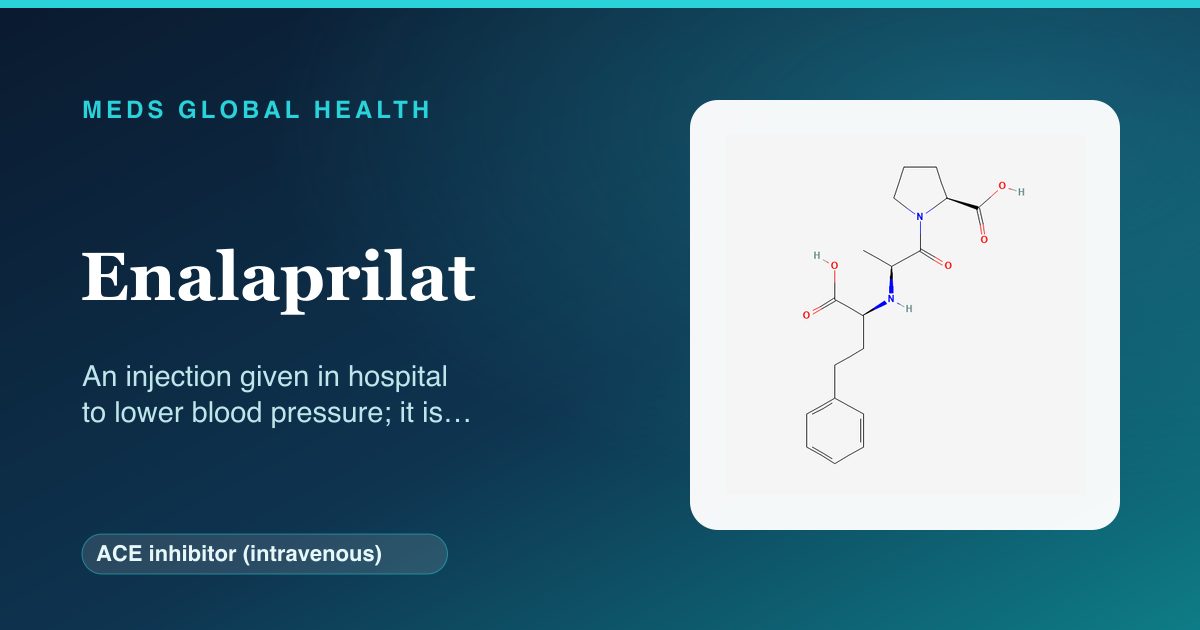
Enalaprilat is the ready-made active form of enalapril, a blood-pressure medicine in the group known as ACE inhibitors. When enalapril is taken as a tablet, the body converts it into enalaprilat, which does the actual work; enalaprilat is the version given directly as an injection into a vein. It is a hospital medicine, used when someone needs their blood pressure lowered and cannot take tablets, for example because they are unwell or unable to swallow. It is given and monitored by hospital staff.
How it works
Enalaprilat blocks an enzyme (angiotensin-converting enzyme) that the body uses to make a hormone that tightens blood vessels and holds on to salt and water. By blocking this enzyme, it relaxes and widens the blood vessels, so blood flows more easily and blood pressure falls. Because it is given straight into a vein, it acts without needing to be absorbed or converted first, which is why it is used in hospital when a quicker or more reliable effect is wanted. Its action on the same system also explains why it can affect potassium levels and the kidneys.
Company & origin
A hospital medicine used in the UK as an injection into a vein to lower blood pressure, the ready-made active form of the tablet medicine enalapril.
What it treats
Conditions Enalaprilat is used for
Practical use
How to take Enalaprilat
General, dose-free guidance — always follow your prescriber's and the leaflet's specific instructions.
- It is given as an injection into a vein by hospital staff, not something you take yourself.
- Your blood pressure is checked closely, especially after the first dose, because it can drop suddenly.
- You may be asked to lie down while it is given, to reduce the chance of feeling faint.
- Blood tests for your kidneys and potassium are usually done while you are being treated.
- Tell the team straight away if you feel very dizzy, faint or notice any swelling of your face, lips or tongue.
Weighing it up
Advantages & disadvantages of Enalaprilat
Advantages
- Lowers blood pressure quickly in hospital when tablets cannot be used.
- Is the ready-made active form, so it does not need to be converted by the body first.
- Works well as part of careful, monitored treatment of high blood pressure in a hospital setting.
Disadvantages
- Can cause a sudden, large drop in blood pressure, especially with the first dose.
- Can raise potassium and affect the kidneys, so it needs blood-test monitoring.
- Must be avoided in pregnancy and can rarely cause serious swelling (angioedema).
Practical use
Good to know
The most important thing to understand about enalaprilat is that, because it lowers blood pressure through a vein, blood pressure can drop suddenly and sharply, particularly after the first dose or in someone who is already low on fluid, so it is given with close monitoring and the person usually lies down. Like all ACE inhibitors, it can raise the level of potassium in the blood and can affect how the kidneys work, so blood tests are used to keep an eye on these. It must not be used in pregnancy, as ACE inhibitors can seriously harm the developing baby. A rare but serious reaction is angioedema, a sudden swelling of the face, lips, tongue or throat that needs emergency treatment. A dry cough, common with the tablet form, is less of an issue with short hospital use.
Who should not take it / use with caution
- People who are pregnant must not use it, as ACE inhibitors can seriously harm the baby.
- People who have had angioedema (serious swelling) with an ACE inhibitor before should not use it.
- People who have had a serious allergic reaction to enalapril or enalaprilat should not use it.
- It is used with great care in people who are dehydrated, have kidney problems or high potassium.
Monitoring
- Close monitoring of blood pressure, especially after the first dose.
- Blood tests to check kidney function and potassium levels.
- Watching for signs of low blood pressure or any swelling that could be angioedema.
Side effects
- A sudden or large drop in blood pressure, causing dizziness or faintness.
- A rise in blood potassium and changes in how the kidneys work.
- Headache or feeling generally unwell.
- Rarely but seriously, angioedema (sudden swelling of the face, lips, tongue or throat), which needs emergency care.
Key interactions
- Other blood-pressure medicines and water tablets (diuretics) can add to the drop in blood pressure.
- Potassium supplements, potassium-sparing diuretics and some other medicines can push potassium too high.
- Anti-inflammatory painkillers (NSAIDs) can reduce its effect and add to kidney strain.
Available as: A solution given as an injection into a vein.
Answers
Enalaprilat: frequently asked questions
What is enalaprilat used for?
It is used in hospital to lower high blood pressure when an injection into a vein is needed instead of tablets; it is the active form of enalapril.
How is it different from enalapril tablets?
Enalaprilat is the active form that the body normally makes from enalapril tablets, but given directly as an injection so it works without needing to be converted first.
Why is my blood pressure checked so closely?
Because it can cause a sudden, large drop in blood pressure, especially with the first dose, so staff monitor you and often ask you to lie down.
Is it safe in pregnancy?
No. Like other ACE inhibitors, it must be avoided in pregnancy because it can seriously harm the developing baby.
What is angioedema?
It is a rare but serious sudden swelling of the face, lips, tongue or throat that can happen with ACE inhibitors and needs emergency treatment.
The wider class
About ACE inhibitor (intravenous)
Enalaprilat belongs to the ace inhibitor (intravenous) class. For how the class as a whole works, its shared safety principles and monitoring, see the full guide.
Browse by body system
Authoritative sources
- BNF
- NICE CKS
Building a medicines information resource?
We create evidence-led, dose-free drug and formulary references for teams.