An IDH2 inhibitor for acute myeloid leukaemia
Enasidenib
A targeted tablet used to treat acute myeloid leukaemia that has a specific gene change called an IDH2 mutation.
What is Enasidenib?
Enasidenib is a specialist targeted treatment for acute myeloid leukaemia in people whose cancer has a particular gene change called an IDH2 mutation. It is a tablet taken by mouth that blocks the faulty IDH2 protein, helping the immature leukaemia cells mature into normal blood cells. Its most important risk is differentiation syndrome, a serious and sometimes fatal reaction as the cells mature, which can cause breathlessness, fever, swelling and weight gain and needs urgent treatment. It can also raise bilirubin and cause tumour lysis, so it is closely monitored.
Education and reference only. This is a plain-language guide to Enasidenib — it deliberately contains no doses. Doses depend on the person, the brand and the reason for treatment, and belong with your prescriber. Always check the BNF, the product labelling (SmPC) and follow medical advice.
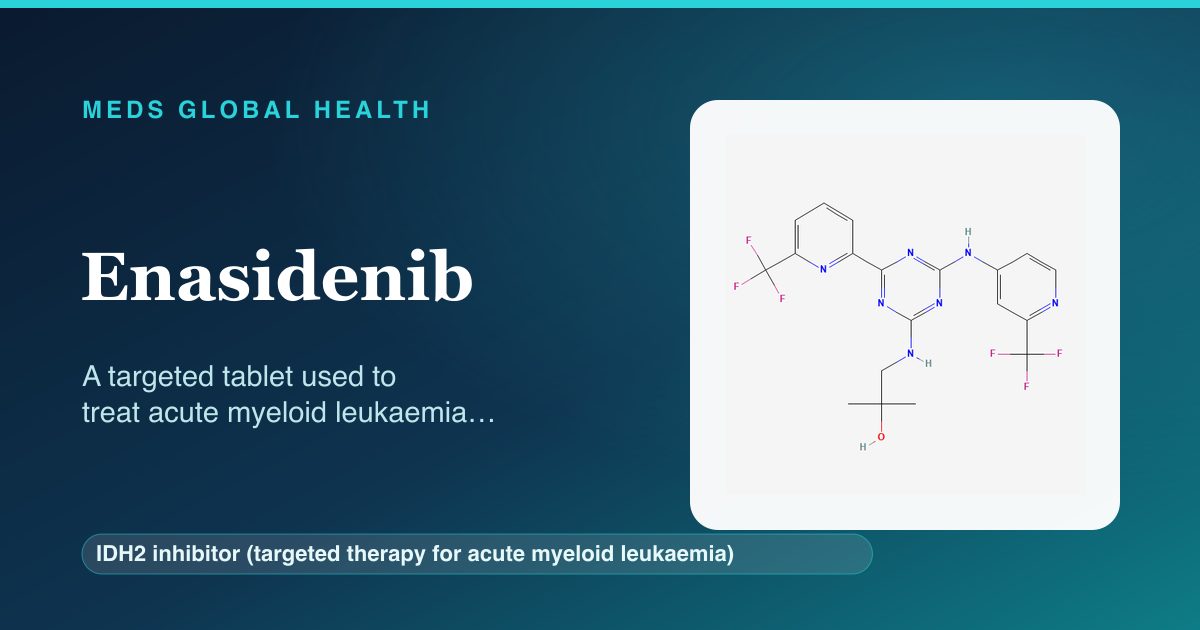
What it is
Enasidenib is a targeted medicine used to treat acute myeloid leukaemia, a fast-growing cancer of the bone marrow, in people whose leukaemia carries a specific gene change known as an IDH2 mutation. A test confirms this mutation before it is used. It is taken by mouth as a tablet and works in a more targeted way than standard chemotherapy. It is prescribed and supervised by a specialist cancer team, who monitor closely for its distinctive side effects, and treatment continues for as long as it keeps helping.
How it works
The IDH2 mutation produces a faulty protein that makes a harmful substance, which keeps blood cells stuck in an immature, abnormal state so they build up as leukaemia. Enasidenib blocks this faulty protein, lowering the harmful substance and allowing the trapped cells to mature into normal, working blood cells instead. Because it pushes large numbers of leukaemia cells to mature at once, this maturing process itself can trigger a serious reaction called differentiation syndrome, which is why the team watches very carefully when treatment starts.
Company & origin
A specialist targeted treatment used for acute myeloid leukaemia with a particular gene change (an IDH2 mutation).
Practical use
How to take Enasidenib
General, dose-free guidance — always follow your prescriber's and the leaflet's specific instructions.
- Take the tablet by mouth as prescribed, swallowing it whole and at about the same time each day; it can be taken with or without food.
- Report breathlessness, fever, cough, swelling or sudden weight gain straight away, as these may be differentiation syndrome and need urgent treatment.
- Do not stop or change the dose yourself, even if you feel unwell; contact your team for advice.
- Attend all blood-test appointments so your team can check bilirubin, kidney function and blood counts.
- Use reliable contraception during treatment and for the time afterwards that your team advises, and report any possible pregnancy promptly.
Weighing it up
Advantages & disadvantages of Enasidenib
Advantages
- A targeted treatment for acute myeloid leukaemia with an IDH2 mutation, working in a more focused way than standard chemotherapy.
- Helps faulty leukaemia cells mature into normal blood cells rather than simply killing dividing cells.
- Taken as a tablet at home rather than by infusion.
Disadvantages
- Can cause differentiation syndrome, a serious and sometimes fatal reaction that needs urgent treatment.
- Can raise bilirubin and cause tumour lysis as cancer cells break down.
- Needs close monitoring and can harm an unborn baby.
Practical use
Good to know
The single most important thing to know about enasidenib is differentiation syndrome. As the leukaemia cells mature, the body can react strongly, causing fever, breathlessness, cough, swelling, rapid weight gain, low blood pressure or kidney problems. This can develop within days or weeks of starting and can be life-threatening if not treated quickly, so any of these symptoms must be reported straight away; it is usually treated promptly with steroids and the medicine may be paused. Enasidenib can also raise bilirubin, which may make the skin or eyes look yellow but is often not a sign of liver damage, and it can cause tumour lysis as cancer cells break down, which the team prevents and monitors. Nausea and reduced appetite are common. Because it can harm an unborn baby, reliable contraception is important during treatment and for a time afterwards.
Who should not take it / use with caution
- People who have had a serious allergic reaction to enasidenib should not take it.
- It is not used in pregnancy or while breastfeeding, as it can harm an unborn baby.
- It is used only where an IDH2 mutation has been confirmed and under close specialist supervision.
Monitoring
- Close watching for differentiation syndrome, especially in the first weeks of treatment.
- Regular blood tests for bilirubin, kidney function, blood salts and blood counts.
- Reviewing response to treatment and managing tumour lysis risk early on.
Side effects
- Differentiation syndrome, with breathlessness, fever, swelling and weight gain, which can be serious or fatal and needs urgent treatment.
- A rise in bilirubin, which may make the skin or eyes look yellow.
- Nausea, reduced appetite, diarrhoea and tiredness.
- Tumour lysis as cancer cells break down, and changes in blood salts, which are monitored.
Key interactions
- Tell your team about all your medicines, as some may affect blood salts or add to side effects.
- Medicines that affect liver function or bilirubin should be reviewed by your team.
- Avoid starting new medicines, including over-the-counter products, without checking with your team.
Available as: Tablets taken by mouth.
Answers
Enasidenib: frequently asked questions
What is enasidenib used for?
It is a targeted tablet used to treat acute myeloid leukaemia in people whose cancer has a specific gene change called an IDH2 mutation, confirmed by a test.
What is differentiation syndrome?
It is a serious reaction as the leukaemia cells mature, causing breathlessness, fever, swelling and weight gain; it can be life-threatening, so report these symptoms urgently.
Why have my eyes gone yellow?
Enasidenib can raise bilirubin, which may make the skin or eyes look yellow; this is often not a sign of liver damage, but tell your team so they can check.
How is it taken?
It is taken as a tablet by mouth, swallowed whole at about the same time each day, with or without food, exactly as your team prescribes.
Do I need contraception?
Yes. Because it can harm an unborn baby, reliable contraception is important during treatment and for a time afterwards, as your team advises.
Authoritative sources
- BNF
- NICE CKS
Building a medicines information resource?
We create evidence-led, dose-free drug and formulary references for teams.