An aldosterone-blocking (potassium-sparing) medicine
Eplerenone
A potassium-sparing medicine that blocks aldosterone, used in heart failure and sometimes resistant high blood pressure.
What is Eplerenone?
Eplerenone is a selective aldosterone antagonist (a potassium-sparing diuretic). It is used mainly to protect the heart in certain types of heart failure, especially after a heart attack, and sometimes for difficult-to-control blood pressure. It works similarly to spironolactone but causes fewer hormonal side effects such as breast tenderness.
Education and reference only. This is a plain-language guide to Eplerenone — it deliberately contains no doses. Doses depend on the person, the brand and the reason for treatment, and belong with your prescriber. Always check the BNF, the product labelling (SmPC) and follow medical advice.
What it is
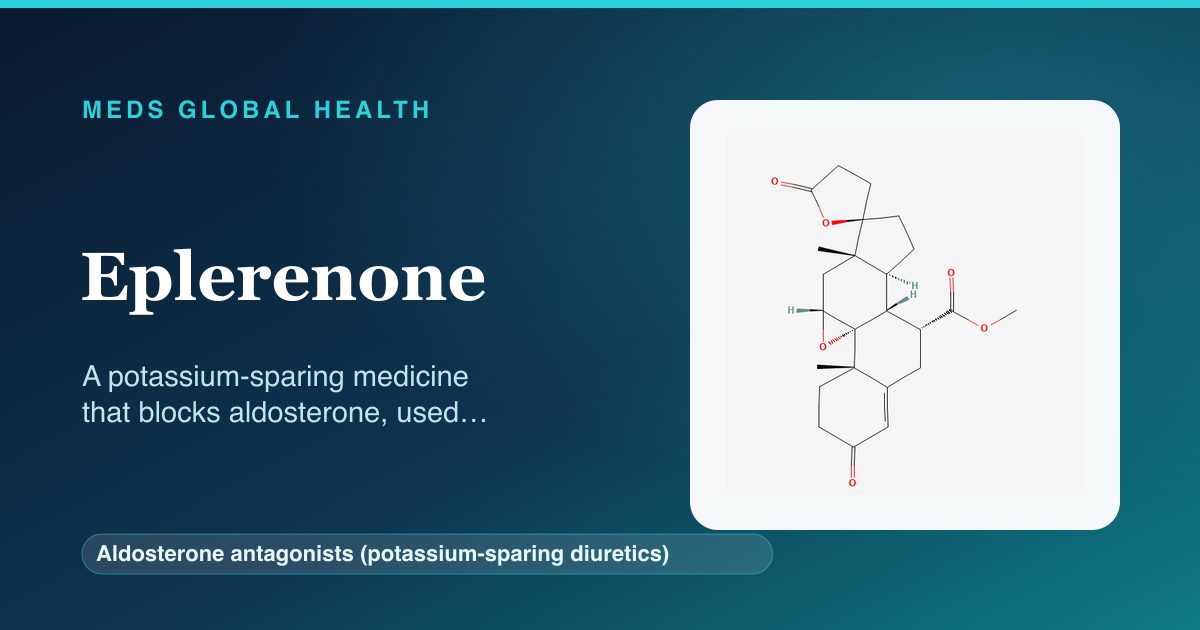
Eplerenone is a medicine that blocks the hormone aldosterone, which the body uses to control salt, water and potassium. In the UK it is used mainly to protect the heart in people with heart failure, especially after a heart attack, and is sometimes added in difficult-to-control (resistant) high blood pressure. It belongs to the same family as spironolactone but is more selective, so it causes fewer hormonal side effects.
How it works
By blocking aldosterone receptors in the kidney and heart, eplerenone helps the body lose a little extra salt and water while holding on to potassium. This reduces strain on the heart and helps prevent the harmful remodelling and scarring that aldosterone can drive in failing hearts. The benefit in heart failure is fewer hospital admissions and better survival, measured over months and years rather than felt day to day.
Company & origin
Originated / developed by: Pfizer (originator).
A selective aldosterone antagonist developed in the early 2000s, used mainly in heart failure after a heart attack.
What it treats
Conditions Eplerenone is used for
Practical use
How to take Eplerenone
General, dose-free guidance — always follow your prescriber's and the leaflet's specific instructions.
- Take it at the same time each day, with or without food.
- Swallow the tablet whole with a drink of water.
- Keep taking it even when you feel well, as it works quietly to protect the heart.
- Avoid potassium supplements and salt substitutes unless your team specifically advises them.
- If you miss a dose, take it when you remember unless it is nearly time for the next one — do not double up.
Weighing it up
Advantages & disadvantages of Eplerenone
Advantages
- Improves survival and reduces hospital admissions in heart failure after a heart attack.
- Causes far fewer hormonal side effects (such as breast tenderness) than spironolactone.
- Helps potassium stay in the body, unlike many other diuretics.
Disadvantages
- Can raise blood potassium to dangerous levels, especially with kidney problems.
- Requires regular blood tests for potassium and kidney function.
- Often more expensive than spironolactone, which does a similar job.
Practical use
Good to know
Because eplerenone keeps potassium in the body, your blood potassium and kidney function are checked with blood tests soon after starting and at intervals afterwards. You should avoid potassium supplements and "low-sodium" salt substitutes (which are high in potassium) unless told otherwise. Tell your team if you develop diarrhoea, vomiting or dehydration, as these can affect potassium and kidney function. It is taken long-term, and you should not stop it suddenly without advice.
Who should not take it / use with caution
- People with high blood potassium or significant kidney impairment.
- People taking other strong potassium-raising medicines or potassium supplements without close monitoring.
- Used with caution alongside ACE inhibitors, ARBs and certain antifungal or HIV medicines.
Monitoring
- Blood potassium, checked soon after starting and at intervals.
- Kidney function (blood tests), especially in older people or those with kidney disease.
- Blood pressure and symptoms of heart failure.
Side effects
- Raised blood potassium, which is usually picked up on blood tests before it causes symptoms.
- Dizziness, low blood pressure or feeling faint, especially when standing up quickly.
- Tiredness, headache, or digestive upset such as diarrhoea.
Key interactions
- ACE inhibitors and ARBs add to the potassium-raising effect — combined use needs monitoring.
- Potassium supplements, salt substitutes and other potassium-sparing diuretics increase the risk of high potassium.
- Strong CYP3A4 inhibitors (some antifungals, certain antibiotics and HIV medicines) can raise eplerenone levels.
Available as: Tablets.
Answers
Eplerenone: frequently asked questions
How is eplerenone different from spironolactone?
Both block aldosterone and protect the heart in heart failure. Eplerenone is more selective, so it is much less likely to cause hormonal effects such as breast tenderness or enlargement, but it is usually more expensive. Your team chooses based on tolerance and cost.
Why do I need blood tests on eplerenone?
Eplerenone keeps potassium in the body, and too much potassium can affect the heart rhythm. Blood tests check your potassium and kidney function so any rise can be caught and managed early, particularly soon after starting or changing the dose.
Can I use a low-sodium salt substitute?
Usually no. "Low-sodium" or "reduced-salt" substitutes are often high in potassium, which adds to eplerenone's effect and can push your potassium too high. Check with your pharmacist or doctor before using one.
Will eplerenone make me pass a lot of urine?
It has only a mild water-removing effect compared with most diuretics, so it does not usually cause a strong rush to the toilet. Its main job is to protect the heart rather than to act as a strong water tablet.
Can I stop eplerenone if I feel well?
No — feeling well is a sign it is working. Stopping it removes the protection it gives the heart. If you want to stop or have side effects, speak to your team so the decision and any monitoring can be managed safely.
The wider class
About Aldosterone antagonists (potassium-sparing diuretics)
Eplerenone belongs to the aldosterone antagonists (potassium-sparing diuretics) class. For how the class as a whole works, its shared safety principles and monitoring, see the full guide.
Browse by body system
Authoritative sources
- BNF
- NICE CKS
Building a medicines information resource?
We create evidence-led, dose-free drug and formulary references for teams.