A weak oestrogen used mainly as a vaginal cream or pessary
Estriol
A weak oestrogen used mainly as a vaginal cream or pessary to ease dryness and discomfort after the menopause.
What is Estriol?
Estriol is a weak form of oestrogen, the female hormone. It is used mainly as a vaginal cream or pessary to ease dryness, soreness and discomfort of the vaginal area (vaginal atrophy) after the menopause, and it is also part of some hormone replacement therapy (HRT). Using it locally in the vagina keeps most of its effect in that area and limits whole-body effects. If oestrogen is absorbed into the body, the usual oestrogen cautions can apply. It is used under medical advice and reviewed regularly.
Education and reference only. This is a plain-language guide to Estriol — it deliberately contains no doses. Doses depend on the person, the brand and the reason for treatment, and belong with your prescriber. Always check the BNF, the product labelling (SmPC) and follow medical advice.
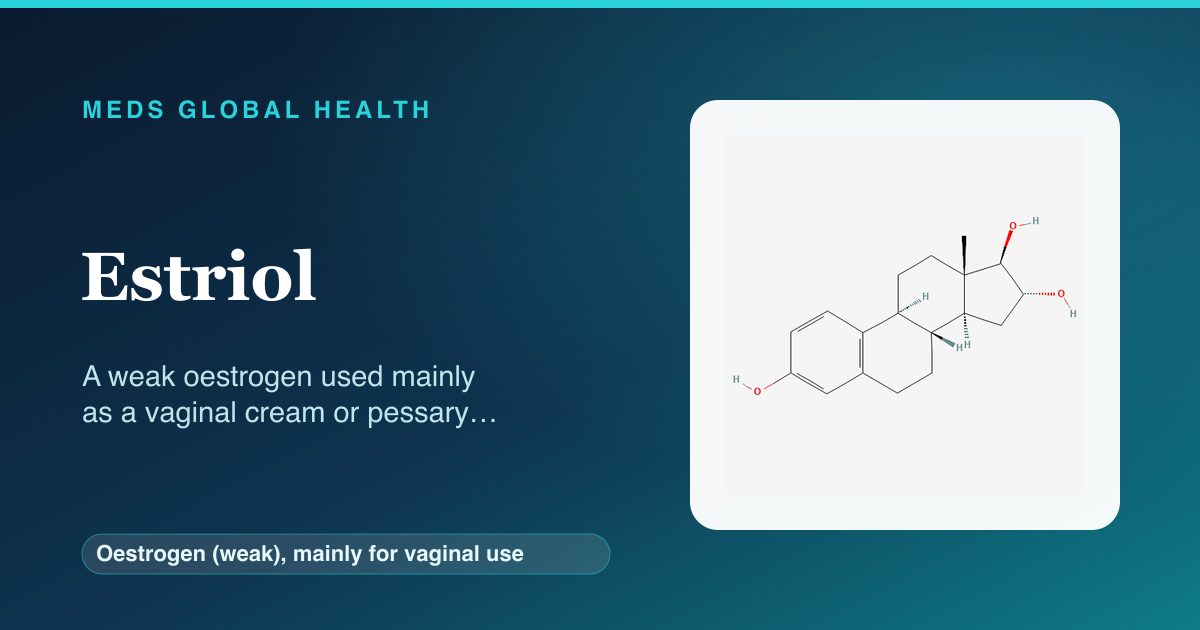
What it is
Estriol is a naturally occurring but relatively weak form of oestrogen, the main female hormone. After the menopause, falling oestrogen can make the tissues of the vagina thinner, drier and more easily irritated, a problem called vaginal atrophy, which can cause dryness, soreness, itching and discomfort. Estriol is used mainly as a vaginal cream or pessary to restore some moisture and comfort to this area. It is also found in some HRT preparations. Because it is mostly used locally, it is aimed at relieving local symptoms with limited effect on the rest of the body.
How it works
Oestrogen helps keep the tissues of the vagina thick, moist and supple. After the menopause, when natural oestrogen falls, these tissues become thinner and drier, leading to discomfort. Applied as a vaginal cream or pessary, estriol acts on the lining of the vagina to help restore its thickness and natural moisture, easing dryness, soreness and irritation. Because it is a weak oestrogen used locally, most of its effect stays in the area where it is applied, which is why it can ease symptoms while keeping whole-body hormone effects relatively low.
Company & origin
A weak natural oestrogen used in the UK mainly as a cream or pessary to ease vaginal dryness after the menopause.
What it treats
Conditions Estriol is used for
Practical use
How to take Estriol
General, dose-free guidance — always follow your prescriber's and the leaflet's specific instructions.
- Use the cream or pessary in the vagina as directed, often a little more often at first and then less often for maintenance.
- Apply it at bedtime if advised, as this can help it stay in place.
- Use the lowest amount that controls your symptoms, and keep to the schedule your prescriber gives you.
- Report any unexpected vaginal bleeding after the menopause, as this always needs to be checked.
- Attend regular reviews so your prescriber can check it is still needed and being used at the lowest effective level.
Weighing it up
Advantages & disadvantages of Estriol
Advantages
- Eases vaginal dryness, soreness and discomfort after the menopause.
- Used locally, so most of its effect stays in the area and whole-body effects are limited.
- A weak oestrogen available as a convenient cream or pessary.
Disadvantages
- Some oestrogen can still be absorbed, so the usual oestrogen cautions may apply, especially with longer use.
- Needs to be used regularly to keep symptoms under control.
- Any unexpected vaginal bleeding must always be investigated.
Practical use
Good to know
The key advantage of using estriol locally as a vaginal cream or pessary is that most of its effect stays where it is applied, which limits whole-body effects compared with oestrogen taken throughout the body. Even so, some oestrogen can be absorbed, so the usual cautions for oestrogen treatment can still apply, particularly with longer or higher use, and your prescriber will weigh these for you. It is often used a little more often at first and then less often for maintenance. Any unexpected vaginal bleeding after the menopause should always be reported and checked, as it needs investigation regardless of using estriol. It is reviewed regularly so the lowest effective use is continued.
Who should not take it / use with caution
- People who have had a serious allergic reaction to estriol or its ingredients should not use it.
- It is generally avoided in people with certain oestrogen-sensitive cancers, unexplained vaginal bleeding, or a history of certain blood clots, unless a specialist advises otherwise.
- It is used with care, and after assessment, in people with conditions affected by oestrogen, under medical advice.
Monitoring
- Regular reviews to check it is still needed and used at the lowest effective level.
- Investigating any unexpected vaginal bleeding after the menopause.
- Considering the usual oestrogen-related checks where appropriate, guided by your prescriber.
Side effects
- Local irritation, itching or discharge where it is applied.
- Breast tenderness or mild headache in some people if oestrogen is absorbed.
- Less commonly, the cautions linked to oestrogen treatment in general, which your prescriber considers.
Key interactions
- Because it is mainly used locally, important medicine interactions are fewer than with oestrogen taken throughout the body.
- Tell your prescriber about other hormone treatments, including any other HRT, to avoid doubling up.
- Mention all your medicines and your medical history so suitability can be judged.
Available as: Vaginal cream and pessaries, and it is also part of some HRT preparations.
Answers
Estriol: frequently asked questions
What is estriol used for?
It is a weak oestrogen used mainly as a vaginal cream or pessary to ease dryness, soreness and discomfort of the vaginal area after the menopause, and it is also part of some HRT.
Does using it in the vagina affect the rest of my body?
Used locally, most of its effect stays where it is applied, which limits whole-body effects, though some oestrogen can still be absorbed.
What should I do about unexpected bleeding?
Any unexpected vaginal bleeding after the menopause should always be reported and checked, as it needs investigating regardless of using estriol.
How often do I use it?
It is often used a little more often at first and then less often for maintenance; follow the schedule your prescriber gives you.
Are there cautions like other oestrogens?
Because some oestrogen can be absorbed, the usual oestrogen cautions can still apply, so your prescriber weighs these and reviews you regularly.
Authoritative sources
- BNF
- NICE CKS
Building a medicines information resource?
We create evidence-led, dose-free drug and formulary references for teams.